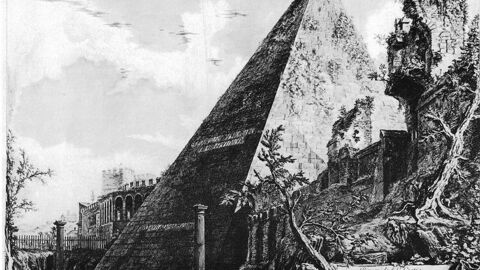
Piranesi, Pyramid of Cestius
Posted in: Architectural Gems Central Italy Curiosities Latium Tourist Attractions
When you think of pyramids, you're likely to imagine a sandy desert in Egypt. You're less like to think of the heart of the city of Rome and, yet, that's exactly where a pyramid which dates back to between 18 and 12 BC is located. Although the pyramid itself is not Egyptian, it serves as a reminder of the conquest of Egypt in 30 BC and the subsequent Egyptomania that overcame Rome's citizens in its wake. All kinds of artefacts inspired by Egyptian art and culture and copies of Egyptian examples popped up all over the city.

There were, however, only two pyramids erected on Italian soil, only one of which still exists, the Pyramid of Cestius.
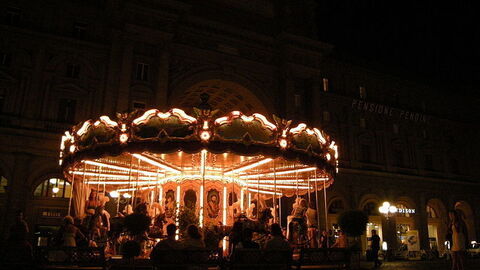
Carousel, Piazza della Repubblica
Posted in: Central Italy Curiosities Day Trips Tuscany
One of the biggest things that draws people to the idea of celebrity is the opportunity, both in career and fiscally, to travel the world. We are constantly bombarded by paparazzi and personal social media images of celebrities travelling the globe and exploring some of the most beautiful places in the world – places we might have always wanted to visit for ourselves. If Florence is on your own bucket list and you are planning all the things you want to do on your trip, you might consider giving Beyoncé and Jay-Z's itinerary from when they visited in May of 2015 a glance – you might even get some inspiration for your own trip! Find a luxury villa in Florence and truly have the complete celebrity experience.
Chapel at Urbino Cathedral
Posted in: Central Italy Churches & Religious Buildings The Marches Tourist Attractions Unesco World Heritage Sites
If you are visiting Urbino and have already stopped by the Palazzo Ducale to see the National Museum and palace itself, then you might think about taking a few moments to stop at the Duomo, or cathedral, just next door. Both buildings are part of Urbino's UNESCO heritage and were at the centre of the urban renewal of the beautiful city by the ducal family in the Renaissance, though the cathedral was altered in the 18th century and now bears a neoclassical edifice instead. The Duomo is the perfect complement to a visit to the palace as many of the same artists and designers who worked in the palace also lent their skills to the redesign of the church.
Palazzo Ducale, facade
Posted in: Architectural Gems Central Italy Museums & Galleries The Marches Tourist Attractions Unesco World Heritage Sites
The Palazzo Ducale is the most famous building in Urbino and one of the most impressive and beautiful Renaissance palaces in Italy. It is now also home to the National Gallery of Le Marche as well. Therefore, it's a bit of a package deal when you visit, offering a stunning combination of both art and architecture. Listed as a UNESCO, world heritage site, it is not only acknowledged as unique and important by locals but is recognised as an extra special site in this world. If you are interested in art, architecture, history or merely getting lost in the majesty of the past and court culture, then the Palazzo Ducale is somewhere you won't want to miss. Why not find a villa with pool in Le Marche and take a day to explore this most beautiful of sights in Urbino?
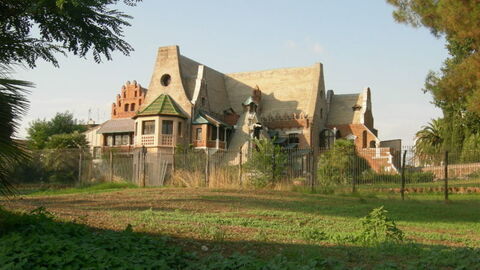
Casina delle Civette
Posted in: Architectural Gems Central Italy Latium Museums & Galleries Tourist Attractions
The Casina delle Civette, or House of the Owls, was the home of Prince Giovanni Torlonia until his death in 1938. The building was originally constructed in the nineteenth century as a “Swiss Cabin” pleasure building on the edge of the grounds of the ancestral home of Villa Torlonia. These types of buildings were used by the aristocracy across Europe to retreat from formal court life in their homes and play at simplicity. The building was designed by Giuseppe Jappelli in 1840 for Prince Alessandro Torlonia to look like a rustic dwelling. However, in the twentieth century, when his nephew, Giovanni, got his hands on the structure it became increasingly elaborate. It was transformed from a cottage into a medieval hamlet.