The Palazzo Ducale is the most famous building in Urbino and one of the most impressive and beautiful Renaissance palaces in Italy. It is now also home to the National Gallery of Le Marche as well. Therefore, it's a bit of a package deal when you visit, offering a stunning combination of both art and architecture. Listed as a UNESCO, world heritage site, it is not only acknowledged as unique and important by locals but is recognised as an extra special site in this world. If you are interested in art, architecture, history or merely getting lost in the majesty of the past and court culture, then the Palazzo Ducale is somewhere you won't want to miss. Why not find a villa with pool in Le Marche and take a day to explore this most beautiful of sights in Urbino?
The Palazzo Ducale was built for Duke Federico III da Montefeltro in the middle of the fifteenth century, by Maso di Bartolomeo of Florence. The Duke's family had been in control of the city since the end of 12th century and had undertaken a radical rebuilding campaign, transforming the city by giving it a new look.
The likes of Da Vinci were called in to do things such as redesign the city walls. Of course, then, they needed a home to suit a family with such grand ambitions, which led to the rebuilding and expansion of the pre-existing palace on the site into the extraordinary Palazzo Ducale.
The likes of Da Vinci were called in to do things such as redesign the city walls. Of course, then, they needed a home to suit a family with such grand ambitions, which led to the rebuilding and expansion of the pre-existing palace on the site into the extraordinary Palazzo Ducale.
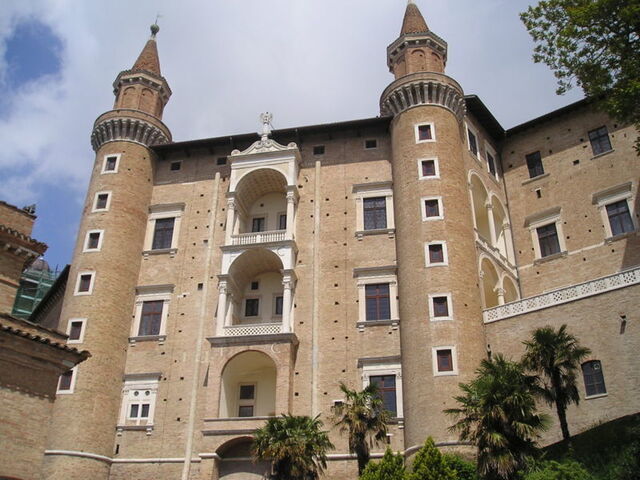
The west façade is probably the most distinctive and well-known part of the building and consists of two slender turrets flanking three loggias rising one above another. While the rest of the exterior is somewhat more austere, built largely of simple brick and very fortress-like, the west façade is executed with beautiful detailing in stone. To the side facing the Piazza del Risorgimento, the façades of two medieval palaces have been skilfully incorporated by the Dalmatian architect Luciano Laurana into the Renaissance palace.
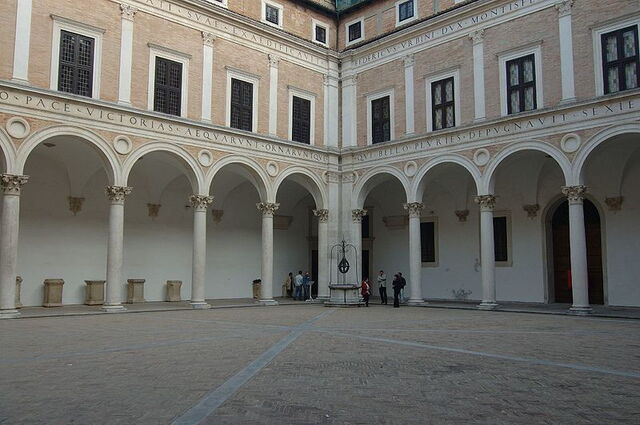
The interior, by contrast, is much more lavishly decorated. A monumental staircase by Barocci leads to the piano nobile.
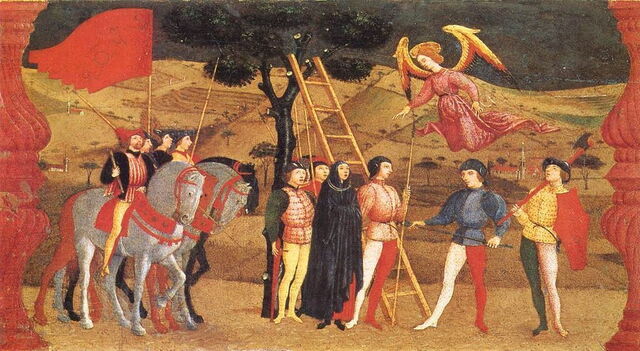
Most of the palace, however, is now occupied by the National Museum and the artworks are complimented by the décor which was often designed by famous Renaissance artists as well. The Throne Room has a bas-relief of the Lion of St Mark, The Room of the Angels, has dancing putti on the chimney-piece and its trompe-l'œil inlaid wooden doors and the walls of the Duke's Study are by Botticelli. Artists represented by the collection of the museum include Raphael, Uccello and Titian.
With so much to see in this one building, be sure to stop by on your next visit to the Le Marche region!
The interior, by contrast, is much more lavishly decorated. A monumental staircase by Barocci leads to the piano nobile.
Most of the palace, however, is now occupied by the National Museum and the artworks are complimented by the décor which was often designed by famous Renaissance artists as well. The Throne Room has a bas-relief of the Lion of St Mark, The Room of the Angels, has dancing putti on the chimney-piece and its trompe-l'œil inlaid wooden doors and the walls of the Duke's Study are by Botticelli. Artists represented by the collection of the museum include Raphael, Uccello and Titian.
With so much to see in this one building, be sure to stop by on your next visit to the Le Marche region!