Some travellers are not content with doing what everyone else does on holidays. They don’t want the standard photos or to line up for hours for famous attractions or to mill in crowds of people. Instead, they want to explore, get off the beaten tourist path, and see beyond the brochures and Instagram to find the hidden gems that a destination has to offer. If you have found a vacation rental in Liguria and are exploring this beautiful coastal region of Italy, then we recommend heading to one beach, in particular, and not because it is a popular tourism spot but, rather, because of something that lies beneath the waves…
Noli, a pretty seaside town around 50km from Genoa, in Liguria, is home to a rather fascinating garden. This may seem like a bold claim in a country like Italy where there are endless beautiful gardens belonging to ancient estates, hidden amongst winding streets in city centres, housing incredible works of art and rare blooms, and much more besides but this garden is truly worth being set aside as something extra special. Why, you may ask? Well, for one thing, it’s an underwater farm. That’s something you don’t see every day, that’s for sure!
23
Sep
2019
2019
Posted in: Architectural Gems
Castles & Palaces
Central Italy
Curiosities
Latium
Museums & Galleries
Must See Attractions
Tourist Attractions
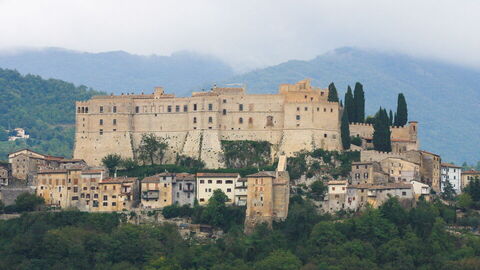
In the last few years, an incredibly interesting castle reopened to the public after being abandoned for half a century, close to a decade of restoration, and millions of euros were poured into the project. With almost a thousand years of history, the Rocca Sinibalda is an astounding fortress located in Latium, 50 miles north of Rome. Positioned majestically on a rocky outcrop that overlooks the Turano Valley, the castle-fortress is first noted in records with the building of a classic Norman stronghold by Count Sinibaldo, the governor of the Sabina area, in the 11th century. It is an extraordinary place, steeped in history and culture, stuffed with artistic gems, with a unique architectural character, and countless stories of scandal and mischief held within its walls. So, if you’re interested in art, architecture, pretty castles, or a little bit of historic gossip, then this fascinating place is a must see for those who have found a holiday rental in Rome or a vacation rental in Latium and are planning on exploring the wider region.
While the Rocca Sinibalda looks like a typical and romantic medieval fortress from a distance it is, in fact, far more interesting and complex than that. It has several names, for one thing. One of its names, the “Castle of the Eagle”, refers to the unusual shape of the building: in addition to the expected bastion walls, battlements, and lookout turrets, there are also sixteenth century additions that make the whole thing vaguely “eagle-shaped”, including the two wing-like bastions jutting out at the rear and the pointed “beak” at the front of the building, which overlooks the town below. Another named attributed to the castle is the “Castle of Metamorphoses” and the plaque by the main entrance declares it to be the “Castle of Invented Destinies.” Each of these names refers to different periods and incidents from the history of the building, with the Metamorphoses coming from a series of 16th century wall paintings and grotesques inspired by Ovid’s myths of transformation that is located in the reception rooms of the piano nobile.
While the Rocca Sinibalda looks like a typical and romantic medieval fortress from a distance it is, in fact, far more interesting and complex than that. It has several names, for one thing. One of its names, the “Castle of the Eagle”, refers to the unusual shape of the building: in addition to the expected bastion walls, battlements, and lookout turrets, there are also sixteenth century additions that make the whole thing vaguely “eagle-shaped”, including the two wing-like bastions jutting out at the rear and the pointed “beak” at the front of the building, which overlooks the town below. Another named attributed to the castle is the “Castle of Metamorphoses” and the plaque by the main entrance declares it to be the “Castle of Invented Destinies.” Each of these names refers to different periods and incidents from the history of the building, with the Metamorphoses coming from a series of 16th century wall paintings and grotesques inspired by Ovid’s myths of transformation that is located in the reception rooms of the piano nobile.
20
Sep
2019
2019
Posted in: Activities
Campania
Food and Wine
Products & Specialities
Southern Italy
Tours
Wineries & Breweries
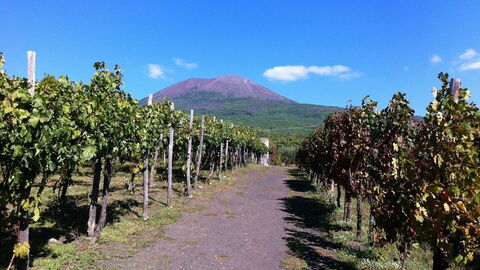
When you think of Mount Vesuvius, it is probably images of the destruction of the ancient city of Pompeii or of legions of tourists going to observe the famous volcano for themselves. You are less likely to immediately picture wine and, yet, that is one of the things you are very likely to encounter as, at the base of the volcano, there are famous vineyards, that stretch part-way up the slopes and produce wines that have been consumed since the fifth century BC. So, if you’re interested in wine, the history of wine, and unique wines, in particular, then you need to make sure you experience this rather special variety when you plan your vacation in Campania.
Lacryma Christi, also known as Lachryma Christi of Vesuvius, is the name of this celebrated Neapolitan type of wine made on the slopes of Mount Vesuvius. Literally meaning, "tears of Christ," the wine type dates back to even before the time of Jesus, to the fifth century BC, when Greek settlers first came to the area and planted Italy’s very first vineyards, as noted by Aristotle who recorded that the ancient people of Thessaly in Magna Grecia planted the first vineyards on Mount Vesuvius' slopes. After the Greeks came the Romans, who named the area, “Campania Felix,” (or “fertile countryside,” from which the region’s modern-day name of Campania derives) and spread the legend that Bacchus wept tears of joy upon seeing such a beautiful land, which caused vines to flourish in the landscape. Roman poet Martial wrote, "Bacchus loved these hills more than his native hills of Nisa". As is often the case, this story was later Christianised and medieval wine-making monks swapped out Bacchus for Christ and motivated his fertile tears with a tale of the sorrow the Son of God felt over Lucifer's fall from heaven. Lucifer was also said to have taken a little piece of heaven with him when he fell, further imbuing magic and blessings into the soils of the area.
Lacryma Christi, also known as Lachryma Christi of Vesuvius, is the name of this celebrated Neapolitan type of wine made on the slopes of Mount Vesuvius. Literally meaning, "tears of Christ," the wine type dates back to even before the time of Jesus, to the fifth century BC, when Greek settlers first came to the area and planted Italy’s very first vineyards, as noted by Aristotle who recorded that the ancient people of Thessaly in Magna Grecia planted the first vineyards on Mount Vesuvius' slopes. After the Greeks came the Romans, who named the area, “Campania Felix,” (or “fertile countryside,” from which the region’s modern-day name of Campania derives) and spread the legend that Bacchus wept tears of joy upon seeing such a beautiful land, which caused vines to flourish in the landscape. Roman poet Martial wrote, "Bacchus loved these hills more than his native hills of Nisa". As is often the case, this story was later Christianised and medieval wine-making monks swapped out Bacchus for Christ and motivated his fertile tears with a tale of the sorrow the Son of God felt over Lucifer's fall from heaven. Lucifer was also said to have taken a little piece of heaven with him when he fell, further imbuing magic and blessings into the soils of the area.
10
Sep
2019
2019
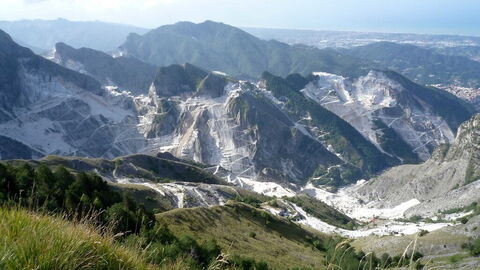
Tuscany is home to the Apuan Alps, a mountain range nestled between the valleys of the Serchio and Magra rivers, not far from the Garfagnana and Lunigiana areas. It is a beautiful part of the world that boasts even more beautiful views over the picturesque and distinctive landscape of Tuscany. Monte Sagro then, is a mountain in the Apuan Alps, overlooking the city of Carrara, that is one of nine main peaks in the range and an excellent place to go hiking if you have found a vacation rental in Carrara and want to get some fresh air and stretch your legs.
Located closest to the sea, in the northern part of the mountain range, Monte Sagro means holy or sacred mountain and there are several theories as to how this name first originated. According to one theory, the mountain is said to have been a sacred place for the ancient Liguri tribe, along with Monte Bego, which is located at the modern border between France and Italy. It is thought that these Ligurian-Apuan people, with Pliny the Elder noting this belief, believed the mountain to be home to a generous god who was prone to blessing them with rain. Other ideas about how it became a sacred mountain include its grandeur simply attracting such a name, or the idea that its particularly elegant pyramidal shape warranted the title, or because it was one of the main sanctuaries of the ancient Ligurian-Apuan people and allowed direct visual communication with Monte Penna, another important mountain for the local tribes. All of these theories come from the same period and all suggest that, though we do not know which one is exactly right (or if it might not actually be a combination or blend of these reasons), this grand and imposing mountain, usefully positioned for communication and for attracting clouds and rain, has long captured the imagination of those who saw it.
Located closest to the sea, in the northern part of the mountain range, Monte Sagro means holy or sacred mountain and there are several theories as to how this name first originated. According to one theory, the mountain is said to have been a sacred place for the ancient Liguri tribe, along with Monte Bego, which is located at the modern border between France and Italy. It is thought that these Ligurian-Apuan people, with Pliny the Elder noting this belief, believed the mountain to be home to a generous god who was prone to blessing them with rain. Other ideas about how it became a sacred mountain include its grandeur simply attracting such a name, or the idea that its particularly elegant pyramidal shape warranted the title, or because it was one of the main sanctuaries of the ancient Ligurian-Apuan people and allowed direct visual communication with Monte Penna, another important mountain for the local tribes. All of these theories come from the same period and all suggest that, though we do not know which one is exactly right (or if it might not actually be a combination or blend of these reasons), this grand and imposing mountain, usefully positioned for communication and for attracting clouds and rain, has long captured the imagination of those who saw it.
6
Sep
2019
2019
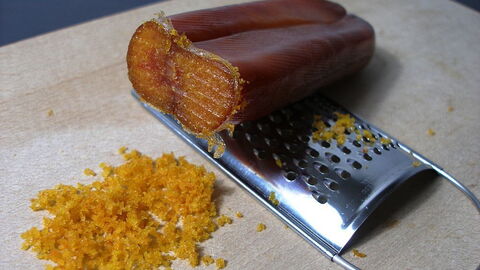
Italy is home to lots of unique culinary delicacies and specialities. Many are familiar to most people around the world and are readily available abroad but there are some that are somewhat lesser-known gems yet to be discovered by a wider international audience. One such item is bottarga, known as “Mediterranean caviar,” or as the “truffle of the sea”, which is made of salted, cured fish roe, typically of the grey mullet or the bluefin tuna. While similar products are actually made in Japan, Korea, and Egypt, the Italian iteration, with which we are concerned today comes from Sardinia but is also made in Sicily and Calabria. It is rather expensive and harder to source abroad so it is best to try as a treat during your travels if you have found a vacation rental in Sardinia, a holiday rental in Sicily, or a rental in Calabria.