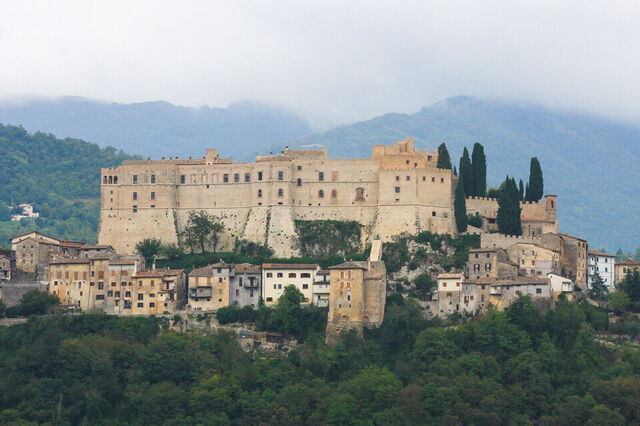
In the last few years, an incredibly interesting castle reopened to the public after being abandoned for half a century, close to a decade of restoration, and millions of euros were poured into the project. With almost a thousand years of history, the Rocca Sinibalda is an astounding fortress located in Latium, 50 miles north of Rome. Positioned majestically on a rocky outcrop that overlooks the Turano Valley, the castle-fortress is first noted in records with the building of a classic Norman stronghold by Count Sinibaldo, the governor of the Sabina area, in the 11th century. It is an extraordinary place, steeped in history and culture, stuffed with artistic gems, with a unique architectural character, and countless stories of scandal and mischief held within its walls. So, if you’re interested in art, architecture, pretty castles, or a little bit of historic gossip, then this fascinating place is a must see for those who have found a holiday rental in Rome or a vacation rental in Latium and are planning on exploring the wider region.
While the Rocca Sinibalda looks like a typical and romantic medieval fortress from a distance it is, in fact, far more interesting and complex than that. It has several names, for one thing. One of its names, the “Castle of the Eagle”, refers to the unusual shape of the building: in addition to the expected bastion walls, battlements, and lookout turrets, there are also sixteenth century additions that make the whole thing vaguely “eagle-shaped”, including the two wing-like bastions jutting out at the rear and the pointed “beak” at the front of the building, which overlooks the town below. Another named attributed to the castle is the “Castle of Metamorphoses” and the plaque by the main entrance declares it to be the “Castle of Invented Destinies.” Each of these names refers to different periods and incidents from the history of the building, with the Metamorphoses coming from a series of 16th century wall paintings and grotesques inspired by Ovid’s myths of transformation that is located in the reception rooms of the piano nobile.
While the Rocca Sinibalda looks like a typical and romantic medieval fortress from a distance it is, in fact, far more interesting and complex than that. It has several names, for one thing. One of its names, the “Castle of the Eagle”, refers to the unusual shape of the building: in addition to the expected bastion walls, battlements, and lookout turrets, there are also sixteenth century additions that make the whole thing vaguely “eagle-shaped”, including the two wing-like bastions jutting out at the rear and the pointed “beak” at the front of the building, which overlooks the town below. Another named attributed to the castle is the “Castle of Metamorphoses” and the plaque by the main entrance declares it to be the “Castle of Invented Destinies.” Each of these names refers to different periods and incidents from the history of the building, with the Metamorphoses coming from a series of 16th century wall paintings and grotesques inspired by Ovid’s myths of transformation that is located in the reception rooms of the piano nobile.
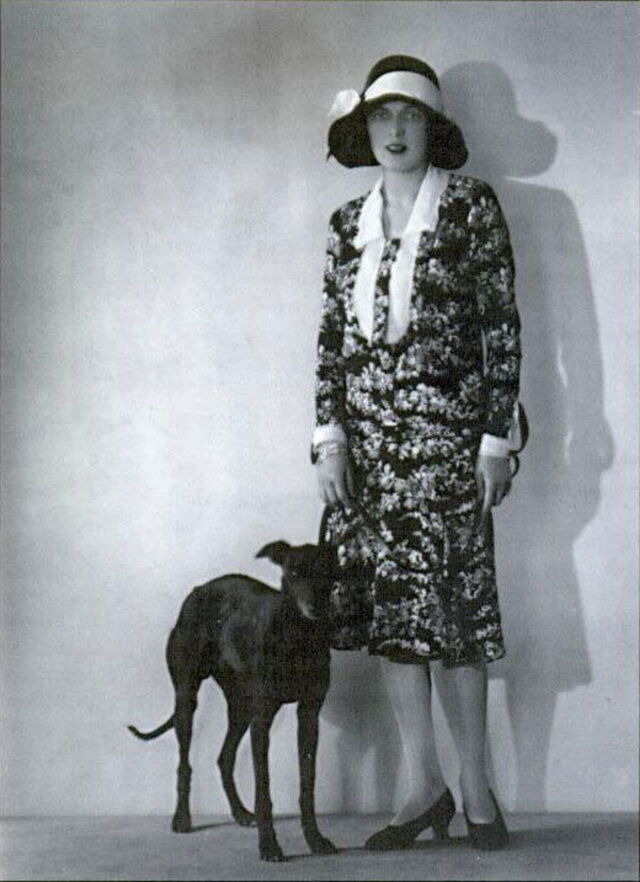
There are further frescoes artworks dating to the 18th century on the walls of the Great Hall but these works are somewhat eclipsed today by a sculptural group called the “Realm of the Mothers” by the Italian-Argentinean artist Marcos Cei at the centre of the room, which features a large group of dramatic mythological, allegorical, and human figures and symbolises the suffering of immigrants. In fact, it is hard to keep your head straight inside the castle as the ancient architectural and decorative elements are so rich and elaborate but are now also accented by a fascinating and diverse 20th century art collection left behind by the last resident of the castle, Caresse Crosby.
Crosby was the daughter of a prominent, though not spectacularly wealthy, New England family and was the first to patent a design for a modern bra in 1914, having grown tired of whalebone corsets at 21 years of age. She quickly grew bored of the company that produced the garment, however, and sold it for a pittance before it went on to make millions. This unconventional attitude was to continue throughout her life and she became a famous patron of the arts, was part of rather illustrious and famous artistic circles, was a poet and author in her own right, and, along with Harry Crosby, her wealthy second husband, she founded a publishing company, Black Sun Press. This company printed the early works of D H Lawrence, Ernest Hemingway, James Joyce, Henry Miller, Henry James, Archibald MacLeish, Anaïs Nin, Charles Bukowski, and Ezra Pound.
Crosby was the daughter of a prominent, though not spectacularly wealthy, New England family and was the first to patent a design for a modern bra in 1914, having grown tired of whalebone corsets at 21 years of age. She quickly grew bored of the company that produced the garment, however, and sold it for a pittance before it went on to make millions. This unconventional attitude was to continue throughout her life and she became a famous patron of the arts, was part of rather illustrious and famous artistic circles, was a poet and author in her own right, and, along with Harry Crosby, her wealthy second husband, she founded a publishing company, Black Sun Press. This company printed the early works of D H Lawrence, Ernest Hemingway, James Joyce, Henry Miller, Henry James, Archibald MacLeish, Anaïs Nin, Charles Bukowski, and Ezra Pound.
After her husband’s shocking death – he and his mistress committed suicide – Crosby bought Rocca Sinibalda in the 1950s and went on to establish an artist’s colony for American expatriates, as well as hosting the likes of Dali, the Beat poets, and her friend, and the famous socialite, Peggy Guggenheim. Upon her death in Rome in 1970 at the age of 78, she was remembered by Time magazine as the “literary godmother of the Lost Generation” of American expatriate writers. In her day, however, she was wild and free and was said to have competed with Guggenheim in satisfying their voracious appetites and bedding men. Crosby’s time in the castle not only added to its beauty and interest with her rich and fascinating art collection, it also added to the incredible and scandalously titillating tapestry of the history of the building.
Under Claudio Silvestrin, an architect based in London, award-winning restorations were undertaken in recent years to bring the castle back to its former glory after its decades of abandonment upon Crosby’s death. It is now a space for hosting exhibitions, plays, theatre workshops, and private functions and can be toured on Saturdays at 4pm and Sundays at 11am or at other specified times upon application (and for groups of 15 or more). Come and learn all about the events that have happened inside these walls and observe the incredible art collection, which is a fascinating mix of classic landscape painting, contemporary installations, and a large section of ritual masks of Native American peoples of the Pacific coast of the USA and Canada. Continuing the spirit of Crosby, the castle also remains a centre for experimental art and hosts seminars, residential programmes, and artists’ retreats to this day. This is where the castle’s third name the Castle of Invented Destinies, was born as it plays host to a biennial festival of the arts, which sees groups of young international artists of various disciplines to come and create for shorts stays in the castle, inventing their own identities.
So, if you have found a vacation rental in Rome or holiday rental in Latium and are exploring the area, looking for something steeped in history and art but well off the beaten tourist path, look no further than Rocca Sinibalda.
So, if you have found a vacation rental in Rome or holiday rental in Latium and are exploring the area, looking for something steeped in history and art but well off the beaten tourist path, look no further than Rocca Sinibalda.
Photo credits
Picture 1: Alessandro / CC BY 2.0
Picture 1: Alessandro / CC BY 2.0