Catania
Posted in: Architectural Gems Beaches Food and Wine Main Islands Museums & Galleries Must See Attractions Sicily and Sardinia Top 10 Lists Tourist Attractions Travel Tips
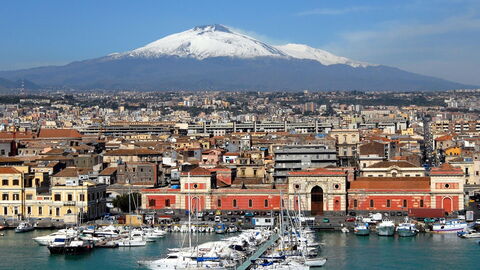
Catania is Sicily’s second city and a rather special gem in Italy. Overlooked by Mount Etna (and by a lot of travellers, unfortunately), it is a picturesque cityscape that is a little rough around the edges but in the most rugged and charming of ways. It is filled with architectural beauties, cultural and historical riches, Baroque piazzas, grandeur that is crumbling just a little, famously vibrant markets full of famously delicious food, hip bars, excellent museums, abundant energy, bargains, and surprises. If you have found a vacation rental in Sicily and you are exploring the wider island, it is a must-see. Or, if you are looking for a holiday destination within Sicily, Catania, which is often overlooked in favour of the capital of Palermo, is a wonderful and unexpected delight. Browse our vacation rentals in Catania here.

There is lots of see and do in the city and lots of unique charms to be uncovered so, if you’re heading to Catania, keep an eye out for these highlights…
Frutta Martorana
Posted in: Food Food and Wine Main Islands Products & Specialities Sicily and Sardinia
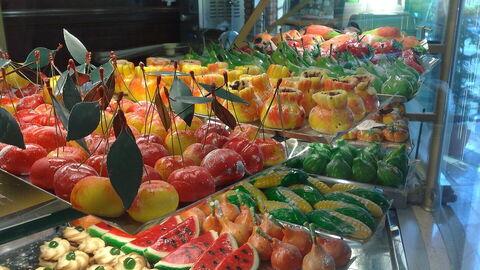
One of the best things about going on holidays is that we are able to step away from daily life, routines, chores, expectations, limitations, and dietary control, and to freely enjoy the finer things without concern. A glass of wine with lunch, dessert after most meals, snacks, bigger portions…all that good stuff! If you have found a luxury villa in Sicily, in particular, you will find that lots of delicious treats await for you to indulge as you spend time on this beautiful Italian island. However, if you really want to go all out with a sense of luxury and excess for your Sicilian getaway, then you need to make sure to get your hands on some frutta martorana to enjoy as you lounge around in Italy.
Posted in: Books and Movies Curiosities Food and Wine Main Islands Must See Attractions Restaurants & Cafés Sicily and Sardinia
One of the most enduringly famous portrayals of Sicily that has ever graced the silver screen has to be Francis Ford Coppola’s 1972 masterpiece, “The Godfather”, starring Marlon Brando and Al Pacino. This iconic movie is set in 1940s and 1950s Sicily and New York and tells the story of the Corleone family, characters from Mario Puzo’s novel, “The Godfather.” Many tourists have gone in search of filming locations from the movie throughout the years since its release. Many head to Corleone, the town that shares its name with Don Vito Corleone, but it was not actually where the film was shot as when they began making the movie in the 1970s, it had changed drastically in the time since Puzo wrote his novel. Modernised and greatly expanded, it no longer resembled the rural place from the books. However, never fear, if you have found a vacation rental in Sicily and are a fan of the movie, there are plenty of filming sites to visit as the villages of Motta Camastra, Forza d’Agro, and Savoca were all featured in, “The Godfather”.
Bottarga
Posted in: Calabria Curiosities Food and Wine Main Islands Sicily and Sardinia Southern Italy
Italy is home to lots of unique culinary delicacies and specialities. Many are familiar to most people around the world and are readily available abroad but there are some that are somewhat lesser-known gems yet to be discovered by a wider international audience. One such item is bottarga, known as “Mediterranean caviar,” or as the “truffle of the sea”, which is made of salted, cured fish roe, typically of the grey mullet or the bluefin tuna. While similar products are actually made in Japan, Korea, and Egypt, the Italian iteration, with which we are concerned today comes from Sardinia but is also made in Sicily and Calabria. It is rather expensive and harder to source abroad so it is best to try as a treat during your travels if you have found a vacation rental in Sardinia, a holiday rental in Sicily, or a rental in Calabria.
Posted in: Architectural Gems Main Islands Must See Attractions Sicily and Sardinia Tourist Attractions
We have previously noted the influence that the Normans and Arab rulers had on Sicily during periods of rule in the Middle Ages, with the Islamic Conquest of 827-1091AD and the Norman era of 1071-1194AD, and how the two cultures remain visible in many places throughout the island. This leftover of the Middle Ages is particularly evident in the city of Palermo, which is a melting pot of Italian, Norman and Middle Eastern cultures and influences, and especially in her architecture. Norman buildings are dotted throughout the island of Sicily – Castelvetrano’s 12 century church of SS. Trinità di Delia, Cefalù’s Cathedral, Monreale’s Cathedral and cloister, and the church of SS. Pietro e Paolo a few kilometres outside of Forza d'Agrò, to name a few – but there are multiple buildings Arab-Norman buildings in Palermo including the Sala di Ruggero in the Royal Palace and the churches of Santo Spirito and San Giovanni degli Eremiti. One of the places and buildings that is most famous, beautiful, and clearly influenced by the wonderful marriage of these two cultures, however, is the stunning Cappella Palatina. The open exchange of Western and Middle Eastern cultures is at its peak here and it is a must-see if you have found a vacation rental in Palermo.

Located on the second floor of the Palazzo dei Normanni (Palace of the Normans), the Cappella Palatina is part of the architectural complex of the Norman Palace and was built as the royal chapel of the Norman kings of Sicily in 1140 for Ruggero II of Sicily. Bringing together the best artisans, materials, techniques, and motifs from all across the extended Norman world, it is an incredible jewellery box of a building. On the plan of a traditional Roman basilica, the chapel has three naves and carries a vaulted wooden roof on rows of granite columns with Cipolin Corinthian capitals bearing Islamic ogive arches. Said roof is covered in elaborate muqarnas, incredible traditional Islamic geometric designs. The walls of the church, however, are the true star of the show, covered in breath-taking Byzantine mosaics that are picked out in gold and vibrant colours.