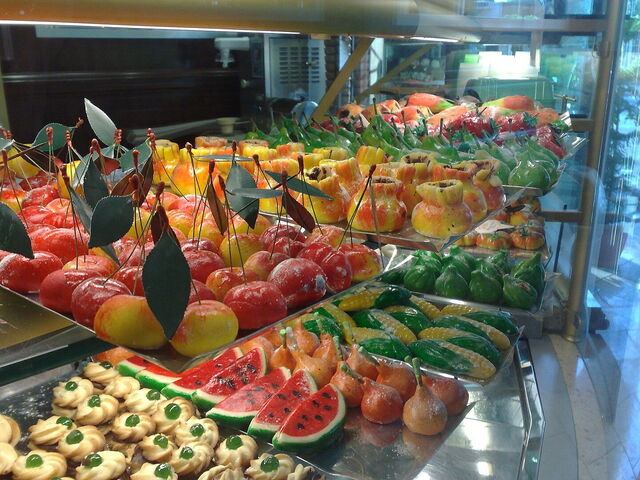
One of the best things about going on holidays is that we are able to step away from daily life, routines, chores, expectations, limitations, and dietary control, and to freely enjoy the finer things without concern. A glass of wine with lunch, dessert after most meals, snacks, bigger portions…all that good stuff! If you have found a luxury villa in Sicily, in particular, you will find that lots of delicious treats await for you to indulge as you spend time on this beautiful Italian island. However, if you really want to go all out with a sense of luxury and excess for your Sicilian getaway, then you need to make sure to get your hands on some frutta martorana to enjoy as you lounge around in Italy.
Frutta Martorana are incredible marzipan sweets made to look like perfect reproductions of tiny fruits and vegetables that are more like tiny sculptures and can be found in pasty-shops all over Sicily throughout the year, but particularly during the Festival of the Dead, on November 2nd. Displayed in wicker baskets or wooden boxes, they are a local tradition but, sadly, one that is dying out. The artful creations, made with painstaking care by confectioners, take around an hour per piece to make, painted layer by layer and including small blemishes and imperfections to perfectly imitate the real thing. Smaller, mass-produced versions are now more common but you can still sometimes find the real thing. If you do, snap it up as frutta martorana are rare gems today and true works of art.
Invented at some point in the 12th century by the nuns of La Martorana, a church in Palermo, they are said to have been created to hang from empty trees to impress a visiting archbishop. They did the job so well that the fruits became a fixture of the parish and something they began selling to parishioners. Eventually, they spread across the island and became commonplace among the Sicily’s bakeries. As noted, the real deal is less easily acquired today but you can still spot the mass-produced versions in every bakery in Sicily.
Invented at some point in the 12th century by the nuns of La Martorana, a church in Palermo, they are said to have been created to hang from empty trees to impress a visiting archbishop. They did the job so well that the fruits became a fixture of the parish and something they began selling to parishioners. Eventually, they spread across the island and became commonplace among the Sicily’s bakeries. As noted, the real deal is less easily acquired today but you can still spot the mass-produced versions in every bakery in Sicily.