Palazzo Dei Priori
Posted in: Architectural Gems Castles & Palaces Central Italy History Renaissance Tourist Attractions Umbria
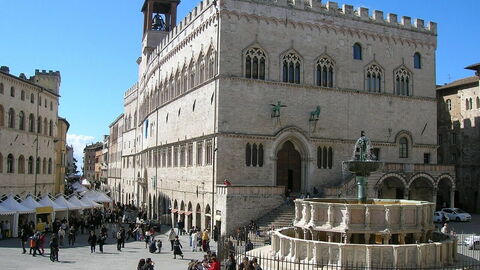
The Palazzo dei Priori in Perugia is one of the finest and most striking buildings in the city.

It is also home to the National Galley of Umbria and is, therefore, one of the must-see attractions if you have found a holiday rental in Perugia and are spending time in this charming city.

Between trying the excellent local chocolate, visiting the stunning churches and wandering the Old Town, be sure to stop by this architectural gem stuffed to the gills with the most important local artistic treasures of times gone by.

Built between the 13th and the 15th centuries, the Palazzo dei Priori is a distinctively austere building. A large rectangular block of pale stone, it has minimal decorative elements with large expanses of unembellished masonry.
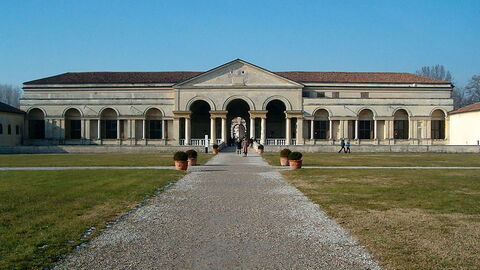
Palazzo del Te, Facade
Posted in: Castles & Palaces History Lombardy Northwest Italy Renaissance Tourist Attractions
Palazzo del Te is a 16th century villa in Mantua though the title of “palace” does seem more accurate as it is unbelievably grand and combines aspects of palace and villa architecture and function. It has also been called the “greatest of all Mannerist villas”. This astounding building was designed by Giulio Romano, the most gifted of Raphael's students, for Federigo Gonzaga, Duke of Mantua, son of the famous Isabella d'Este and famous in his own right as one of the most cultured and learned off all Renaissance patrons of the arts. A villa suburbana, it was built in the countryside close to the city to take advantage of the fresh air and more rural pursuits without having to venture too far away. Why not find a holiday rental in Lombardy and pay a visit to Mantua and the villa for yourself?
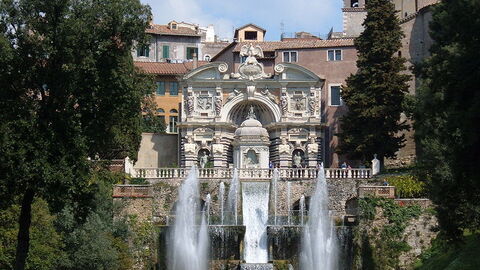
Front of Villa d'Este
Posted in: Central Italy History Latium Parks & Gardens Renaissance Tourist Attractions Unesco World Heritage Sites Villas and Farmhouses
The magnificent Villa d’Este in Tivoli, near Rome was awarded as a UNESCO World Heritage Site because it is the perfect example of well-preserved Renaissance architecture and an Italian style Renaissance garden.

It illustrates the glory of the Renaissance culture to the highest degree and its garden became an early reference point in the classic design of noble European gardens.

Stay at a perfect villa rental in Guidonia Montecelio,only a few kilometres away from Tivoli for a splendid few days!
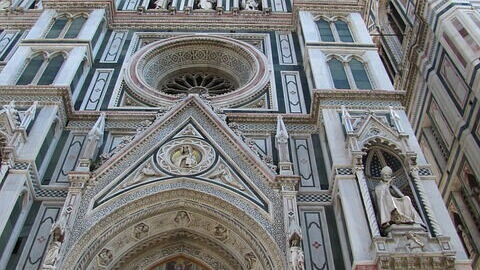
front of florence cathedral
Posted in: History Renaissance
The Renaissance was a term coined to describe the era between the 14th and 17th centuries that originated in Tuscany, Italy. It was a time of great learning and creativity in the arts, literature and sciences among those who pursued the ideals of Humanism.

Renaissance humanism was a new method of scholarship developed by a learned scholar called Francesco Petrarch. It viewed humans as intelligent and rational beings who had the ultimate power in creating a life of knowledge and possibility for themselves.

Why not stay in a beautiful villa near Florence or a cosy apartment in Rome city where you can easily explore the treasures left behind from this magically artistic era.

It valued human as inherently good creatures in complete opposition of the church’s portrayed view of man as a sinner needing the mercy of an invisible deity to determine their destiny.
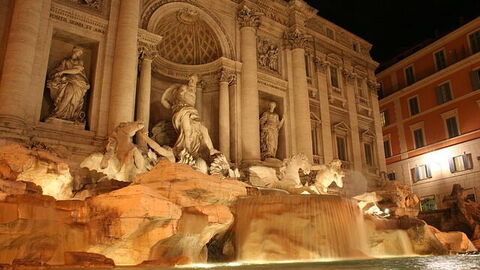
The Trevi fountain in Rome
Posted in: History Renaissance
The rebirth of Rome’s status in the Renaissance was a spectacular affair. At the start of the 15th century, Rome was a shadow of its former self when it was once the headquarters of the mighty Roman Empire. It had a population of approximately one million around the first century which diminished to around 25,000 at the start of the 15th century.

Why not stay in a stylish apartment in Rome city where you can walk around the splendid building inspired by the lavish style of Renaissance architecture?

No longer an urban centre of strong commerce or influence, Rome was left to disintegrate further when the Catholic papacy that had been a major advocate of the cities riches, moved to Avignon in France during the 14th century, leaving behind a decaying urban mess.