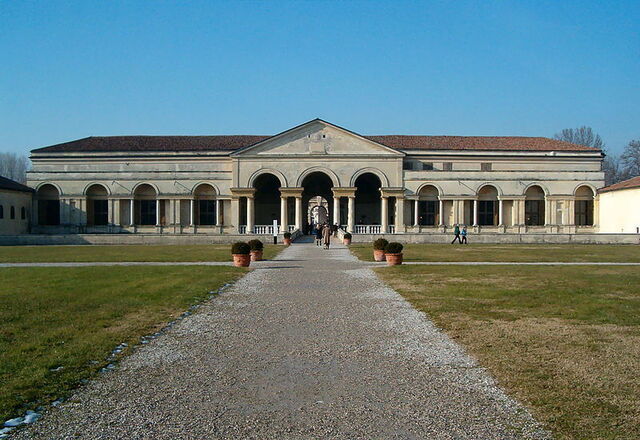
Palazzo del Te is a 16th century villa in Mantua though the title of “palace” does seem more accurate as it is unbelievably grand and combines aspects of palace and villa architecture and function. It has also been called the “greatest of all Mannerist villas”. This astounding building was designed by Giulio Romano, the most gifted of Raphael's students, for Federigo Gonzaga, Duke of Mantua, son of the famous Isabella d'Este and famous in his own right as one of the most cultured and learned off all Renaissance patrons of the arts. A villa suburbana, it was built in the countryside close to the city to take advantage of the fresh air and more rural pursuits without having to venture too far away. Why not find a holiday rental in Lombardy and pay a visit to Mantua and the villa for yourself?
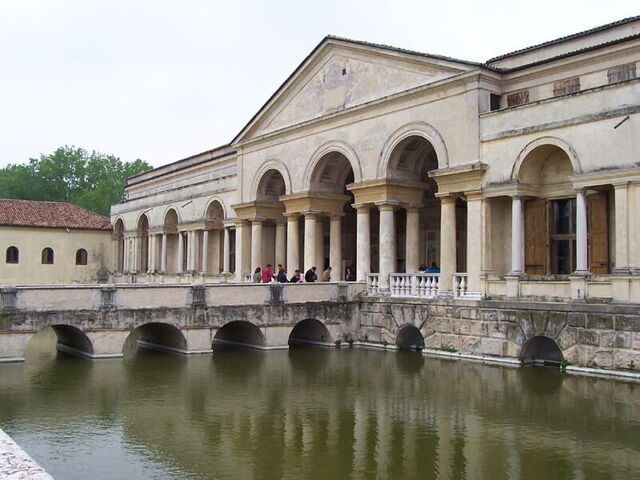
Located just outside the gates of Mantua on the island of Te, the villa was a large stud farm belonging to the marchesi of Gonzaga which was converted into a palazzo-like villa as a place for pleasure and courtly entertainments and a display of a ruler's status. Federico has spent time at the court of Julius II in Rome and became familiar with the art of the High Renaissance and the Roman culture of villas. Later, he spent time in France and in their castles. These influences became infused with Romano's plan for an ideal single storey Roman house with a vestibule and a large atrium to create a striking and highly influential structure that would be often quoted throughout history.
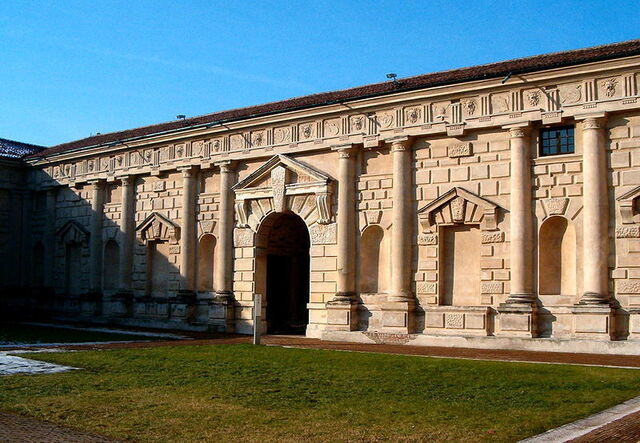
The endeavour of creating the villa was no small feat and, in order to kit out and decorate the vast space of the building, Romano created a workshop of artists to help complete the work. He then carefully oversaw the work, ensuring that a uniform stylistic tone was maintained. The artists working at the villa were instructed to dutifully copy Romano's designs and ignore their own artistic impulses. This has made it difficult to distinguish one hand from another, despite the fact that artists who would later become well-known such as Bolognese sculptor Francesco Primaticcio, worked there. The frescoes of the villa are one of its most characteristic features and one of the things that have lead to its great fame. They are expressed as an elaborate scheme throughout the entirety of the building with each room organised on a theme such as the Sala dei Cavalli, with life-size portraits of Federico's horses, and Sala dei Giganti, with images of the giants trying to storm Olympus and being pushed back by the gods.
Part of the palace is now a museum and the building is open to visitors to admire its grandeur and great beauty. Not to be missed while you're in Lombardy.
Part of the palace is now a museum and the building is open to visitors to admire its grandeur and great beauty. Not to be missed while you're in Lombardy.
Photo credits
Picture 1: Marcok / CC BY-SA 3.0;
Picture 2: MarkusMark / CC BY-SA 3.0;
Picture 3: Marcok / CC BY-SA 3.0
Picture 1: Marcok / CC BY-SA 3.0;
Picture 2: MarkusMark / CC BY-SA 3.0;
Picture 3: Marcok / CC BY-SA 3.0