Catania
Posted in: Architectural Gems Beaches Food and Wine Main Islands Museums & Galleries Must See Attractions Sicily and Sardinia Top 10 Lists Tourist Attractions Travel Tips
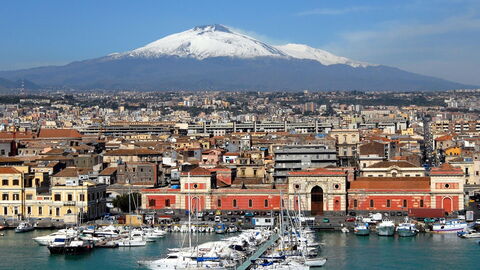
Catania is Sicily’s second city and a rather special gem in Italy. Overlooked by Mount Etna (and by a lot of travellers, unfortunately), it is a picturesque cityscape that is a little rough around the edges but in the most rugged and charming of ways. It is filled with architectural beauties, cultural and historical riches, Baroque piazzas, grandeur that is crumbling just a little, famously vibrant markets full of famously delicious food, hip bars, excellent museums, abundant energy, bargains, and surprises. If you have found a vacation rental in Sicily and you are exploring the wider island, it is a must-see. Or, if you are looking for a holiday destination within Sicily, Catania, which is often overlooked in favour of the capital of Palermo, is a wonderful and unexpected delight. Browse our vacation rentals in Catania here.

There is lots of see and do in the city and lots of unique charms to be uncovered so, if you’re heading to Catania, keep an eye out for these highlights…
Frutta Martorana
Posted in: Food Food and Wine Main Islands Products & Specialities Sicily and Sardinia
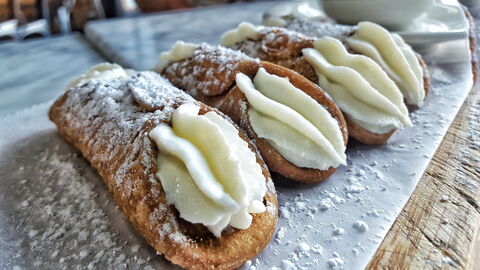
One of the best things about going on holidays is that we are able to step away from daily life, routines, chores, expectations, limitations, and dietary control, and to freely enjoy the finer things without concern. A glass of wine with lunch, dessert after most meals, snacks, bigger portions…all that good stuff! If you have found a luxury villa in Sicily, in particular, you will find that lots of delicious treats await for you to indulge as you spend time on this beautiful Italian island. However, if you really want to go all out with a sense of luxury and excess for your Sicilian getaway, then you need to make sure to get your hands on some frutta martorana to enjoy as you lounge around in Italy.
Posted in: Books and Movies Curiosities Food and Wine Main Islands Must See Attractions Restaurants & Cafés Sicily and Sardinia
One of the most enduringly famous portrayals of Sicily that has ever graced the silver screen has to be Francis Ford Coppola’s 1972 masterpiece, “The Godfather”, starring Marlon Brando and Al Pacino. This iconic movie is set in 1940s and 1950s Sicily and New York and tells the story of the Corleone family, characters from Mario Puzo’s novel, “The Godfather.” Many tourists have gone in search of filming locations from the movie throughout the years since its release. Many head to Corleone, the town that shares its name with Don Vito Corleone, but it was not actually where the film was shot as when they began making the movie in the 1970s, it had changed drastically in the time since Puzo wrote his novel. Modernised and greatly expanded, it no longer resembled the rural place from the books. However, never fear, if you have found a vacation rental in Sicily and are a fan of the movie, there are plenty of filming sites to visit as the villages of Motta Camastra, Forza d’Agro, and Savoca were all featured in, “The Godfather”.
Posted in: Curiosities Emilia-Romagna Food Food and Wine Northeast Italy Products & Specialities Tourist Attractions Water & Amusement Parks
If you have found a vacation rental in Emilia-Romagna and you are a foodie, you’re in luck as there are lots of delicious local treats, eateries, products, and more to get acquainted with over the course of your stay in the area. However, if you are seriously into food and you are looking for a rather unique foodie experience in Italy then you might want to head 20 minutes out of Bologna to FICO Eataly World, a food theme park located just outside of town on a 20-acre plot that was previously home to a fruit and vegetables market.

None of this, however, has to be simply passive. This is a theme park and there are various “rides” involved. Attend one of the 30 events or 50 classes per day that are held in various classrooms, theatres and learning facilities dotted around the park, ride around on three-wheeler bikes specially designed for the park by the Italian bicycle company Bianchi to explore the grounds, meet and pet the animals in their pens, take the mini train around, watch dogs go truffle hunting, go on a guided tour with one of the park’s “biodiversity ambassadors”, sample products, and much more besides. There is lots to do!
Vineyard at the base of Vesuvius
Posted in: Activities Campania Food and Wine Products & Specialities Southern Italy Tours Wineries & Breweries
When you think of Mount Vesuvius, it is probably images of the destruction of the ancient city of Pompeii or of legions of tourists going to observe the famous volcano for themselves. You are less likely to immediately picture wine and, yet, that is one of the things you are very likely to encounter as, at the base of the volcano, there are famous vineyards, that stretch part-way up the slopes and produce wines that have been consumed since the fifth century BC. So, if you’re interested in wine, the history of wine, and unique wines, in particular, then you need to make sure you experience this rather special variety when you plan your vacation in Campania.

Lacryma Christi, also known as Lachryma Christi of Vesuvius, is the name of this celebrated Neapolitan type of wine made on the slopes of Mount Vesuvius. Literally meaning, "tears of Christ," the wine type dates back to even before the time of Jesus, to the fifth century BC, when Greek settlers first came to the area and planted Italy’s very first vineyards, as noted by Aristotle who recorded that the ancient people of Thessaly in Magna Grecia planted the first vineyards on Mount Vesuvius' slopes. After the Greeks came the Romans, who named the area, “Campania Felix,” (or “fertile countryside,” from which the region’s modern-day name of Campania derives) and spread the legend that Bacchus wept tears of joy upon seeing such a beautiful land, which caused vines to flourish in the landscape. Roman poet Martial wrote, "Bacchus loved these hills more than his native hills of Nisa". As is often the case, this story was later Christianised and medieval wine-making monks swapped out Bacchus for Christ and motivated his fertile tears with a tale of the sorrow the Son of God felt over Lucifer's fall from heaven. Lucifer was also said to have taken a little piece of heaven with him when he fell, further imbuing magic and blessings into the soils of the area.