Lit up Castel Sant' Angelo
Posted in: Castles & Palaces Central Italy Latium Tourist Attractions
In the capital city of Rome there is the majestic Castel Sant’ Angelo, also known as the Mausoleum of Hadrian. This huge cylindrical fortress is located in Parco Adriano and was built by order of the Roman emperor Hadrian as an elaborate family tomb for him and his descendants to be interred.

In later years it came under the ownership of Vatican City and was used as a residence and hideaway of popes.Stay in beautiful holiday rental in Rome where you can spend a few days exploring all the treasures this city has within its hold.
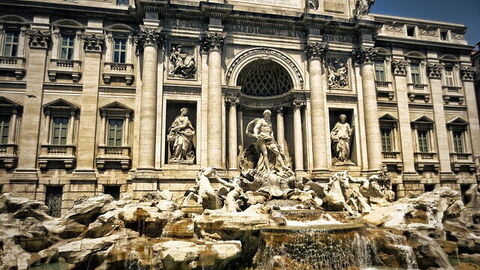
View of Trevi fountain
Posted in: Central Italy Latium Must See Attractions Tourist Attractions
In 1732 Pope Clement XII awarded the celebrated sculptor Nicola Salvi the commission to create an elaborate fountain in the Trevi district of Rome city. The task was so huge that it had to be completed by another architect called Pietro Bracci.

The Trevi fountain is situated in front of the beautiful Palazzo Poli and the water which supplies it comes from an ancient Roman aqueduct called the ‘Acqua Virgine’.

Stay in a wonderful holiday rental in Rome where you can easily travel around all the treasure this capital city has to offer!
Painting of Pluto
Posted in: Central Italy History Latium Roman Empire
Continuing on from our introductory article on the gods of ancient Rome, here are some more familiar faces that you may already know a little about!

Pluto was god of the underworld and another brother of Jupiter’s. He was a gloomy fellow, jealous of his siblings who had a better life of it high up in the clouds!

Mars was a son of Jupiter and god of war. He wasn’t that popular with the other gods as he was extremely vain and quite cruel. The only other deity that liked him was Venus, goddess wife of Vulcan.
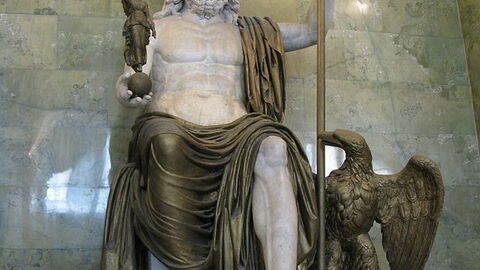
Jupiter statue
Posted in: Central Italy History Latium Roman Empire Tourist Attractions
The civilisation of ancient Rome was a major believer in higher powers. They had gods and goddesses for almost anything imaginable! There were gods of war, sea, love, and wisdom for example and each one would be specifically prayed to for a corresponding crisis or wish in that area.

There were hundreds of Roman gods, many of which transcended into being through influences of Greek and Latin civilisations. In many cases, each of these cultures had equivalent gods for different purposes.

For example the Greek god, Zeus was the god of gods and was the equivalent of the Roman god Jupiter. Hades was the Greek ruler of the underworld, very similar to Pluto the Roman version.
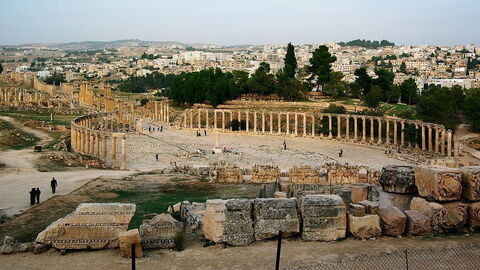
Roman Forum built during the reign of the empire
Posted in: Central Italy History Latium Roman Empire
The origins of what went on to become one of the largest and most powerful empires in the ancient world began on the peninsula of Italy around the 8th century BC near the site where Rome city now stands.

Through its 1200 years of existence the ancient Roman civilisation went through stages of monarchy, classical republic before transforming into the formidable empire that expanded across much of Europe and around the Mediterranean.