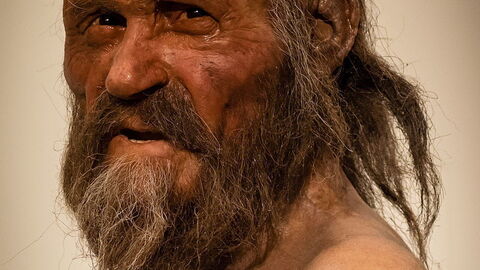
Imagining of how Otzi looked in life
Posted in: Curiosities History Museums & Galleries Northeast Italy Tourist Attractions Trentino-Alto Adige
We’ve already written two posts on the story of the Bolzano Iceman and the museum that houses him. However, there is still one important topic which remains to be discussed – his curse. Another part of the story which enriches it further and makes it all the more fascinating, it’s another reason why you should consider finding a holiday rental in Trentino Alto Adige and visiting the Iceman in Bolzano. Whether you believe in such things or not, the stories which follow certainly are rather creepy and do make you wonder just what is happening to make tragedy follow the mummy so very closely.

Claims have long been made that Otzi is cursed. Such things often surround mummies as evidenced by the "Curse of the pharaohs" and the media theme of cursed mummies. This allegation has been encouraged by the deaths of several people connected to the discovery, recovery and subsequent examination of Otzi. It is said that they have all died under mysterious circumstances.

To date there have been nine deaths, four of which were the result of some violence in the form of accidents, which have been attributed to the alleged curse. However, of the hundreds of people who have been involved with the Iceman, this seems a rather small number, in reality. The fact that such a small percentage of them have died over the years has not been shown to be statistically significant.


It all began in 1992 with the death of Dr. Rainer Henn, aged 64, who was the head of the forensic team that examined the body. He died in a crash on his way to give a talk about Otzi. Next was mountaineer Kurt Fritz, who led Dr. Henn and the others to the iceman's body and later gave tours to the site. He later died in an avalanche. Austrian journalist Rainer Hoelzl, who exclusively covered the removal of the body as part of a one-hour documentary, developed a mystery illness a few months after the programme was shown and died. While German tourist Helmut Simon, who found the body, died in a blizzard when he fell into a deep ravine.

The fifth attributed victim, Dieter Warnecke, seems a bit of a stretch, however. He was the head of the mountain rescue team that searched for Helmut Simon and died of a heart attack less than an hour after Simon was buried. This seems unfortunate but hardly a bizarre twist of events that could be ascribed to a curse. As is the case with the 6th victim, archaeologist Konrad Spindler, who died in 2005 of a pre-existing chronic condition. However, what is unfortunate is that he was the curse’s greatest skeptic and was quoted as saying, “I think it's a load of rubbish. It is all media hype. The next thing you will be saying I will be next.”

The other “victims” include 63-year old Dr Tom Loy who died prior to finishing a book on Otzi, Innsbruck professor Friedrich Tiefenbrunner who died during open-heart surgery and was part of Spindler's team and Tom Loy, who had analysed DNA found on Otzi, died in unclear circumstances. Even if you, like us, are prone to brushing off the notion of this curse, you’ve got to admit that it’s a little creepy. Yet, it does make a visit to the Ötzi Museum and Trentino Alto Adige all the more interesting!
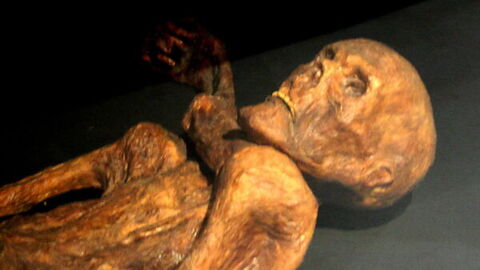
A reconstruction of Otzi/ The Bolzano Iceman
Posted in: Curiosities History Museums & Galleries Must See Attractions Northeast Italy Tourist Attractions Trentino-Alto Adige
If you’ve found a holiday rental in Trentino Alto Adige and are planning on visiting the city of Bolzano, there’s a very famous gentleman who lives there that you should make sure to pencil in some time to visit. He's over 5,000 years old and has been the talk of the past years not only in Bolzano, but all over the world. His name is Ötzi the Iceman and he’s a mummy. In fact, he’s probably the only mummy in the whole world to have an entire museum dedicated just to him. The Ötzi Museum in Bolzano has been home to the Iceman, the oldest human mummy on earth, since 1998 and every year thousands of visitors come just to see him.

Over 5,000 years ago, a man climbed to the icy heights of the Schnalstal glacier and died there. In 1991 he was found, along with his clothes and other gear, mummified and frozen, by two German tourists, Helmut and Erika Simon. The body was at first thought to be a modern corpse, like several others which had been recently found in the region. It was quickly and hastily retrieved by the Austrian authorities and taken to Innsbruck before true age was finally discovered. Subsequent surveys showed that the body had been located a few meters inside Italian territory and it is now on display at the South Tyrol Museum of Archaeology in Bolzano.


He is Europe's oldest known natural human mummy, and has offered an unprecedented view of Chalcolithic Europeans. The body has been extensively examined, measured, x-rayed, and dated. Tissues and gut contents were examined microscopically, as was the pollen found on his gear. All of this tells us that at the time of his death, Ötzi was a 30-to-45-year old man, approximately 160cm tall and 50kg in weight. More recently, a DNA study conducted by Walther Parson of Innsbruck Medical University revealed Ötzi has 19 living genetic relatives. Research is also on-going with more discovered about Ötzi and more learned from him each year.

In addition to housing the remains of the Iceman, the Archaeology Museum also documents the pre-history and early history of the surrounding area from the end of the last Ice Age to the time of Charlemagne. It uses models, reconstructions, stereoscopic images, videos and interactive multimedia stations to provide an interesting, engaging and informative experience. However, the star of the show is still Ötzi himself who continues to fascinate people and draw them back to Trentino Alto Adige.
MAMbo
Posted in: Emilia-Romagna Museums & Galleries Northeast Italy Tourist Attractions
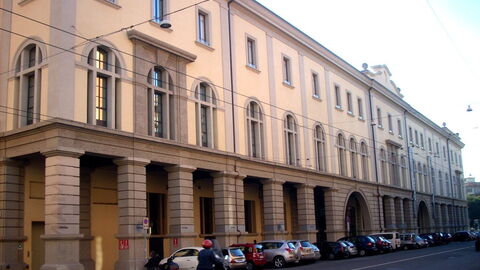
MAMbo, or the Bologna Modern Art Museum, is the leading space for the exhibition of Modern Art in Bologna and one of the leading institutions in Italy. It is 9,500m² of space in the city which is entirely devoted to visual culture and experimentation. The building itself is a former bakery on Don Minzoni Street where creativity is now born and nourished, instead of edible treats. Still, it is a site that delights the senses and engages the viewers to react, comment, learn and contribute. The permanent collection is made up of Italian art from World War II to the present day and there are also regular exhibitions of visiting collections and artists. For serious fans of modern art, this is not only a must-see while in Bologna but, also, while in Italy. Just find a holiday rental in Emilia-Romagna and spend a day exploring the city of Bologna and her extraordinary modern art museum.
National Gallery of Umbria
Posted in: Central Italy Museums & Galleries Tourist Attractions Umbria
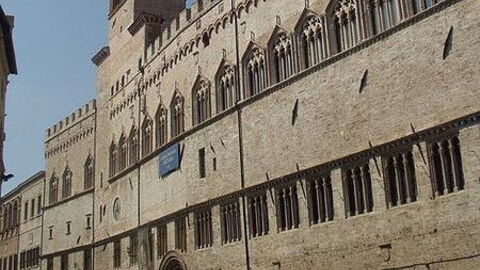
Perugia was an important production centre for art in the Renaissance and from which many great masters emerged. It continues to be a city that values art to this day and is even home to one of the best art galleries in the country, though it might be less well-known than others in bigger cities such as Florence and Rome. Nonetheless, the National Gallery of Umbria in Perugia has one of the richest collections in Italy with many works of international renown. There is a large swathe of history represented by the collection and a wide range of types of works from paintings to fabrics which carefully captures the development of artistic practice in the surrounding area. Find a vacation rental in Perugia and you can spend a day taking in this absolutely world-class collection for yourself.
Priamar Fortress
Posted in: Castles & Palaces Liguria Museums & Galleries Northwest Italy Tourist Attractions
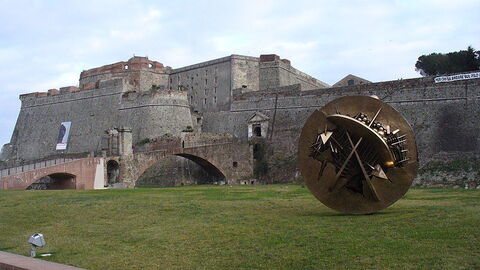
The Monumental Complex of Priamar (“stone by the sea”), which is often known simply as Priamar Fortress, is a sixteenth-century fortress which is located in the port town of Savona. It stands on the rock that hosted the first Savona settlement and the medieval core of the city. This monumental building has undergone many changes over the years and has been put to use for a variety of purposes. Today, it is an important museum and cultural centre in the city. Art lovers, history buffs, military enthusiasts, kids and architecture fans alike will all take something away from a visit to this attraction. Just find a vacation rental in the Riviera Ligure area and enjoy this stunning structure and the beautiful town in which it is located.