An extremely exciting exhibition is coming to Florence this Autumn.
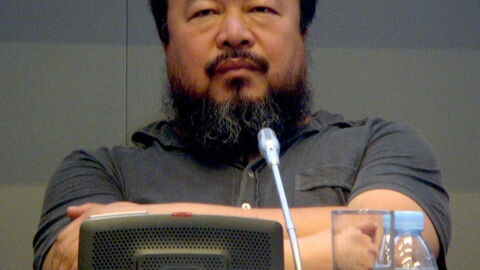
Birthplace of the Renaissance and home to endless museums and galleries, the city is one of the greatest places to see art and for art lovers to visit in the world and, now, one of the great pioneers of contemporary art and China's most famous living artist, Ai Weiwei, will be shown in the city.
A dissident artist with a leading voice, Ai Weiwei is known world-wide for his political activism, for questioning international issues and for his challenging on contemporary art practices.
The exhibition, “Ai Weiwei. Libero”, will be the first major retrospective dedicated to the artist in the country and the first to be exhibited across the entirety of the Palazzo Strozzi spaces.
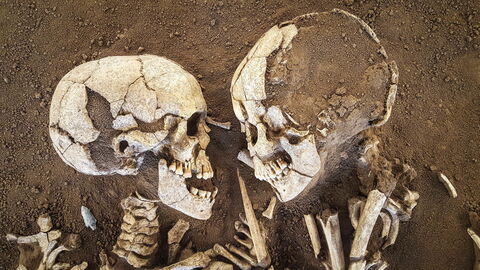
In February 2007 there was an archaeological discovery made in the village of Valdaro, just outside of Mantua, which quickly captured the attention and the imagination of scientists and romantics alike the world over. A pair of Neolithic corpses were found buried together, entangled and facing each other, prompting Shakespearean references aplenty. This was only heightened by the fact that the nearby Mantua was the site of Romeo's exile in that iconic blueprint for tales of romance and tragedy. Today, they still remain together, on display under one case. If you have a soft spot for romance be sure to find a holiday rental in Lombardy and stop by to pay the lovers a visit.
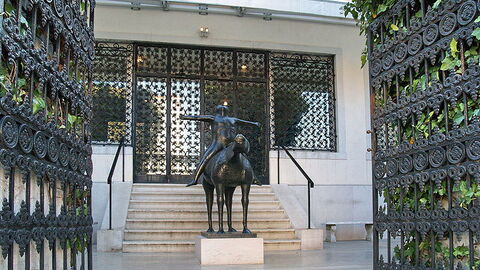
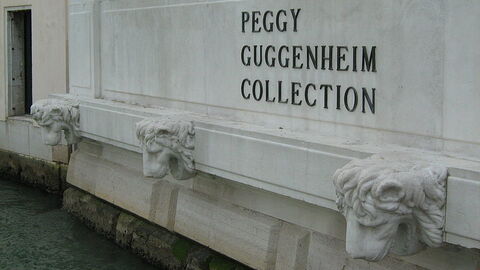
In the previous post, we discussed the fascinating character that was Peggy Guggenheim and mentioned how her career and collection began. Her collection went from a great support to contemporary artists of the 20th century, and a driving force to pushing forward the artistic scene of the time, and private thing of immense beauty and prestige to a leading museum in Venice. In her own lifetime, Guggenheim opened the collection to the public during summer months and, in her final years, donated it to the art foundation established by her uncle and backer of the Guggenheim in New York. It was then converted into a museum and is now open year-round to anyone visiting the beautiful city of Venice. Just find a vacation rental in Venice and you can explore this little artistic gem and all that is held within.
Peggy Guggenheim's life and career are key to the history of 20th century art and she dedicated half of her life to protecting the art of her time. Today, one of Venice's best museums bears her name. It is based on the collection she established and, eventually, began to open to the public seasonally. She was ahead of her time in her attitudes towards collecting art, and to life and left behind an extraordinary tale and a fantastic museum for Venice. The museum is, of course, a must for art-lovers visiting the city once they have found a holiday rental in Venice. However, it will also be of interest to those taken in by fascinating characters from history as Peggy was exactly that; fascinating.
Once you’ve found a vacation rental in Trentino Alto Adige and are planning on visiting the city of Bolzano, make sure to find time to see Ötzi, the 5,000-year-old Iceman and oldest human mummy on earth. Discovered by German tourists in a glacier in the area in 1991, it has been on display in a purpose-built museum since 1998. Ötzi has been the talk of the past years not only in Bolzano, but all over the world and he’s probably the only mummy in the whole world to have an entire museum dedicated just to him. Every year thousands of visitors come to Bolzano just to see him.
The body has been extensively examined, measured, x-rayed, and dated since it has been found and research into the body is on-going to this day. The Archaeology Museum of Bolzano houses the Iceman and also documents the pre-history and early history of the surrounding area from the end of the last Ice Age to the time of Charlemagne. It uses models, reconstructions, stereoscopic images, videos and interactive multimedia stations to provide an interesting, engaging and informative experience. Yet, its main purpose remains to be displaying, housing and researching Ötzi.
How the body is displayed and the museum organised has been very carefully planned. In awareness of fact that the discovery of the body was likely to trigger heated ethical discussions, the careful and restrained presentation of the Iceman was the first and foremost concern when the museum was established in 1998. The current exhibition, as it appears today, is actually the format created for the special 20th anniversary exhibition in 2011. This, however, went on to become the permanent method of display in 2013.
The area surrounding the mummy is stark, made up of white walls that evoke the snow-covered landscape in which it was discovered. Everything surrounding, from fonts to graphics to décor is muted and does not detract from the mummy or sensationalise it. The room is also actually partitioned, meaning those interested in the story but uncomfortable with viewing the body can still enjoy a visit to the museum. The mummy has been placed in a visually separated, tastefully designed room which is kept at a fixed temperature of -6ºC and nearly 100% relative air humidity - the same conditions found in a glacier. The accompanying finds are also kept in acclimatised, nitrogen-filled showcases at a temperature of 18ºC.
Tasteful, fascinating and engaging, this museum is a must for anyone visiting Trentino Alto Adige.
— Colette Fitzpatrick
Loading . . .
Attention
An error has occurred, please contact the Service Administrator.