Archive for 'Castles & Palaces'


Exterior
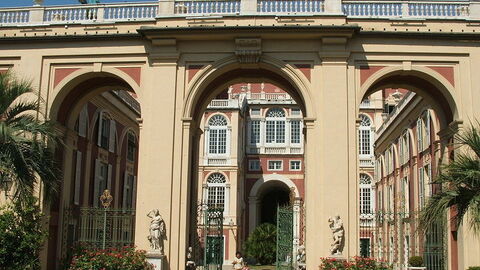
Liguria is home to the Italian Riviera, a stretch of the coast that boasts some of Italy's most beautiful beaches and, as a result, it is an especially popular holiday destination. However, in addition to having lots of options for days of fun and sun at the beach, a villa in Liguria also means enjoying incredible fresh seafood and plenty of delicious local specialties including mushroom pie and mussels stuffed with cheese and herbs; visits to exclusive holiday resorts such as the luxurious and star-studded Portofino; wonderful walks and hiking routes along the coast where you can enjoy the scent of the sea and endless lemon groves that permeates the air or in the Ligurian Alps where you'll take in some of the most extraordinary views in the world; wandering the picturesque towns of the famous Cinque Terre; trips to villages famous for witch trials, inspiring Monet, annual carnival celebrations, and more; and, of course, time exploring the stunning and elegant capital of the region, Genoa. Genoa is an incredibly beautiful gem with an old town full of pretty winding little streets among tall old buildings, palaces, museums, and architectural feats. Among all of the wonderful things to see and do in the city, however, if you have found a villa in Liguria and are spending the day in Genoa, then a visit to the Palazzo Reale is a must.     Read More


Palazzo Colonna
If you are a serious culture vulture who likes to admire the greatest works made by human hands, then one of your bucket list destinations has to be Rome. With a villa in Rome, you can discover the ancient ruins of the Colosseum, Michelangelo's painted glories on the ceiling of the Sistine Chapel, the unbelievable scale and architectural splendor of St Peter's, and much more besides. However, beyond the most famous attractions of the city, there is also an impossible wealth of other incredible attractions, buildings, works of art, examples of stunning city planning, gorgeous gardens, collections of incredible artefacts, and more to be explored. In fact, there is more to see in Rome than one could get to if they had full lifetimes to wander the beautiful streets and amazing attractions of the city. However, if you're looking for something that is a famous must-see but still slightly off the beaten track for many international tourists in Rome to pencil into your next vacation in Rome, then we suggest a visit to the glorious Palazzo Colonna.

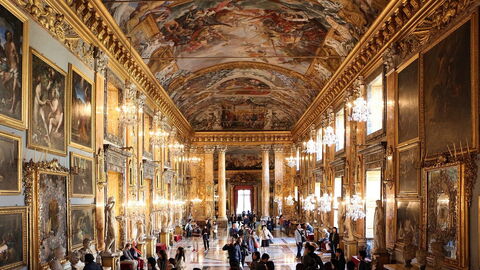
The Palazzo Colonna is a block of palatial buildings that is located in the centre of Rome, at the base of the Quirinal Hill and which is built on a site that has housed buildings and homes since before the year 1000AD, including an ancient Roman Serapeum, a 12th century castle, and palaces of twenty generations of the powerful and noble Colonna family of Rome. Today, the palace can be visited and explored and is home to the Colonna Gallery, an incredible museum of Baroque art in the surrounds of frescoed walls and ceilings, gilded corridors, and antique furnishings. The largest noble residence in Rome, this stunning palace is akin to any of the great palatial buildings of Europe and is home to works of art by some of the most famous names in the history of art, making it an absolute must-see if you were thinking about finding a villa in Rome and spending time in the city.     Read More


Ghost of a girl
This week, in preparation for the spooky season that is swiftly descending upon us, and as people consider planning last-minute mid-term break, half-term, or Hallowe’en getaways, we have been looking at some of the spookiest places, attractions, and destinations in Italy. If you wanted to pay a visit to Bologna, after you have found a vacation rental in Emilia Romagna, then you’re in luck as it is home to the Villa Malvasia, often known as the Villa Clara, which is said to be one of the most haunted places in Italy. Come take in the history, culture, and heritage of Bologna, and her creepier aspects on a once-in-a-lifetime spooky and seasonal trip to Italy!

Located on via Zanardi 449 the Villa Malvasia immediately stands out as a creepy and dilapidated shell of an abandoned and formerly beautiful mansion. Like a lot of castles and old mansions in Italy, it is steeped in local legends and, in this case, a rather disturbing one.

The villa is also known as Villa Clara due to one of the supposed former residents of the building, who is said to stay on as a ghost. Clara was said to have been the daughter or stepdaughter of an owner of the villa who was born with an especially strong gift of clairvoyance. Any dream or vision she had was more than sure to come true. Her father feared her gift and is said, in local mythology, to have locked her away and allowed her to die.     Read More


Italy is home to plenty of castles that have existed for hundreds of years and, as is often the case with things and places that have existed for hundreds of years and with castles, in particular, this means that there are also plenty of haunted castles throughout the country. Among them, one of the most famous is the castle of Montebello, which is located a hamlet of Borgo Montebello, in the municipality of Poggio Torriana, Rimini. The Castello di Montebello is famous for the tale of Azzurrina, a noble girl who lived there in the 14th century, and the legend and stories of hauntings that surround both her and the castle. Open to the public as a museum, the castle is one of the easiest haunted places to visit in Italy and is a must-see for anyone who has found a vacation rental in Rimini or a holiday rental in Emilia Romagna and is planning a trip over mid-term break or around Hallowe’en. Come have a spooky experience in this fascinating gem!

The story goes that Guendalina Malatesta was born around 1370 to Ugolinuccio, or Uguccione, the feudal lord of Montebello. Unfortunately, when she was born, the family was filled with dread instead of joy as she was an albino. In the Middle Ages albinism was a symbol of great misfortune and connected to events of a diabolical nature, according to popular superstitions, and albinos were often accused of being witches and burned at the stake. Fearing for their child and her future, the lord and lady came up with a plan to dye her hair. However the dye didn’t take in her incredibly pale hair and went blue instead of black, leaving the girl with striking blue eyes and hair, lending the nickname, “Azzurrina” (little blue one). This failed experiment meant that the poor child still stuck out like a sore thumb and it was decided to assign two guards to the child at almost all times and prevent her from leaving the castle.     Read More


Rocca Sinibalda
In the last few years, an incredibly interesting castle reopened to the public after being abandoned for half a century, close to a decade of restoration, and millions of euros were poured into the project. With almost a thousand years of history, the Rocca Sinibalda is an astounding fortress located in Latium, 50 miles north of Rome. Positioned majestically on a rocky outcrop that overlooks the Turano Valley, the castle-fortress is first noted in records with the building of a classic Norman stronghold by Count Sinibaldo, the governor of the Sabina area, in the 11th century. It is an extraordinary place, steeped in history and culture, stuffed with artistic gems, with a unique architectural character, and countless stories of scandal and mischief held within its walls. So, if you’re interested in art, architecture, pretty castles, or a little bit of historic gossip, then this fascinating place is a must see for those who have found a holiday rental in Rome or a vacation rental in Latium and are planning on exploring the wider region.

While the Rocca Sinibalda looks like a typical and romantic medieval fortress from a distance it is, in fact, far more interesting and complex than that. It has several names, for one thing. One of its names, the “Castle of the Eagle”, refers to the unusual shape of the building: in addition to the expected bastion walls, battlements, and lookout turrets, there are also sixteenth century additions that make the whole thing vaguely “eagle-shaped”, including the two wing-like bastions jutting out at the rear and the pointed “beak” at the front of the building, which overlooks the town below. Another named attributed to the castle is the “Castle of Metamorphoses” and the plaque by the main entrance declares it to be the “Castle of Invented Destinies.” Each of these names refers to different periods and incidents from the history of the building, with the Metamorphoses coming from a series of 16th century wall paintings and grotesques inspired by Ovid’s myths of transformation that is located in the reception rooms of the piano nobile.     Read More