Rocca Sinibalda
Posted in: Architectural Gems Castles & Palaces Central Italy Curiosities Latium Museums & Galleries Must See Attractions Tourist Attractions
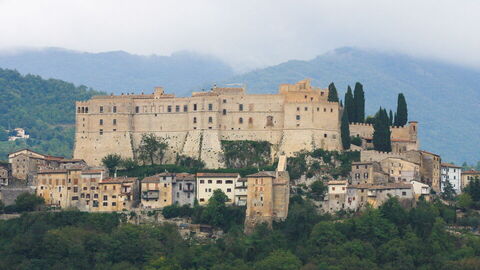
In the last few years, an incredibly interesting castle reopened to the public after being abandoned for half a century, close to a decade of restoration, and millions of euros were poured into the project. With almost a thousand years of history, the Rocca Sinibalda is an astounding fortress located in Latium, 50 miles north of Rome. Positioned majestically on a rocky outcrop that overlooks the Turano Valley, the castle-fortress is first noted in records with the building of a classic Norman stronghold by Count Sinibaldo, the governor of the Sabina area, in the 11th century. It is an extraordinary place, steeped in history and culture, stuffed with artistic gems, with a unique architectural character, and countless stories of scandal and mischief held within its walls. So, if you’re interested in art, architecture, pretty castles, or a little bit of historic gossip, then this fascinating place is a must see for those who have found a holiday rental in Rome or a vacation rental in Latium and are planning on exploring the wider region.

While the Rocca Sinibalda looks like a typical and romantic medieval fortress from a distance it is, in fact, far more interesting and complex than that. It has several names, for one thing. One of its names, the “Castle of the Eagle”, refers to the unusual shape of the building: in addition to the expected bastion walls, battlements, and lookout turrets, there are also sixteenth century additions that make the whole thing vaguely “eagle-shaped”, including the two wing-like bastions jutting out at the rear and the pointed “beak” at the front of the building, which overlooks the town below. Another named attributed to the castle is the “Castle of Metamorphoses” and the plaque by the main entrance declares it to be the “Castle of Invented Destinies.” Each of these names refers to different periods and incidents from the history of the building, with the Metamorphoses coming from a series of 16th century wall paintings and grotesques inspired by Ovid’s myths of transformation that is located in the reception rooms of the piano nobile.
Arco Castle
Posted in: Activities Architectural Gems Castles & Palaces Hiking Northeast Italy Pretty Views Tourist Attractions Trentino-Alto Adige
Trentino is a northern region of Italy, set amongst Alpine backdrops, lush valleys, rolling hills, wide pastures, and little villages that is, undoubtedly, utterly picturesque and completely lovely. However, there are particular corners of Trentino that are especially beautiful and magical and that should be sought out by anyone who has found a vacation rental in Trentino and is thinking about exploring the region. One of those little gems is Arco Castle, a romantic ruin that sits majestically atop a cliff and surveys the surrounding landscape. Come and stretch your legs by hiking to the castle, admire the incredible panoramic view from the top, and explore this stunningly lovely ruin.

Perched over the plain of the River Sacra, just at the point at which it widens, Arco Castle (Castello di Arco) dominates the skyline of the area and is an iconic structure in the landscape. It is the symbol of the town of Arco and a beloved memento of times past. While its exact origins are somewhat steeped in mystery, we know that it existed at least after the year 1000 AD. The area has been inhabited since before the Middle Ages and it is thought that the castle was originally built by the people, only to be later taken over by the local nobles.
Vineyard
Posted in: Architectural Gems Castles & Palaces Food and Wine Localities Milan Tourist Attractions Wineries & Breweries
La Vigna di Leonardo (Leonardo’s Vineyard) in Milan is, as you may have guessed from the name, a vineyard that used to be owned by Leonardo da Vinci. Given to da Vinci by Ludovico Sforza, Duke of Milan, in 1498, during the artist's tenure in the city and while the Duke was his main patron, it was very precious to him and something he maintained even after leaving the city. Da Vinci actually came from a family of winemakers and was a haven that he returned to after long days of working on projects such as the last Supper in the nearby convent of Santa Maria della Grazie. Today, it is open to be toured by the public and provides a fascinating insight into the great Renaissance man's private life. If you have found a vacation rental in Milan, it is a wonderful and unique attraction to make time for in your itinerary.
Estense Castle
Posted in: Castles & Palaces Churches & Religious Buildings Emilia-Romagna Northeast Italy Top 10 Lists Tourist Attractions
The stunning historic centre of Ferrara is enclosed by over nine kilometres of walls, and is a gorgeous Renaissance city, full of lovely buildings, fascinating cultural gems, and plenty of surprises, it is a UNESCO awarded beauty. With its impossibly charming setting and the vast array of things to see and do, this lesser-known gem among international tourists is a wonderful place to head to for day trips of exploring its many attractions and secrets. In fact, the city boasts a lot of the same charms as Florence but without the tourist crowds. Just find a holiday rental in Emilia Romagna and come uncover its appeal for yourself.

Here are ten things to see, do and keep an eye out for on your trip to Ferrara...

1. Visit The Castello Estense

This imposing castle was the result of townspeople turning on the ruling d'Este family during a time of high taxes and poverty in the 14th century.
Palazzo della Pilotta
Posted in: Castles & Palaces Emilia-Romagna Museums & Galleries Must See Attractions Northeast Italy Tourist Attractions
The Palazzo della Pilotta is a palace and complex of structures that is located between the Piazzale della Pace and the Lungoparma in the historic centre of the lovely Italian city of Parma. Vast but incomplete, the palace was built for the Farnese family in the 16th and 17th centuries, at the order of Duke Ottavio Farnese and then under Duke Ranuccio I. Built around a preexisting Visconti stronghold and a church, it was designed as a headquarters for the court and state services – such as stables, store rooms, arms rooms, theatre, barracks and more – rather than as a residence.