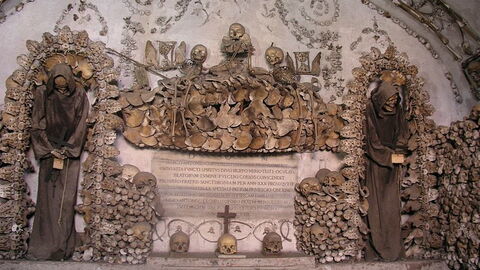
Altar in the Crypt of Santa Maria della Concezione
Posted in: Central Italy Churches & Religious Buildings Curiosities Latium Tourist Attractions
Located on the upscale Via Veneto in Rome, Santa Maria della Concezione is dedicated to Our Lady of the Immaculate Conception. It was built in 1626 by Cardinal Antonio Barberini, the younger brother of Pope Urban VIII, who was a Capuchin friar. Antonio Casoni and another Capuchin Friar, Michele da Bergamo, were the architects and they built a beautiful but simple church. The real interest in this site, however, is what lies below. When the Capuchins moved from their location at the Quirinal to the Via Veneto site, they brought the bones of around 4000 friars and placed them in a cemetery under the church, arranged in patterns on the walls and ceilings. The result is eerie and very unusual. Find a holiday rental in Rome and see it yourself.
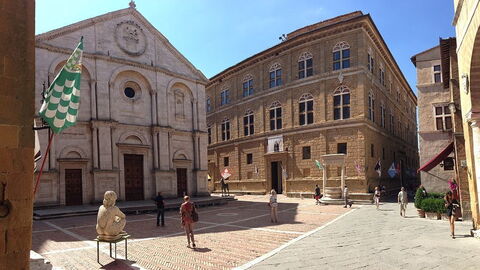
Piazza Pio II, Pienza
Posted in: Central Italy Tourist Attractions Tuscany Unesco World Heritage Sites
Pienza is a small village in the Val d'Orcia in southern Tuscany. Set high atop a hill, overlooking the Orcia Valley, it has extraordinary views. The village is often known as the "ideal Renaissance city” and is the creation of the great humanist Enea Silvio Piccolomini, who later became Pope Pius II. Piccolomini used his money and influence to transform his birthplace of Corsignano, into his idea of a Utopian city. This is what eventually would come to be known as Pienza. Based on classical ideas of geometry and elegance, it is comprised of beautiful buildings and harmonious street plans.
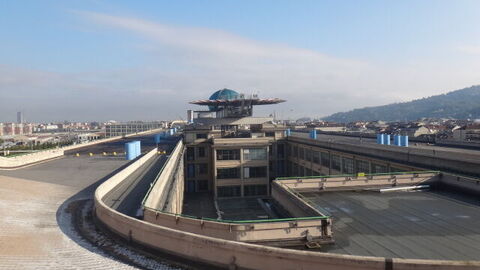
Rooftop test track, Fiat Lingotto
Posted in: Architectural Gems Northwest Italy Piedmont Tourist Attractions
The Fiat Lingotto Factory in Turin was built in the 1920s and was the largest and most modern car manufacturing plant in Europe and second in the world at the time. It is five storeys high with a test track atop the roof and cars were moved upwards from floor to floor to be tested on the track when completed. The factory was eventually closed in 1982 but, thankfully, didn't fall into ruin as such places usually do. In 1985, it was converted and made into a multi-purpose centre that still retained the original architectural identity of the structure. It is now used commercially by various companies and businesses and is readily accessible to the public. If you want to see this amazing roof-top track for yourself, find a villa with pool in Piedmont and make your way to Turin.
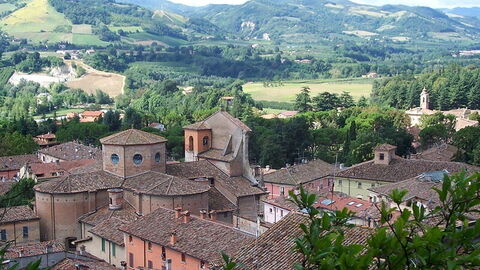
Town of Brisighella
Posted in: Emilia-Romagna Northeast Italy Spa Tourist Attractions
Brisighella is a medieval town and spa centre in Emilia-Romagna which has been recognised as one of the Best Small Towns of Italy and has received an Orange Flag for its preservation of the town's historical centre, sustainable tourism and easily accessible tourist information services. Not only charming and chock full of things to do, the town also takes good care of its visitors. Additionally, though it has lots to offer, it is never overrun with tourists. Located in the Lamone Valley on the Lamone River, it has beautiful surroundings and looks like something out of a fairytale with its distinct silhouette. Find a villa with pool in Emilia-Romagna and see everything the town has to offer for yourself.
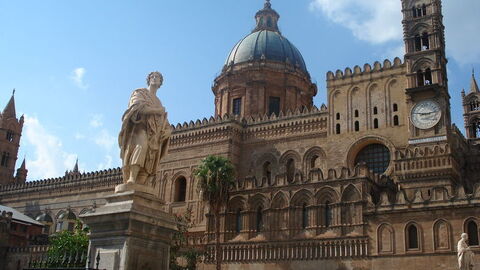
Exterior, by the apse
Posted in: Churches & Religious Buildings Main Islands Sicily and Sardinia Tourist Attractions
Palermo Cathedral was founded on the site of a Muslim mosque, which in turn had replaced an Early Christian basilica in 1184 by the Archbishop of Palermo. His aim was to create something more astounding than the cathedral at Monreale nearby and so a competition broke out between the two cathedrals which became known as the “Battle of the Two Cathedrals”. It is still debatable as to who the winner was but the cathedral at Palermo is stunning in its own right. A fantastic example of the Arab-Norman architecture that is awaiting news on UNESCO status and which is one of the defining characteristics of the city, it is a must-see for any with a love of Western churches, Islamic architecture and Byzantine mosaics as it sees all three combined.