Camuccini's Death of Caesar
Posted in: Central Italy Events History Latium March Must See Attractions Roman Empire

There is almost no time in which a trip to Rome won’t be a rewarding and fascinating experience as there is simply so much to see and do in this grand city. At different times throughout the year, however, a vacation rental in Rome and time in the city means that you will also be able to enjoy some specific celebrations, seasonal experiences, or special events. From the intense Christmas celebrations in this hub of Catholicism, to the wonders of the blooming gardens of the historic palaces in spring, to the thrills of the Italian Open for tennis nerds planning a visit in May, to Roma Jazz Festival in October, there are all sorts of unique offerings throughout the year.


However, the 15th of March, known as the Ides of March, has long been a particularly significant day in Rome. It was often a time around which new year ceremonies would take place, was sacred to their supreme deity, Jupiter, was the beginning of a holy week in the later Imperial period, and more. However, it became cemented in popular imagination from antiquity all the way to the current day when, on the 15th of March in 44BC, Julius Caesar was assassinated on that very day.  

Woman with mimosa flowers
Posted in: Concerts & Festivals Events March Travel Tips

We all likely have some pretty amazing women in our lives that we feel indebted to and would like to celebrate and every March the whole world celebrates women with International Women’s Day. In Italy, in particular, there are specific ways to celebrate the day and traditions that have been created around this holiday.


International Women’s Day, which takes place on the 8th of March, traces its origins to women’s suffrage and labour movements in the 20th century. The earliest iteration of a formal day to celebrate women and promote the pursuit of equality and the establishment of more rights for women is said to have been a Women’s Day that was organsied by the Socialist Party of America in New York City on the 28th of February 1909. Then, in 1910, German delegates at the International Socialist Women's Conference suggested the idea of an annual version, though with no set date at that time.

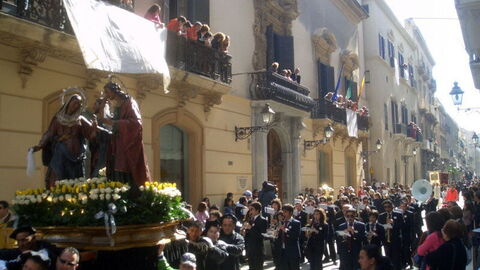
Processione dei Misteri
Posted in: April Events March
If you’re spending Easter in Italy then why not check out one or some of these enchanting events? Continuing on from our two other articles which detail several Easter celebrations, let’s finish with these three festivals.

The ‘Processione dei Misteri’ is the oldest Easter Festival in Italy and is hosted in the city of Trapani on Sicily Island. It has been celebrated at Easter here for over four hundred years!

This 24 hour event consists of twenty huge artistic carved representations of scenes from the Passion and Crucifixion of Christ.
Easter festival in Sulmona
Posted in: April Events March
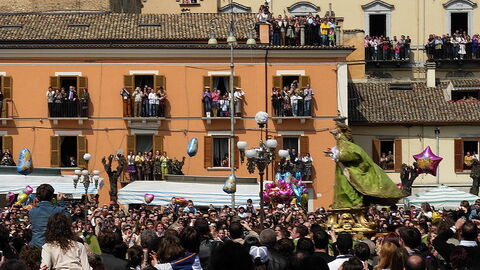
Continuing on from part one of our description of the best Easter festivals to attend in Italy, here are a few more exciting events you could witness! See the unusual ‘La Madonna Che Corre in Piazza’ which takes place in Sulmona, Abruzzo. This translates as ‘The Virgin Mary who races through the Square’!

Strange as the name sounds, the meaning of it goes back to the story of the mourning Mary after the death of her son Jesus on the cross. At first she finds it hard to believe that he has been resurrected and ascended into heaven but when she realises and sees that he has risen from the dead, she races towards him!
Oliena in Sardinia
Posted in: April Events March
The Easter Season in Italy is widely celebrated and represents the second most endeared time of year after Christmas. The traditions of the following festivals evolved from the Catholic belief that this was when Jesus Christ was crucified. Then he was buried and on the third day, ascended into heaven.

The first of our top ten Easter festivals takes place in Oliena, Sardinia.

A solemn procession takes place on Easter Sunday when the townsfolk carry statues of Jesus and the Virgin Mary through the streets. This represents the heartfelt search of Jesus’s mother Mary for her son after his mysterious disappearance from the tomb before she realises he has ascended into heaven.