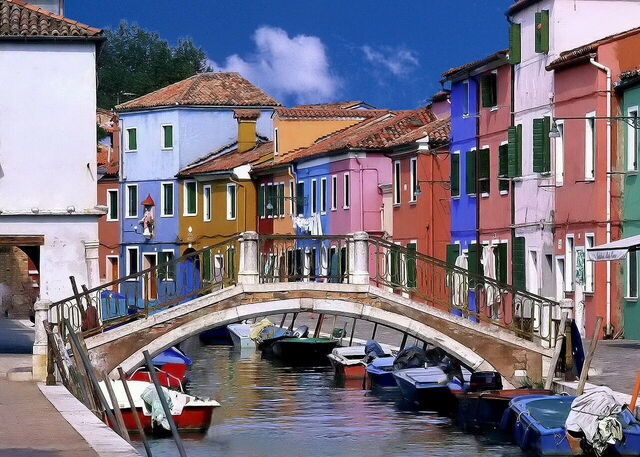
Words like “elegant” and “beautiful” come to mind when you ask most people about the city of Venice. Immediately, they imagine the canals, gleaming white churches and pretty Byzantine-influenced and Gothic palaces. However, as colourful and eye-catching as much of the city is, the rest cannot compare to the dream-like, saturated vision that is presented by Burano, the island in the Northern Venetian Lagoon. Home to an old village with fishing traditions dating back to Roman times, it is most well-known for the lace produced in the area, as well as its bright, multi-coloured houses that seem like something from a storybook or film set and not real life. If you want to experience this quirky little village for yourself, just find a vacation rental in Venice.
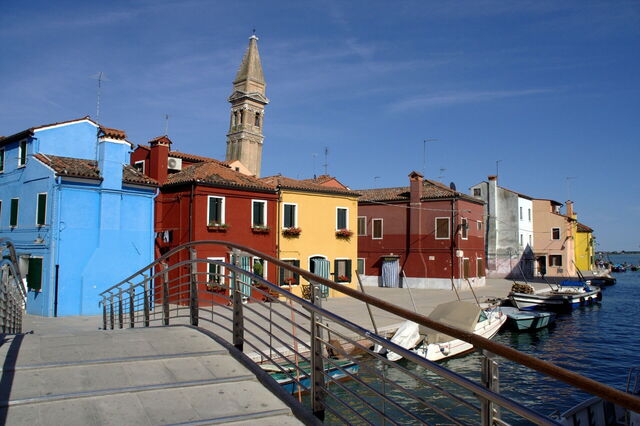
Burano is located just 40 minutes away from Venice by boat. It was founded by the Romans who fled the city of Altino during the Barbarian invasions and was named after one of the gates of the former city. The first houses in the area were made with walls of woven canes plastered in mud. Then these were replaced by brick houses that the locals began to paint in bright colours. The exact reasons as to why this began are uncertain but one local legend tells that it was begun by the fishermen of the town, who found it difficult to pick out the island and the town during times of heavy fog, it is said that they painted their homes in different colours in order to make them more readily visible.
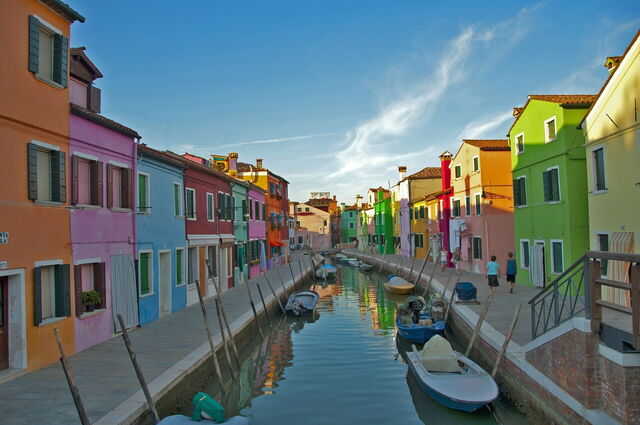
Now, it is even said that some colours have been with particular families for centuries and a specific colouring system has even been developed. If you wish to paint your home today, you even have to send an official request to the government for permission first.
As noted, the town is also famous for lace production which rose to importance in the 16th century. Famous clients include, Leonardo da Vinci, who visited in 1481 and purchased a cloth for the main altar of the Duomo di Milano. The lace was then widely exported all across Europe.
The trade in Burano's lace declined in the 18th century but was revived again in 1872, when a school of lace-making was established. Few make lace in the traditional manner today but it does continue on a small scale. You will know if it the genuine article by the price as the pieces are very time-consuming to produce and, therefore, exceptionally expensive.
Be sure to check out this fantastical corner of Venice while you visit as you'll fall hard for its eccentricity and traditions.
As noted, the town is also famous for lace production which rose to importance in the 16th century. Famous clients include, Leonardo da Vinci, who visited in 1481 and purchased a cloth for the main altar of the Duomo di Milano. The lace was then widely exported all across Europe.
The trade in Burano's lace declined in the 18th century but was revived again in 1872, when a school of lace-making was established. Few make lace in the traditional manner today but it does continue on a small scale. You will know if it the genuine article by the price as the pieces are very time-consuming to produce and, therefore, exceptionally expensive.
Be sure to check out this fantastical corner of Venice while you visit as you'll fall hard for its eccentricity and traditions.