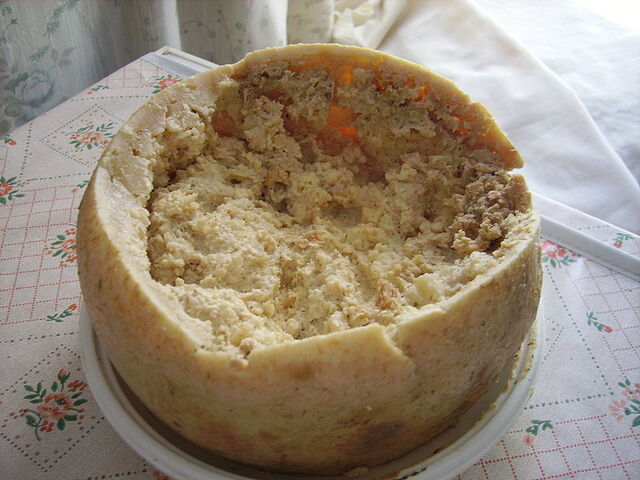
It's not as though it is difficult to find reasons to go on holidays to Sardinia. The landscape, culture, history and cuisine speak for themselves. However, some dishes shout louder than others. Casu Marzu is a traditional cheese from the island which has become notorious and well-known outside of Italy in recent years. The cheese was featured on the show, “Bizarre Foods with Andrew Zimmern”. Made for the American television channel, The Travel Channel, the show introduced foods from around the world that might be perceived as bizarre, exotic or disgusting to an American audience. It became known internationally for the fact that it contained live larvae and the fact that the taste is so strong, it remains for several hours. This piqued the interest of foodies and the adventurous all over the globe. If you want to brave it yourself, or merely soak up the less dramatic aspects of Sardinian culture, find a luxury villa in Sardinia and enjoy this idyllic island.
Casu Marzu is derived from Pecorino cheese when the typical fermentation stage of production is allowed to progress to decomposition which is enable by the digestive action of larvae of the cheese fly known as Piophila casei that are introduced to the cheese. Basically, it's allowed to go rotten – in fact, it is actively encouraged to do so. This makes the cheese become very soft so that some liquid seeps out. Not put off quite yet? Here's where it gets really off-putting for most people. The larvae, which look like translucent white worms, are only sometimes removed before the cheese is consumed. Others eat it, larvae and all. Worse still, the larvae will launch themselves for distances of up to 15cm if you disturb them and the cheese.
The cheese was banned for a time by the EU and a black market trade in the product emerged with people paying large sums for the pleasure of eating it! Local producers argued that they should be allowed to continue making the cheese as it is a traditional food of the island and a hygenic method of production was then developed, allowing it to go back on the market and be sold openly. Which means you're free to purchase some should you wish to try it when you visit Sardinia. The question is: Are you brave enough?
The cheese was banned for a time by the EU and a black market trade in the product emerged with people paying large sums for the pleasure of eating it! Local producers argued that they should be allowed to continue making the cheese as it is a traditional food of the island and a hygenic method of production was then developed, allowing it to go back on the market and be sold openly. Which means you're free to purchase some should you wish to try it when you visit Sardinia. The question is: Are you brave enough?
Photo credit: Shardan / CC BY-SA 2.5