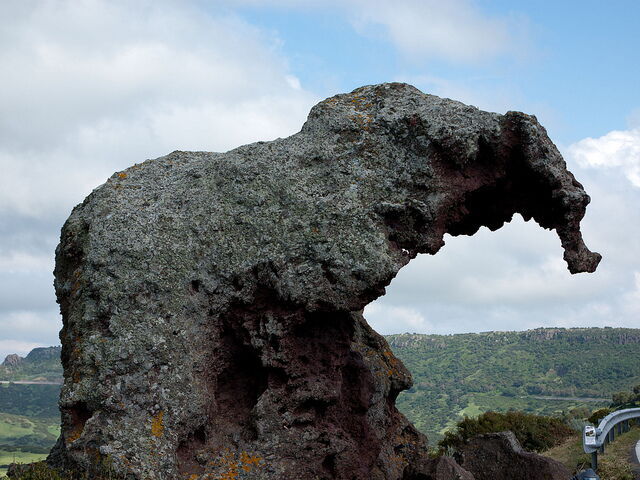
One hardly needs any other reasons to visit Sardinia. Its beaches, people, climate, culture and beauty alone put at the top of many people's bucket lists. However, the beautiful coastal town of Castelsardo, in particular, is known for its charming streets, distinctive skyline and picturesque surroundings which are characterised by dramatic rock formations. One of the most interesting of these rock formations actually takes the shape of an elephant. Perched by the side of the road just outside the town, the Roccia dell'Elefante, or Elephant Rock, is a surprising little oddity that adds to the character of the town and adds to the heaped pile of reasons to visit. Just find a holiday rental in Sardinia and spend a day exploring this charming town and its unique surroundings.
Elephant Rock is comprised of a large mass of trachyte stone in the shape of an elephant which is located standing beside State Road 134, just outside Castelsardo. The rock was originally a part of the rocky complex of Monte Casteddazzu before it broke off and rolled down the valley along the road. As erosion took place and as the popular imagination decreed it because more and more people added to the idea, the rock came to be seen as in the shape of an elephant with its trunk turned towards the road. Thus, it was given its name and became a local attraction. However, Elephant Rock is also known as Sa Pedra Pertunta, the perforated rock, for obvious reasons due to its appearance which is punctuated by openings and holes.
Inside, two domus de janas (typically Sardinian chamber tombs) from the Neolithic period were established, inside of which there are important and interesting reliefs and primitive symbols from the animal and plant worlds. Inside the rock there are numerous openings, almost all of which also have antechambers.
The walls of these irregularly shaped chambers have relief decorations, cow horns and bull heads on a low base formed in the rock. Elephant Rock, therefore, is not merely a natural curiosity but also intimately intertwined with local history and prehistory.
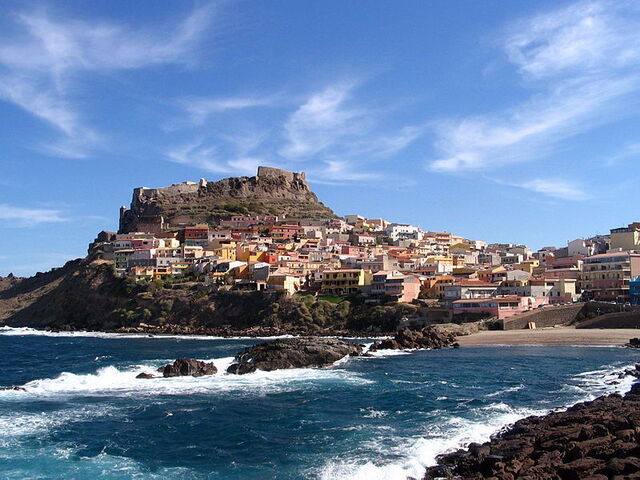
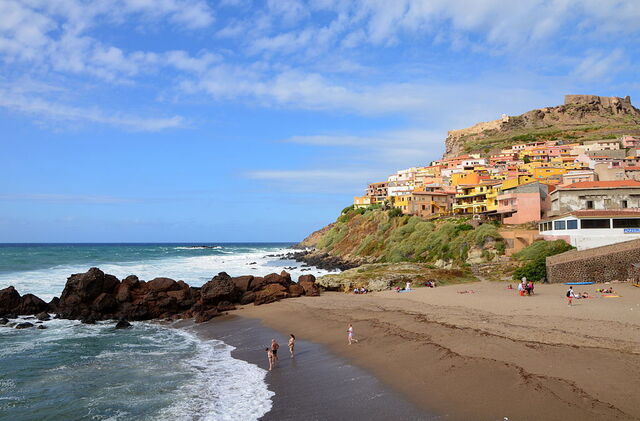
Castelsardo itself is an ancient Sardinian town with excavations showing evidence human presence in the area since pre-Nuragic times, as well as Roman settlements. It is probably named for the castle built in the 12th century by the Doria family from Genoa which marked the beginning of the town as we know it today. Currently only around 5,000 people live in the town, ensuring that its history and charms have remained almost completely in tact. If you're visiting Sardinia, you'll struggle to find anywhere else quite as captivating or charming.
The walls of these irregularly shaped chambers have relief decorations, cow horns and bull heads on a low base formed in the rock. Elephant Rock, therefore, is not merely a natural curiosity but also intimately intertwined with local history and prehistory.
Castelsardo itself is an ancient Sardinian town with excavations showing evidence human presence in the area since pre-Nuragic times, as well as Roman settlements. It is probably named for the castle built in the 12th century by the Doria family from Genoa which marked the beginning of the town as we know it today. Currently only around 5,000 people live in the town, ensuring that its history and charms have remained almost completely in tact. If you're visiting Sardinia, you'll struggle to find anywhere else quite as captivating or charming.
Photo credits
Picture 1: wiseguy71 / CC BY-SA 2.0;
Picture 2: Gzzz / CC BY-SA 3.0
Picture 1: wiseguy71 / CC BY-SA 2.0;
Picture 2: Gzzz / CC BY-SA 3.0