Tulips
Posted in: April Central Italy Events Florence Localities Parks & Gardens Tourist Attractions Tuscany
Last April, as the famously beautiful gardens of Florence – amongst them the Boboli Gardens, Iris Garden, Rose Garden and more – came into bloom, a new kid appeared on the block in the form of the temporary Tulip Garden.

Located in the grounds of the Castello dell'Acciaiolo park, the sprawling garden was planted with around 200,000 tulips of 70 different varieties and opened to the public from the beginning of April to the 22nd. Entry cost 3 euro a person and allowed visitors to wander and pick and bring home two tulips, with additional tulips picked counted at the end and charged at a euro a piece and all of the fees going towards the maintenance of the park. Such was the success of last year's edition, that the planting of another garden of tulips of the same scale and kind was announced and begun last Autumn to be opened once more in Spring 2019.
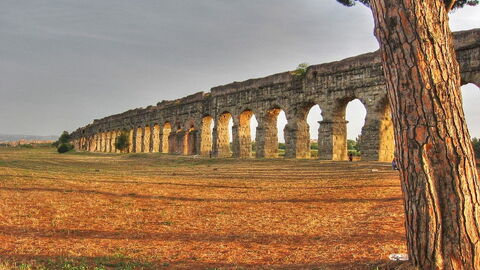
Parco degli Acquedotti
Posted in: Architectural Gems Central Italy Curiosities History Latium Parks & Gardens Roman Empire Tourist Attractions
Rome is home to a treasure trove of ancient monuments and architectural gems all throughout the city. However, most are buzzing tourist attractions that are steeped in modernity. Of course, you shouldn't miss out on the city's famous sights if you have found a luxury villa in Rome but, if you want to fall back in time and enjoy a little bit of peace and quiet, why not pay a visit to the Parco degli Acquedotti?

The Parco degli Acquedotti (Park of the Aqueducts) is a 240-hectare protected green space, located in the Appia Antica Regional Park, just on the outskirts of Rome. Just take a Metro line A to Lucio Sestio or Giulio Agricola and you'll find the park entrance after about a 10 minute walk. It is also a pleasant place to bring a picnic and one can rent bikes to better explore the whole park.
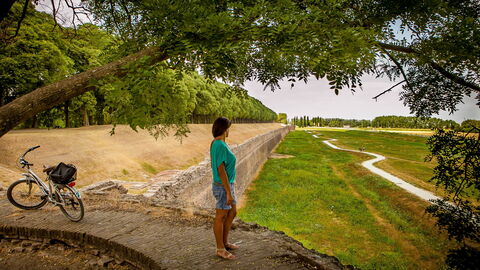
Walls of Ferrara
Posted in: Emilia-Romagna Museums & Galleries Northeast Italy Parks & Gardens Top 10 Lists Tourist Attractions
All this week we have been talking about the beautiful Renaissance city of Ferrara. An incredible gem that is rich is in historical, cultural and artistic merit, it is a wonderful place to visit if you have found a holiday rental in Emilia Romagna and is full of things to see and do. We have been listing some of these things – including delicious food, a visit to the world's oldest wine bar, an amazing castle, a stunning cathedral and more – and to complete this list we have our last entries into our list of the top ten things you must do in Ferrara...
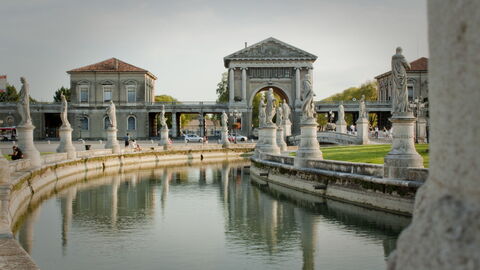
Prato Della Valle
Posted in: Architectural Gems Curiosities Must See Attractions Northeast Italy Parks & Gardens Tourist Attractions Veneto
If you have found a villa rental in Padua and are exploring the city, it is unlikely that you will miss Prato della Valle, or “Prà deła Vałe” in Venetian, a 90,000sqm elliptical piazza in the city and the largest square in Italy as it is so vast and exceptionally beautiful. However, just in case, we're warning you: don't miss out on this stunning part of the city or you'll be kicking yourself later!

Before 1635, the area now occupied by Prato della Valle was actually a large and unpleasant swampy terrain, just south of the old city walls. Then, in 1636, a group of Venetian and Veneto public figures and nobles decided to finance the construction of a temporary, but lavish, theatre for mock battles on horseback on the site.
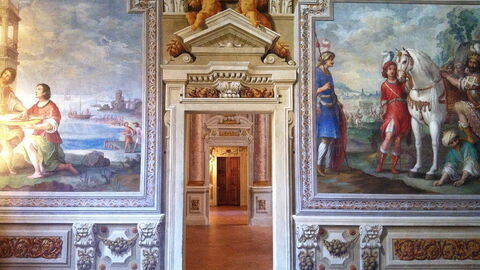
Piano Nobile at Sassuolo Palace
Posted in: Architectural Gems Emilia-Romagna Must See Attractions Northeast Italy Parks & Gardens Tourist Attractions
If you have always wanted to explore a Disney palace for yourself, then the Ducal Palace in Sassuolo, a Baroque villa located in the town of Sassuolo, near Modena, is one of the closest things to one in real life that you will find. Just find a vacation rental in Emilia-Romagna and spend a day wandering around!

Built on the site of an earlier castle from the medieval period, it came into the ownership of Niccolò III d'Este from the Della Rosa family in the 15th century and was rebuilt under Borso d'Este in 1458. In the early 17th century, the Duke Francesco I d'Este commissioned what is now the present structure and it was designed by architect Bartolomeo Avanzini.