Example from the Museum
Posted in: Campania History Museums & Galleries Southern Italy Tourist Attractions
Once you have found a holiday rental in Naples and are exploring the lovely and historic city of Naples, you will find that there is an endless list of castles, architectural gems, cultural attractions and tourist sights to visit. However, one of the most fascinating and beautiful among all of these has to be the Coral Jewellery Museum. Lovers of jewellery, design and shiny things will, of course, find plenty to interest them but the collection is lovely enough to keep anyone intrigued.
Castle
Posted in: Architectural Gems Campania Castles & Palaces Southern Italy Tourist Attractions
The city of Naples is not always celebrated for its beauty and, yet, is still home to plenty of lovely historic buildings, bustling and lively neighbourhoods, and all of it looking out onto the stunning clear blue ocean. It is also home to four castles, dotted around the city.

The baby among them is Castel Sant'Elmo, a star-shaped military fortress perched atop Vomero Hill, with the San Martino Chartherouse just below, and both dominating the Naples skyline as a striking pair. A unique example of 16th century military architecture, it replaced an earlier 14th century fortress with something a little more unusual and special.

Commissioned by Viceroy Don Pedro Alvarez de Toledo, the castle was built according to the plans of Pedro Luis Escriva, a military engineer from Valencia. Escriva was one of the period's most noted and celebrated military architects and designed a strong and compact fortress that, from 1604, was a prison for political prisoners.
Courtyard, Villa Cimbrone
Posted in: Amalfi Coast Architectural Gems Campania Localities Must See Attractions Parks & Gardens Southern Italy Tourist Attractions
The Villa Cimbrone is a historic villa located on a rocky outcrop known as "Cimbronium", from which it takes its name, in Ravello that dates to at least the 11th century AD. The earliest references to the villa from this time refer to when the villa belonged to the Accongiogioco, a noble family. It later became the property of the wealthy and influential Fusco family, who are also recorded as owning the local church of S. Angelo de Cimbrone in the 13th century. Later still, it became part of the nearby monastery of Santa Chiara. Ownership from the seventeenth century is uncertain, but by the second half of the nineteenth century it had come into the possession of the Amici family of Atrani.

In the 20th century, the villa was altered and extended by Ernest William Beckett, who brought in salvaged architectural elements from other parts of Italy and elsewhere, leaving little of the original structure visible.
Galleria Borbonica
Posted in: Architectural Gems Campania Museums & Galleries Southern Italy Tourist Attractions
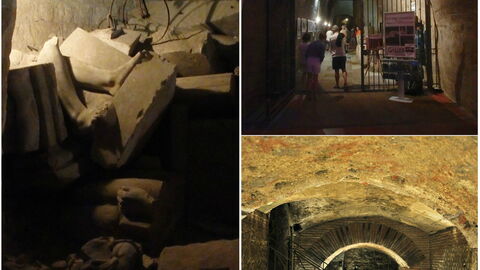
The Galleria Borbonica, or Bourbon Tunnel, is an ancient military underground passage that connects the Royal Palace to the military barracks in Naples. It was built to allow the king to flee to the sea and the soldiers to defend the palace quickly and remains a rather intriguing reminder of the past. Errico Alvino was commissioned by Ferdinand II in 1853 to construct this military passage due to his paranoia about the outbreak of a rebellion. His paranoia turned out to be well-founded as, two years after construction began, the fall of the Bourbon dynasty led to halt of all work on the tunnel.

A network of tunnels carved into the aqueducts of the city, it is 530m in length and remained unused and abandoned until WWII. During the hundreds of bombings in World War II, the people of Naples used the underground passages as shelters. There were also military hospitals established in the tunnel. Furthermore, confiscated vehicles such as cars and bicycles that were taken in this period were kept in the tunnels. A fascist monument made for Aurelio Padovani was also abandoned underground.

Then, again, the tunnels were forgotten until the 2000s, when the curious artefacts that were housed inside and the fascinating passages themselves began to garner attention from locals. In 2014, the tunnels were opened to the public and are now a tourist attraction. You can take several different tours of the tunnels including the Standard Tour, the Adventure Tour (80 minutes; adult/reduced €15/10) and adults-only Speleo Tour (2½ hours; €30).

Standard Tours take you around the displays of vintage cars, motorbikes and water tanks. The Adventure Tour, sees visitors enter a cistern still full of water and sail under the city on a raft. More extreme adventurers, meanwhile, might be more interested in the Speleo Tour, which sees participants don a hard hat and overalls and go crawling through aqueduct tunnels to reach the most beautiful water cisterns.

If you are exploring the city of Naples or have found a luxury villa in Campania, a visit to the Galleria Borbonica is a perfect alternative to more typical tourist attractions and promises to offer a rather unique experience!
Rooftop test track, Fiat Lingotto
Posted in: Architectural Gems Campania Curiosities Must See Attractions Northwest Italy Piedmont Southern Italy Tourist Attractions
There is lots to see and do in Italy but we have rounded up a list of some particularly intriguing attractions and sights that we have dubbed the Seven Wonders of Italy and, continuing from the last article, here are some more of said wonders.

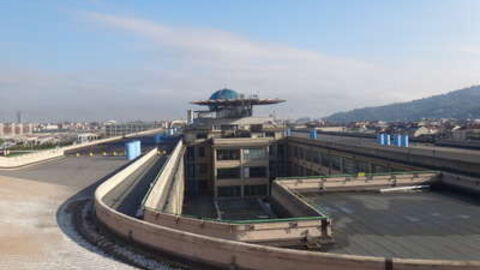
The Fiat Lingotto Factory in Turin was built in the 1920s and was the largest and most modern car manufacturing plant in Europe and second in the world at the time. It is five storeys high with a test track atop the roof and cars were moved upwards from floor to floor to be tested on the track when completed. The factory was eventually closed in 1982 but, in 1985, it was converted and made into a multi-purpose centre and is now used commercially by various companies. The exterior is largely unchanged but the interior has been drastically redesigned in order to house an exhibition centre, a conference centre and auditorium, two hotels, offices and retail space.