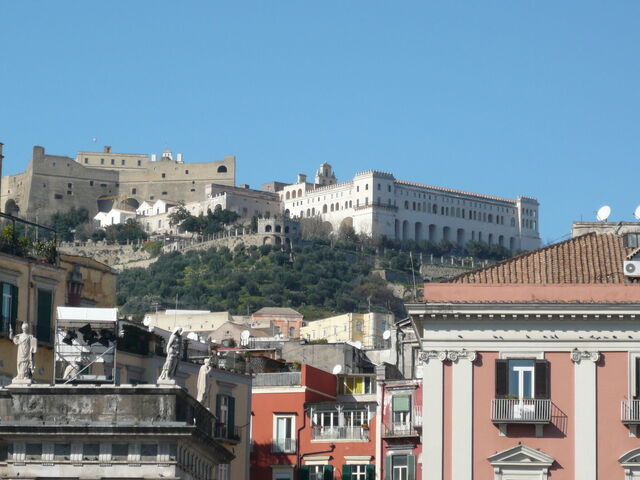
The city of Naples is not always celebrated for its beauty and, yet, is still home to plenty of lovely historic buildings, bustling and lively neighbourhoods, and all of it looking out onto the stunning clear blue ocean. It is also home to four castles, dotted around the city.
The baby among them is Castel Sant'Elmo, a star-shaped military fortress perched atop Vomero Hill, with the San Martino Chartherouse just below, and both dominating the Naples skyline as a striking pair. A unique example of 16th century military architecture, it replaced an earlier 14th century fortress with something a little more unusual and special.
Commissioned by Viceroy Don Pedro Alvarez de Toledo, the castle was built according to the plans of Pedro Luis Escriva, a military engineer from Valencia. Escriva was one of the period's most noted and celebrated military architects and designed a strong and compact fortress that, from 1604, was a prison for political prisoners.
The baby among them is Castel Sant'Elmo, a star-shaped military fortress perched atop Vomero Hill, with the San Martino Chartherouse just below, and both dominating the Naples skyline as a striking pair. A unique example of 16th century military architecture, it replaced an earlier 14th century fortress with something a little more unusual and special.
Commissioned by Viceroy Don Pedro Alvarez de Toledo, the castle was built according to the plans of Pedro Luis Escriva, a military engineer from Valencia. Escriva was one of the period's most noted and celebrated military architects and designed a strong and compact fortress that, from 1604, was a prison for political prisoners.
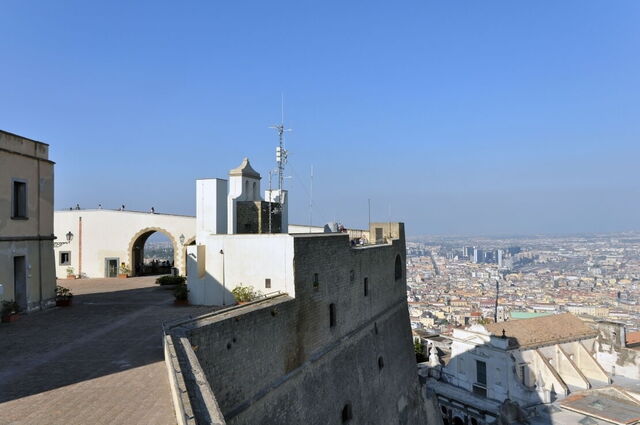
Afterwards, it became a prison for military prisoners, until 1952. It then underwent a period of rebuilding, revealing once more the original structure that had been obscured by alterations over the centuries.
Today it is home to a multifunctional centre offering art exhibitions, shows, concerts and a conference centre and the Napoli Novecento Museum, or Museo del Novecento, which is dedicated to 20th-century Neapolitan art. It documents some of the key art movements that occurred in the region throughout the century, including the Futurist and the Nuclear Art movements and includes works such as Eugenio Viti's sensual “La schiena” (“The Back”), Raffaele Lippi's “Le quattro giornate di Napoli” (“The Four Days of Naples”) and Giuseppe Desiato's magnificent photograph “Monumento”. Giancarlo Neri’s large scale metal sculptures are also memorable and iconic examples among the collection.
Today it is home to a multifunctional centre offering art exhibitions, shows, concerts and a conference centre and the Napoli Novecento Museum, or Museo del Novecento, which is dedicated to 20th-century Neapolitan art. It documents some of the key art movements that occurred in the region throughout the century, including the Futurist and the Nuclear Art movements and includes works such as Eugenio Viti's sensual “La schiena” (“The Back”), Raffaele Lippi's “Le quattro giornate di Napoli” (“The Four Days of Naples”) and Giuseppe Desiato's magnificent photograph “Monumento”. Giancarlo Neri’s large scale metal sculptures are also memorable and iconic examples among the collection.
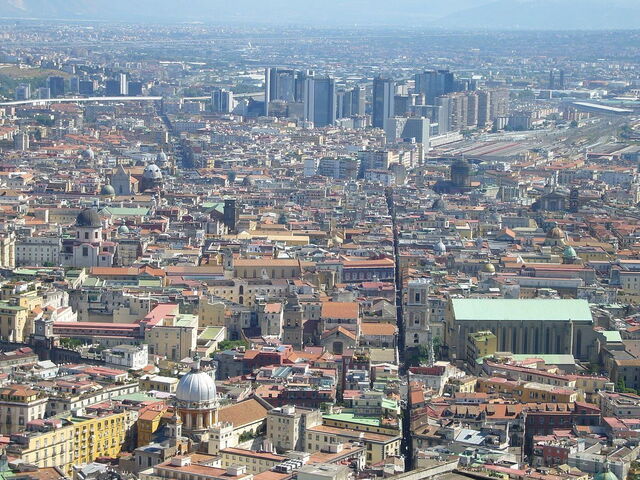
However, one of the best reasons to visit this building, a little off the beaten track and a bit of a trek as it may be, is the roof-top terrace encircling the entire perimeter of the castle. It offers incredible 360° panoramic views all across the and the bay – and this alone makes it well-worth the trip. Visit after 4:00 pm and you'll find that entrance to the Castle is free and the views of the eastern side of the city are at their best. If you really want to take in Naples while exploring Campania, just find a holiday rental in Naples and pay a visit to Castel Sant'Elmo where you'll be able to see it all in one glance.
Photo credits
picture 2: Ra Boe / CC BY-SA 3.0;
picture 3: Lalupa / CC BY 3.0
picture 2: Ra Boe / CC BY-SA 3.0;
picture 3: Lalupa / CC BY 3.0