Continuing on from our previous article, here are the rest of the things you should know about Christmas in Italy.
3. The Original Live Crib Is In Greccio
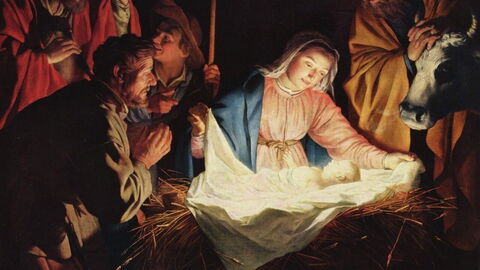
Nativity scenes and, particularly, those featuring actors and live animals, have a long tradition and are said to have been created in Italy. As a result, there are many live Nativities all over the country that are rather famous. One of the most famous, arguably is the one at Greccio in Lazio, which is said to be the very first. To visit this charming event for yourself, just find a vacation rental in Lazio. It is said that the tradition was born as early as the 5th century but gained traction when St. Francis came back from visiting the Holy Land and wanted to reproduce the scene of the Nativity on Christmas Eve in Greccio. He prepared a manger with hay, had an ox and a donkey brought there, and then had a Holy Mass celebrated in front of it, before a large crowd of people who had come from all over the region, it is even said that a vision of the Child appeared on the hay.
In our last article, we outlined the unique nature and particular charms of the Italian interpretation of Christmas markets, before outlining some of the best of the best around the country. In addition to those examples in Rome, Florence and Milan, we have compiled a list of some more of the finest Christmas markets around Italy, should you have found a vacation rental in Italy and be planning on spending the festive season there.
Verona is a very famous Italian city and UNESCO-listed World Heritage Site best known for its connection to Shakespeare's most tragic of lovers. However, come Christmas, it gets a German makeover when a large Christkindlmarkt opens in Piazza dei Signori. Made up of wooden stalls with over 60 exhibitors selling handicrafts, decorations, regional foods, and German specialties, it usually opens late November through to December 21st.
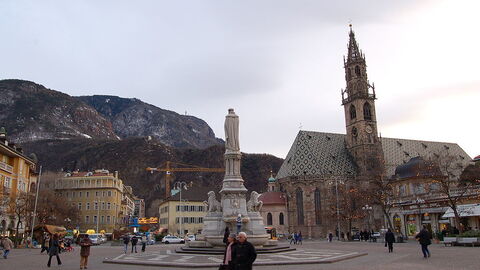
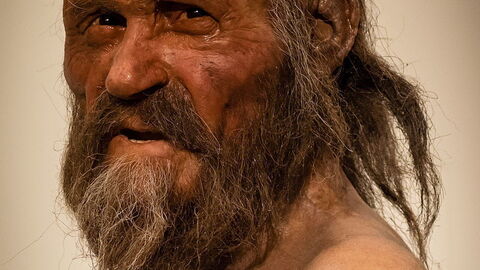
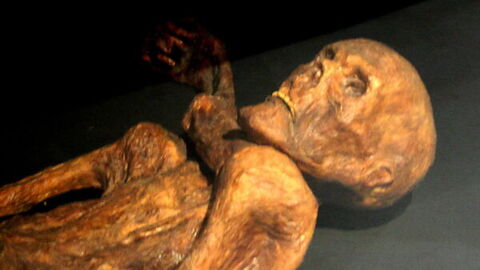
Once you’ve found a vacation rental in Trentino Alto Adige and are planning on visiting the city of Bolzano, make sure to find time to see Ötzi, the 5,000-year-old Iceman and oldest human mummy on earth. Discovered by German tourists in a glacier in the area in 1991, it has been on display in a purpose-built museum since 1998. Ötzi has been the talk of the past years not only in Bolzano, but all over the world and he’s probably the only mummy in the whole world to have an entire museum dedicated just to him. Every year thousands of visitors come to Bolzano just to see him.
The body has been extensively examined, measured, x-rayed, and dated since it has been found and research into the body is on-going to this day. The Archaeology Museum of Bolzano houses the Iceman and also documents the pre-history and early history of the surrounding area from the end of the last Ice Age to the time of Charlemagne. It uses models, reconstructions, stereoscopic images, videos and interactive multimedia stations to provide an interesting, engaging and informative experience. Yet, its main purpose remains to be displaying, housing and researching Ötzi.
How the body is displayed and the museum organised has been very carefully planned. In awareness of fact that the discovery of the body was likely to trigger heated ethical discussions, the careful and restrained presentation of the Iceman was the first and foremost concern when the museum was established in 1998. The current exhibition, as it appears today, is actually the format created for the special 20th anniversary exhibition in 2011. This, however, went on to become the permanent method of display in 2013.
The area surrounding the mummy is stark, made up of white walls that evoke the snow-covered landscape in which it was discovered. Everything surrounding, from fonts to graphics to décor is muted and does not detract from the mummy or sensationalise it. The room is also actually partitioned, meaning those interested in the story but uncomfortable with viewing the body can still enjoy a visit to the museum. The mummy has been placed in a visually separated, tastefully designed room which is kept at a fixed temperature of -6ºC and nearly 100% relative air humidity - the same conditions found in a glacier. The accompanying finds are also kept in acclimatised, nitrogen-filled showcases at a temperature of 18ºC.
Tasteful, fascinating and engaging, this museum is a must for anyone visiting Trentino Alto Adige.
We’ve already written two posts on the story of the Bolzano Iceman and the museum that houses him. However, there is still one important topic which remains to be discussed – his curse. Another part of the story which enriches it further and makes it all the more fascinating, it’s another reason why you should consider finding a holiday rental in Trentino Alto Adige and visiting the Iceman in Bolzano. Whether you believe in such things or not, the stories which follow certainly are rather creepy and do make you wonder just what is happening to make tragedy follow the mummy so very closely.
Claims have long been made that Otzi is cursed. Such things often surround mummies as evidenced by the "Curse of the pharaohs" and the media theme of cursed mummies. This allegation has been encouraged by the deaths of several people connected to the discovery, recovery and subsequent examination of Otzi. It is said that they have all died under mysterious circumstances.
To date there have been nine deaths, four of which were the result of some violence in the form of accidents, which have been attributed to the alleged curse. However, of the hundreds of people who have been involved with the Iceman, this seems a rather small number, in reality. The fact that such a small percentage of them have died over the years has not been shown to be statistically significant.
It all began in 1992 with the death of Dr. Rainer Henn, aged 64, who was the head of the forensic team that examined the body. He died in a crash on his way to give a talk about Otzi. Next was mountaineer Kurt Fritz, who led Dr. Henn and the others to the iceman's body and later gave tours to the site. He later died in an avalanche. Austrian journalist Rainer Hoelzl, who exclusively covered the removal of the body as part of a one-hour documentary, developed a mystery illness a few months after the programme was shown and died. While German tourist Helmut Simon, who found the body, died in a blizzard when he fell into a deep ravine.
The fifth attributed victim, Dieter Warnecke, seems a bit of a stretch, however. He was the head of the mountain rescue team that searched for Helmut Simon and died of a heart attack less than an hour after Simon was buried. This seems unfortunate but hardly a bizarre twist of events that could be ascribed to a curse. As is the case with the 6th victim, archaeologist Konrad Spindler, who died in 2005 of a pre-existing chronic condition. However, what is unfortunate is that he was the curse’s greatest skeptic and was quoted as saying, “I think it's a load of rubbish. It is all media hype. The next thing you will be saying I will be next.”
The other “victims” include 63-year old Dr Tom Loy who died prior to finishing a book on Otzi, Innsbruck professor Friedrich Tiefenbrunner who died during open-heart surgery and was part of Spindler's team and Tom Loy, who had analysed DNA found on Otzi, died in unclear circumstances. Even if you, like us, are prone to brushing off the notion of this curse, you’ve got to admit that it’s a little creepy. Yet, it does make a visit to the Ötzi Museum and Trentino Alto Adige all the more interesting!
If you’ve found a holiday rental in Trentino Alto Adige and are planning on visiting the city of Bolzano, there’s a very famous gentleman who lives there that you should make sure to pencil in some time to visit. He's over 5,000 years old and has been the talk of the past years not only in Bolzano, but all over the world. His name is Ötzi the Iceman and he’s a mummy. In fact, he’s probably the only mummy in the whole world to have an entire museum dedicated just to him. The Ötzi Museum in Bolzano has been home to the Iceman, the oldest human mummy on earth, since 1998 and every year thousands of visitors come just to see him.
Over 5,000 years ago, a man climbed to the icy heights of the Schnalstal glacier and died there. In 1991 he was found, along with his clothes and other gear, mummified and frozen, by two German tourists, Helmut and Erika Simon. The body was at first thought to be a modern corpse, like several others which had been recently found in the region. It was quickly and hastily retrieved by the Austrian authorities and taken to Innsbruck before true age was finally discovered. Subsequent surveys showed that the body had been located a few meters inside Italian territory and it is now on display at the South Tyrol Museum of Archaeology in Bolzano.
He is Europe's oldest known natural human mummy, and has offered an unprecedented view of Chalcolithic Europeans. The body has been extensively examined, measured, x-rayed, and dated. Tissues and gut contents were examined microscopically, as was the pollen found on his gear. All of this tells us that at the time of his death, Ötzi was a 30-to-45-year old man, approximately 160cm tall and 50kg in weight. More recently, a DNA study conducted by Walther Parson of Innsbruck Medical University revealed Ötzi has 19 living genetic relatives. Research is also on-going with more discovered about Ötzi and more learned from him each year.
In addition to housing the remains of the Iceman, the Archaeology Museum also documents the pre-history and early history of the surrounding area from the end of the last Ice Age to the time of Charlemagne. It uses models, reconstructions, stereoscopic images, videos and interactive multimedia stations to provide an interesting, engaging and informative experience. However, the star of the show is still Ötzi himself who continues to fascinate people and draw them back to Trentino Alto Adige.
— Colette Fitzpatrick
Loading . . .
Attention
An error has occurred, please contact the Service Administrator.