We have previously noted the influence that the Normans and Arab rulers had on Sicily during periods of rule in the Middle Ages, with the Islamic Conquest of 827-1091AD and the Norman era of 1071-1194AD, and how the two cultures remain visible in many places throughout the island. This leftover of the Middle Ages is particularly evident in the city of Palermo, which is a melting pot of Italian, Norman and Middle Eastern cultures and influences, and especially in her architecture. Norman buildings are dotted throughout the island of Sicily – Castelvetrano’s 12 century church of SS. Trinità di Delia, Cefalù’s Cathedral, Monreale’s Cathedral and cloister, and the church of SS. Pietro e Paolo a few kilometres outside of Forza d'Agrò, to name a few – but there are multiple buildings Arab-Norman buildings in Palermo including the Sala di Ruggero in the Royal Palace and the churches of Santo Spirito and San Giovanni degli Eremiti. One of the places and buildings that is most famous, beautiful, and clearly influenced by the wonderful marriage of these two cultures, however, is the stunning Cappella Palatina. The open exchange of Western and Middle Eastern cultures is at its peak here and it is a must-see if you have found a vacation rental in Palermo.
Located on the second floor of the Palazzo dei Normanni (Palace of the Normans), the Cappella Palatina is part of the architectural complex of the Norman Palace and was built as the royal chapel of the Norman kings of Sicily in 1140 for Ruggero II of Sicily. Bringing together the best artisans, materials, techniques, and motifs from all across the extended Norman world, it is an incredible jewellery box of a building. On the plan of a traditional Roman basilica, the chapel has three naves and carries a vaulted wooden roof on rows of granite columns with Cipolin Corinthian capitals bearing Islamic ogive arches. Said roof is covered in elaborate muqarnas, incredible traditional Islamic geometric designs. The walls of the church, however, are the true star of the show, covered in breath-taking Byzantine mosaics that are picked out in gold and vibrant colours.
20
Aug
2019
2019
This week we are officially launching our Autumn rental period for 2019 and now is really the best possible time to start looking for a vacation rental in Italy in order to get planning your perfect Fall getaway with the best possible availability on offer right now. Italy is an ideal Autumn destination for lots of reasons: villas rentals are at lower price points; you will find that plenty of other costs during you trip will be lower outside of the high season for tourism; everything is less busy and there you will encounter less queues and crowds; harvest season will mean that there are plenty of delicious things to eat; the weather is milder and temperatures are more pleasant; and Italy is particularly lovely to look at when painted all over in the warm and cosy shades of Fall.
12
Aug
2019
2019
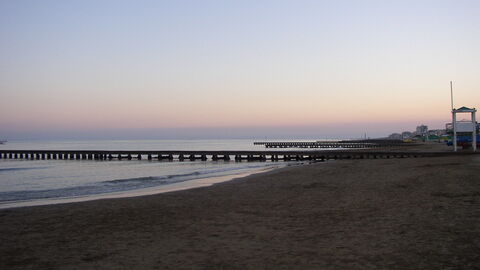
When one thinks of Venice, they think of canals – bodies of water made for transport and access, romantic boat journeys, a range of pretty bridges linking the various districts to one another, a constant battle against marshy lands attempting to reclaim the city – but there is more to the waters of the city beyond the manmade. If you look past the canals, you get to the sea and the beaches. Many somewhat forget it but Venice is not merely a city break destination, it is also a coastal city with lots of the charms that go along with that, including an area that boasts some exceptional beaches to play on, the Lido di Venezia. If you’re planning a city break and have found a vacation rental in Venice, why not also set aside some time to go and explore this less often praised part of the city? Visit the famous museums and churches, enjoy the unique charm of the canals, wander the pretty squares, go on the gondola rides, and then head to the beach for some seaside fun, too, while you’re at it!
The Lido di Venezia is an 11-kilometre-long sandbar in Venice that is famously where the Venice Film Festival takes place each September. At least half of the Adriatic side of the island is one long sandy stretch of beach that is divided into smaller, largely private beaches. However, the northern and southern ends of the island are home to two enormous public beaches. By public water bus, the Lido is only a few minutes from the city centre of Venice and, as such, is a handy place to visit and spend a few hours or a day. It is a popular Adriatic seaside resort and for good reason, with pretty beaches, warm and clean waters, lots of eateries and bars, cute boutiques and shops, and much more besides.
Posted in: Curiosities
Localities
Milan
Museums & Galleries
Must See Attractions
Tourist Attractions
Car lovers from all over the globe will know that Italy is one of the key destinations to visit over the course of your lifetime. Traditionally, Italy has produced some of the world’s favourite cars as well as some of the world’s most desirable luxury cars. As such, these companies and brands often have museums dedicated to their history and the cars that they have made and have made them famous throughout the years. You can head to the Ferrari Museum, the Lamborghini Museum, the Fiat Museum and more but, if you have found a vacation rental in Milan and are exploring the city, then the obvious choice is the Alfa Romeo Museum, located a few kilometres from the city centre of Milan, in Arese.
The Museo Storico Alfa Romeo (now called the Museo Alfa Romeo - La macchina del tempo, which literally means, “The Alfa Romeo Museum – Time Machine”) is dedicated to over 100 years of history of the Alfa Romeo brand. Alfa Romeo, while best known for their cars, has actually produced automobiles, commercial vehicles, railway locomotives, tractors, buses, trams, and marine and aircraft engines throughout the years. This museum tells the tale of the brand and all of those incredible machines that it has put out into the world over time.
Posted in: Central Italy
Curiosities
Latium
Must See Attractions
Tourist Attractions
Water & Amusement Parks
Italy is a country famous for her cinema and contributions to the silver screen throughout history. She has produced incredibly talented writers, directors, and actors, as well as movies. One of the places that these films were made was in Cinecittà Studios, a complex famous for hosting major international productions for almost 80 years, the “Hollywood on the Tiber,” in Rome. However, as times changed, the studio became less profitable in its original form and they had to switch things up and diversify a little, which was how Cinecittà World, an amusement park on the same site, was born. If you are interested in fun and film and are planning on finding a vacation rental in Rome and exploring the city, this might be an interesting spot to pencil into your itinerary.
The Cinecittà Studios were opened in 1937, having been built by Benito Mussolini in an abandoned lot on the Via Tuscolana in Rome. At its height, 350 films were produced on the site a year and Hollywood productions flocked there to make their movies, including classics like, “Ben-Hur,” and, “Cleopatra,” a few years later. Increasingly, however, movies were made outside of studios, on streets and out in the real world, and fewer and fewer big productions came to the studio. From 350 films per annum, the number decreased to only a dozen or so and the studio suffered budget deficits, on average of about $6.8 million a year. Commercials and television productions began to make up the majority of projects shot in the studios and the days of the Hollywood on the Tiber ended.