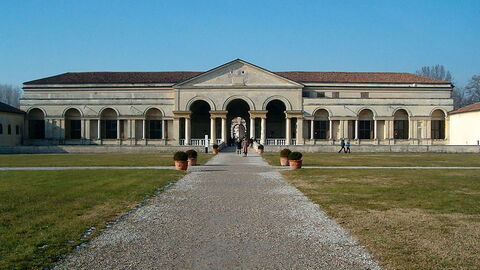
Palazzo del Te is a 16th century villa in Mantua though the title of “palace” does seem more accurate as it is unbelievably grand and combines aspects of palace and villa architecture and function. It has also been called the “greatest of all Mannerist villas”. This astounding building was designed by Giulio Romano, the most gifted of Raphael's students, for Federigo Gonzaga, Duke of Mantua, son of the famous Isabella d'Este and famous in his own right as one of the most cultured and learned off all Renaissance patrons of the arts. A villa suburbana, it was built in the countryside close to the city to take advantage of the fresh air and more rural pursuits without having to venture too far away. Why not find a holiday rental in Lombardy and pay a visit to Mantua and the villa for yourself?
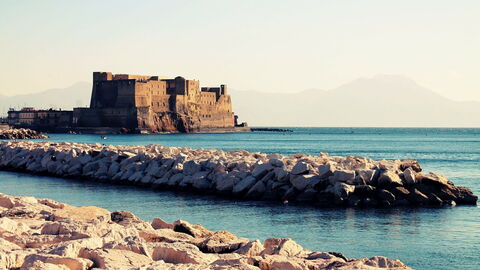
Once you've found the perfect holiday rental in Naples and are exploring the city, you might spend some time visiting any one of her many historic and beautiful castles. During these visits you're likely to learn all about the history, architecture and art of the buildings. However, there are a few that have particularly juicy histories and stories to tell which seem less like a lesson from school and more like the plots of soap operas. One of the lesser known, but rather important, castles among their number is Castel Capuano.
Italy is well-known as a Catholic nation and, due to its long history of Catholicism, has given rise to a large number of saints. With so many saints, not everyone can be patron saint of obvious causes which has lead to the creation of some rather strange ones including a Patron Saint of Cranky Children (St Sebastian). One of the most unusual is, perhaps, St Clare of Assisi. Assisi has had a long history of religious affiliations, with St Francis being intimately connected to the area, but another saint hailing from the town is St Clare, Patron Saint of Television. You read that right, television. Why not find a vacation rental in Umbria and spend a day in the city of Assisi, learning all about this strange saint?
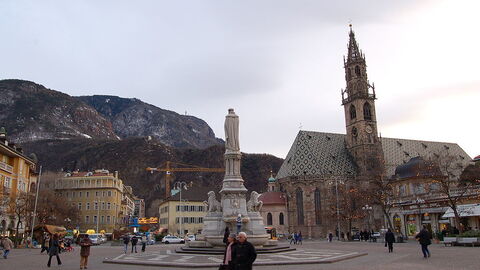
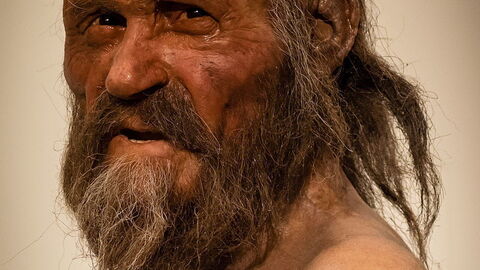
Once you’ve found a vacation rental in Trentino Alto Adige and are planning on visiting the city of Bolzano, make sure to find time to see Ötzi, the 5,000-year-old Iceman and oldest human mummy on earth. Discovered by German tourists in a glacier in the area in 1991, it has been on display in a purpose-built museum since 1998. Ötzi has been the talk of the past years not only in Bolzano, but all over the world and he’s probably the only mummy in the whole world to have an entire museum dedicated just to him. Every year thousands of visitors come to Bolzano just to see him.
The body has been extensively examined, measured, x-rayed, and dated since it has been found and research into the body is on-going to this day. The Archaeology Museum of Bolzano houses the Iceman and also documents the pre-history and early history of the surrounding area from the end of the last Ice Age to the time of Charlemagne. It uses models, reconstructions, stereoscopic images, videos and interactive multimedia stations to provide an interesting, engaging and informative experience. Yet, its main purpose remains to be displaying, housing and researching Ötzi.
How the body is displayed and the museum organised has been very carefully planned. In awareness of fact that the discovery of the body was likely to trigger heated ethical discussions, the careful and restrained presentation of the Iceman was the first and foremost concern when the museum was established in 1998. The current exhibition, as it appears today, is actually the format created for the special 20th anniversary exhibition in 2011. This, however, went on to become the permanent method of display in 2013.
The area surrounding the mummy is stark, made up of white walls that evoke the snow-covered landscape in which it was discovered. Everything surrounding, from fonts to graphics to décor is muted and does not detract from the mummy or sensationalise it. The room is also actually partitioned, meaning those interested in the story but uncomfortable with viewing the body can still enjoy a visit to the museum. The mummy has been placed in a visually separated, tastefully designed room which is kept at a fixed temperature of -6ºC and nearly 100% relative air humidity - the same conditions found in a glacier. The accompanying finds are also kept in acclimatised, nitrogen-filled showcases at a temperature of 18ºC.
Tasteful, fascinating and engaging, this museum is a must for anyone visiting Trentino Alto Adige.
We’ve already written two posts on the story of the Bolzano Iceman and the museum that houses him. However, there is still one important topic which remains to be discussed – his curse. Another part of the story which enriches it further and makes it all the more fascinating, it’s another reason why you should consider finding a holiday rental in Trentino Alto Adige and visiting the Iceman in Bolzano. Whether you believe in such things or not, the stories which follow certainly are rather creepy and do make you wonder just what is happening to make tragedy follow the mummy so very closely.
Claims have long been made that Otzi is cursed. Such things often surround mummies as evidenced by the "Curse of the pharaohs" and the media theme of cursed mummies. This allegation has been encouraged by the deaths of several people connected to the discovery, recovery and subsequent examination of Otzi. It is said that they have all died under mysterious circumstances.
To date there have been nine deaths, four of which were the result of some violence in the form of accidents, which have been attributed to the alleged curse. However, of the hundreds of people who have been involved with the Iceman, this seems a rather small number, in reality. The fact that such a small percentage of them have died over the years has not been shown to be statistically significant.
It all began in 1992 with the death of Dr. Rainer Henn, aged 64, who was the head of the forensic team that examined the body. He died in a crash on his way to give a talk about Otzi. Next was mountaineer Kurt Fritz, who led Dr. Henn and the others to the iceman's body and later gave tours to the site. He later died in an avalanche. Austrian journalist Rainer Hoelzl, who exclusively covered the removal of the body as part of a one-hour documentary, developed a mystery illness a few months after the programme was shown and died. While German tourist Helmut Simon, who found the body, died in a blizzard when he fell into a deep ravine.
The fifth attributed victim, Dieter Warnecke, seems a bit of a stretch, however. He was the head of the mountain rescue team that searched for Helmut Simon and died of a heart attack less than an hour after Simon was buried. This seems unfortunate but hardly a bizarre twist of events that could be ascribed to a curse. As is the case with the 6th victim, archaeologist Konrad Spindler, who died in 2005 of a pre-existing chronic condition. However, what is unfortunate is that he was the curse’s greatest skeptic and was quoted as saying, “I think it's a load of rubbish. It is all media hype. The next thing you will be saying I will be next.”
The other “victims” include 63-year old Dr Tom Loy who died prior to finishing a book on Otzi, Innsbruck professor Friedrich Tiefenbrunner who died during open-heart surgery and was part of Spindler's team and Tom Loy, who had analysed DNA found on Otzi, died in unclear circumstances. Even if you, like us, are prone to brushing off the notion of this curse, you’ve got to admit that it’s a little creepy. Yet, it does make a visit to the Ötzi Museum and Trentino Alto Adige all the more interesting!
— Colette Fitzpatrick
Loading . . .
Attention
An error has occurred, please contact the Service Administrator.