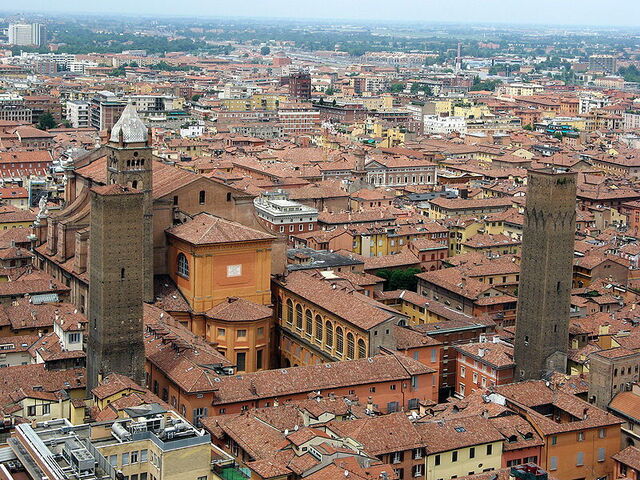
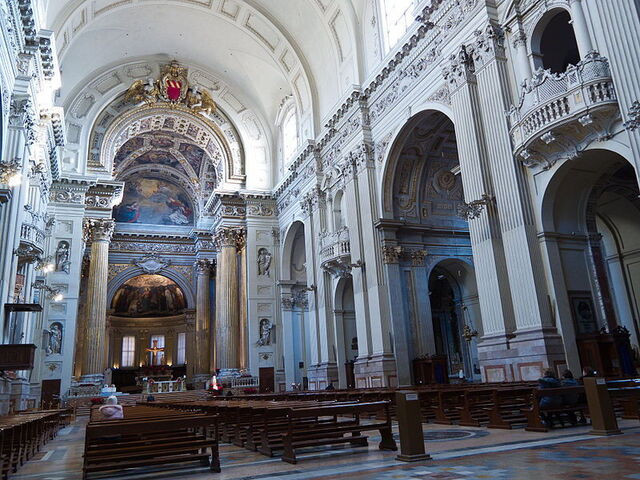
The Cattedrale Metropolitana di San Pietro, or the Metrolpolitan Cathedral of Saint Peter, is the cathedral of Bologna in the Emilia-Romagna region of Italy. The present structure largely dates to the sixteenth century but the history of the building stretches back much further than that. The massive emphatically baroque interior is complimented by a stunning red exterior made from brick covered in a pink-toned plaster and accented with marble ornaments. If you have an interest in Baroque architecture or the history of Italy, this is sure to be fascinating to you. Why not find a holiday rental in Emilia-Romagna and spend a few days exploring Bologna's historic centre?
In 1028, a cathedral had already been built on the site, along with a pre-Romanesque campanile. However, it was destroyed in a fire in 1141. In 1184 it was rebuilt with alterations made in the 14th and 15th centuries. Also in the 15th century, frescoes were added to the Garganelli Chapel by the Ferrarese painters, Francesco del Cossa and Ercole de' Roberti. Sadly, these were almost entirely lost during later reconstructions. Fragments of the original works do exist but that is all that they are, fragments.
The Bishop of Bologna was made Archbishop in the following century and the cathedral raised in rank along with him to “metropolitan church”.
The Bishop of Bologna was made Archbishop in the following century and the cathedral raised in rank along with him to “metropolitan church”.
Around this time an intense period of remodelling began but only the crypt and Greater Chapel survive of this period of change. The alterations managed to undermine the structural integrity of the building and the vaults collapsed at the end of the century. An entirely new building was begun in the 17th century by three architects, Floriano Ambrosini, Alfonso Torreggiani and Cosimo Morelli, along with the new façade (also by Torreggiani) in the Baroque. All that remains of the original structure is the campanile which can still be seen on the interior of the building. Any other trace of the previous Romanesque-Gothic buildings have been lost.
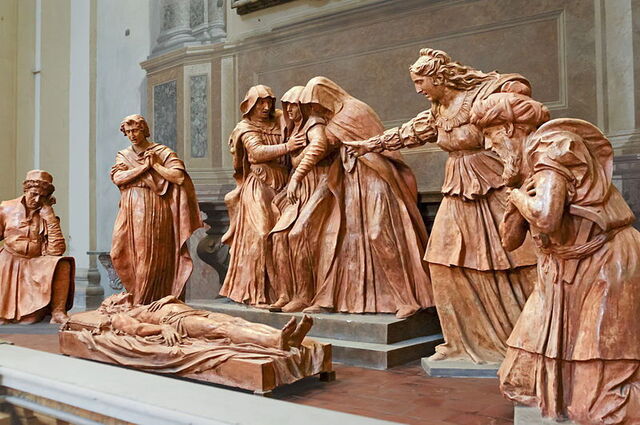
The building is also home to many works of art including Ludovico Carracci's Annunciation in the presbytery, a group of terracotta figures depicting the dead Christ and Mary weeping and paintings by Prospero Fontana and Marcantonio Franceschini.
Photography is not allowed so you really need to experience this building for yourself in order to get any real sense of it. The cathedral is open daily from 7:30-18:45 but access is restricted during services. Admission is free but it is encouraged that you give a small donation to aid the upkeep of the building. Guided tours are also available on Saturdays from 14:00-16:30.
This really is a stunning architectural gem to be visited if you spend time in Emilia-Romagna.
The building is also home to many works of art including Ludovico Carracci's Annunciation in the presbytery, a group of terracotta figures depicting the dead Christ and Mary weeping and paintings by Prospero Fontana and Marcantonio Franceschini.
Photography is not allowed so you really need to experience this building for yourself in order to get any real sense of it. The cathedral is open daily from 7:30-18:45 but access is restricted during services. Admission is free but it is encouraged that you give a small donation to aid the upkeep of the building. Guided tours are also available on Saturdays from 14:00-16:30.
This really is a stunning architectural gem to be visited if you spend time in Emilia-Romagna.
Photo credits
picture 1: Szs / CC BY-SA 3.0 ;
picture 2: CEphoto, Uwe Aranas / CC BY-SA 3.0 ;
picture 3: Didier Descouens / CC BY-SA 4.0
picture 1: Szs / CC BY-SA 3.0 ;
picture 2: CEphoto, Uwe Aranas / CC BY-SA 3.0 ;
picture 3: Didier Descouens / CC BY-SA 4.0