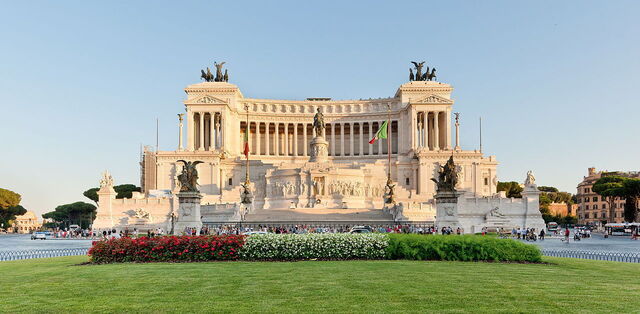
Rome does not lack in famous and astounding monuments. If you visit, you will never be stuck for something to do. However, you might be interested in visiting something uniquely tied into Italian history that is just a little off the beaten track of most tourists, a little less obvious. That something is the Altare dell Patria (Altar of the Fatherland), also known as the Monumento Nazionale a Vittorio Emanuele II (National Monument to Victor Emmanuel II).
Find yourself a vacation rental in Rome, make that once-in-a-lifetime trip, and be sure to include the monument on your itinerary.
The monument was created in order to commemorate Vittorio Emanuele II of Savoy, the first king of Italy and the Risorgimento (unification of Italy). As King of Sardinia with a victory over the Austrian army in Lombardy, he had become a symbol of the Risorgimento.
The monument was created in order to commemorate Vittorio Emanuele II of Savoy, the first king of Italy and the Risorgimento (unification of Italy). As King of Sardinia with a victory over the Austrian army in Lombardy, he had become a symbol of the Risorgimento.
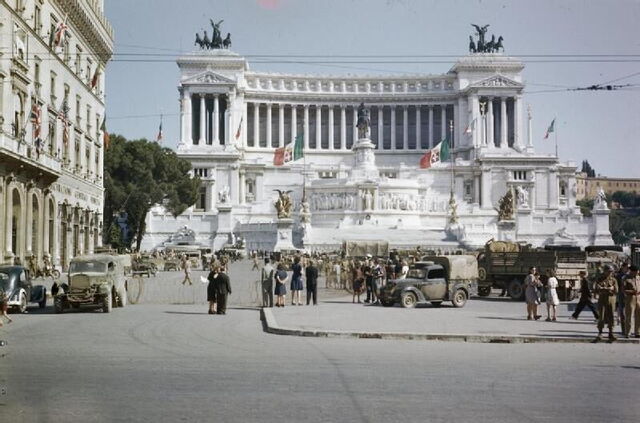
His army joined with Garibaldi, defeated the papal army and the Kingdom of Italy was then proclaimed in 1861 with Victor Emmanuel as king.
This tribute to the king was decided upon in the nineteenth century and a competition was held in order to find the perfect architect and design for this monument. Eventually, Giuseppe Sacconi was decided upon as the winner. Sadly, in order to make space for the monument, medieval churches and ancient monuments were cleared out of the way on the northern slope of the Capitoline Hill.
Construction began in 1885 with the inauguration taking place in 1911, the fiftieth anniversary of the kingdom. However, work on the monument was only actually finished in 1935.
Made of marble from Botticino in the province of Brescia, the monument features multiple allegorical statues, reliefs and murals by a range of artists from all over Italy. It measures 80 meters by 120 meters wide and consists of a large flight of stairs leading up to a massive colonnade. To the right and left of the main entrance are two fountains, representing the two seas that border Italy. At the centre is the colossal equestrian statue of Victor Emmanuel by Enrico Chiaradia. Below this is the Tomb of the Unknown Soldier. The upper section of the monument consists of a massive curved colonnade framed by temple-like wings with a classical front.
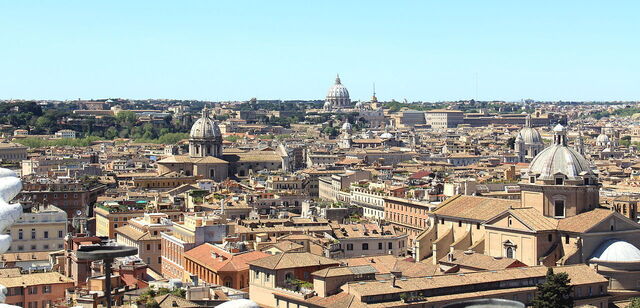
Inside the monument are rooms used for exhibitions and to house the Risorgimento Museum. Also at the site is a panoramic elevator which was added in 2007 and offers a stunning view of the city from the roof. The monument is fascinating but also a source of controversy due to the destruction of sections of Rome which preceded and its size and appearance which some regard as pompous and over-bearing. If anything, this merely makes it all the more interesting a place to visit. Make sure you stop by if you find yourself in a Rome.
This tribute to the king was decided upon in the nineteenth century and a competition was held in order to find the perfect architect and design for this monument. Eventually, Giuseppe Sacconi was decided upon as the winner. Sadly, in order to make space for the monument, medieval churches and ancient monuments were cleared out of the way on the northern slope of the Capitoline Hill.
Construction began in 1885 with the inauguration taking place in 1911, the fiftieth anniversary of the kingdom. However, work on the monument was only actually finished in 1935.
Made of marble from Botticino in the province of Brescia, the monument features multiple allegorical statues, reliefs and murals by a range of artists from all over Italy. It measures 80 meters by 120 meters wide and consists of a large flight of stairs leading up to a massive colonnade. To the right and left of the main entrance are two fountains, representing the two seas that border Italy. At the centre is the colossal equestrian statue of Victor Emmanuel by Enrico Chiaradia. Below this is the Tomb of the Unknown Soldier. The upper section of the monument consists of a massive curved colonnade framed by temple-like wings with a classical front.
Inside the monument are rooms used for exhibitions and to house the Risorgimento Museum. Also at the site is a panoramic elevator which was added in 2007 and offers a stunning view of the city from the roof. The monument is fascinating but also a source of controversy due to the destruction of sections of Rome which preceded and its size and appearance which some regard as pompous and over-bearing. If anything, this merely makes it all the more interesting a place to visit. Make sure you stop by if you find yourself in a Rome.
Photo credits
picture 1: Paolo Costa Baldi / CC BY-SA 3.0
picture 1: Paolo Costa Baldi / CC BY-SA 3.0