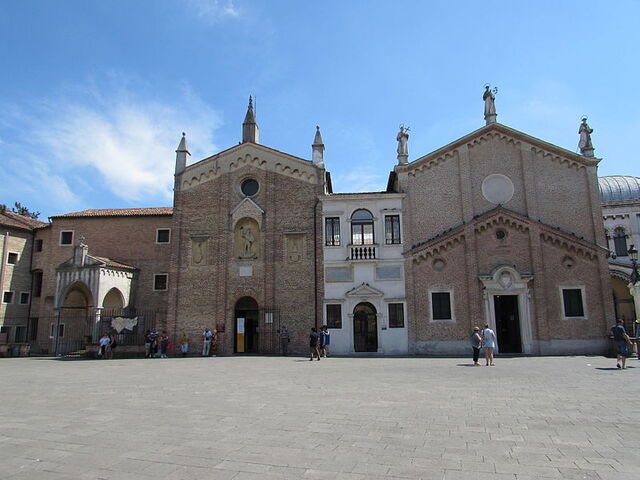
The great painter, Titian, sadly left us very few frescoes by his hand after his death. One of these few examples is a rather well-preserved group in the Scuola del Santo (or “Scoletta”) in Padua which comes from 1511, very early on in his career as an artist. Padua, in Veneto, is actually a city with an extremely rich tradition and heritage of fresco painting.
It is here that we find Giotto's Scrovegni Chapel which cemented the enormous importance of fresco painting as decoration, the tradition of grand fresco cycles and the standard by which all others would come to be measured.
It is here that we find Giotto's Scrovegni Chapel which cemented the enormous importance of fresco painting as decoration, the tradition of grand fresco cycles and the standard by which all others would come to be measured.
If you're an art history nut, this is one city you won't want to miss. Find a luxury villa in Veneto and delve into the vast collection frescoes in Padua.
Titian was not the only painter at large in the Scuola del Santo, though the most famous by far, but his work does stand out quite a bit in quality and impact from his fellow artists.
The other artists involved included Bartolomeo Montagna, Francesco Vecellio, Domenico Campagnola, Girolamo del Santo, Giovanni Antonio Corona and Filippo da Verona among their number.
The cycle decided upon for the building was to be based on the life and miracles of St Anthony. The Scuola del Santo, being part of the complex of buildings connected to the grand Basilica of St Anthony, refers to its purpose as the seat of the Arch-confraternity of St Anthony, a charitable organisation.
St Anthony was the second saint of the Franciscans and a particularly beloved figure in Italy. The church was built for the confraternity in the fifteenth century and a conference room was placed above it in the sixteenth century.
Titian was not the only painter at large in the Scuola del Santo, though the most famous by far, but his work does stand out quite a bit in quality and impact from his fellow artists.
The other artists involved included Bartolomeo Montagna, Francesco Vecellio, Domenico Campagnola, Girolamo del Santo, Giovanni Antonio Corona and Filippo da Verona among their number.
The cycle decided upon for the building was to be based on the life and miracles of St Anthony. The Scuola del Santo, being part of the complex of buildings connected to the grand Basilica of St Anthony, refers to its purpose as the seat of the Arch-confraternity of St Anthony, a charitable organisation.
St Anthony was the second saint of the Franciscans and a particularly beloved figure in Italy. The church was built for the confraternity in the fifteenth century and a conference room was placed above it in the sixteenth century.
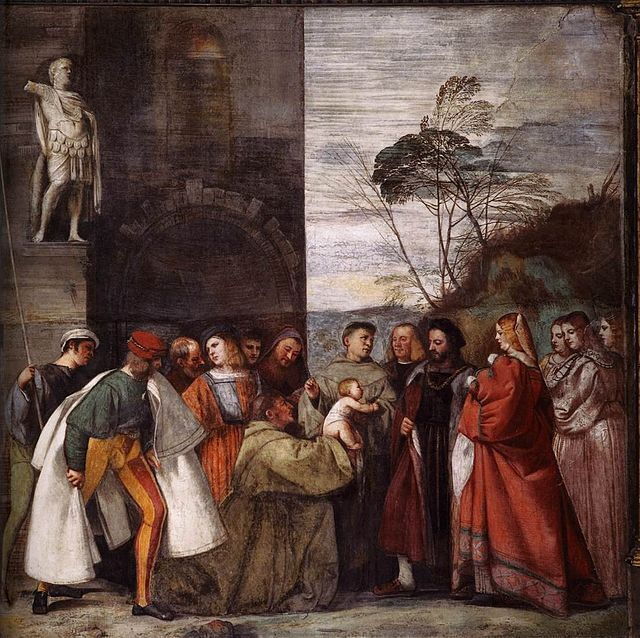
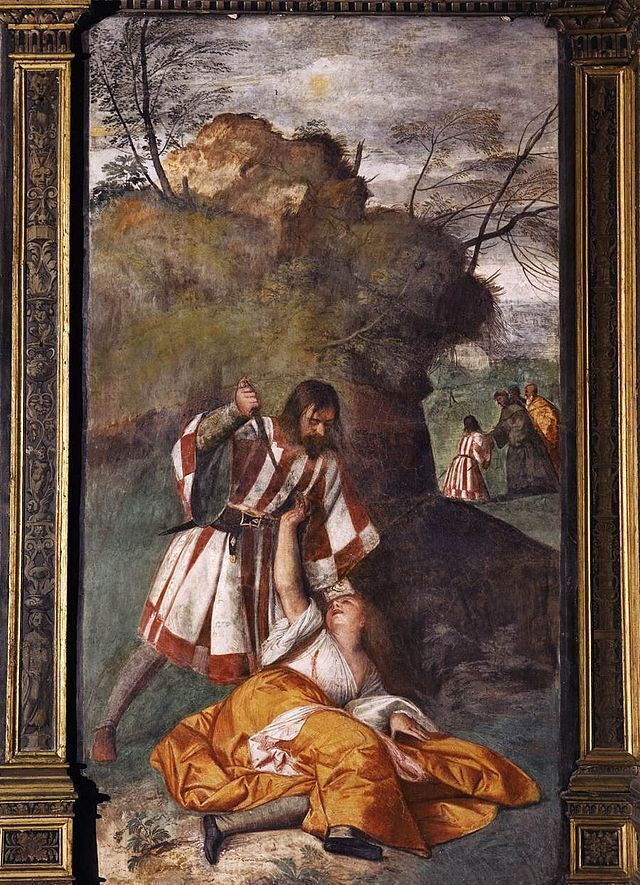
It is in this room that frescoes and sculptures were placed. Titian contributed The Miracle of the Newborn Child, The Miracle of the Jealous Husband and The Miracle of the Wrathful Son to the collection of frescoes. Also held is a sinopia drawing by the young artist with the same subject-matter.
The church is open from 10:00 to 12:00, reopening after 15:00 until 17:00.
Tickets cost just three euro with reductions offered for large enough groups.
A trip to the Scoletta offers a rare opportunity to view frescoes by Titian and works so early on in his career and is not to be missed! If you visit Veneto, be sure to pop by (and to St George's Oratory next door) for all your fresco needs!
The church is open from 10:00 to 12:00, reopening after 15:00 until 17:00.
Tickets cost just three euro with reductions offered for large enough groups.
A trip to the Scoletta offers a rare opportunity to view frescoes by Titian and works so early on in his career and is not to be missed! If you visit Veneto, be sure to pop by (and to St George's Oratory next door) for all your fresco needs!
Photo credits
picture 1: Cezar Suceveanu / CC BY-SA 4.0
picture 1: Cezar Suceveanu / CC BY-SA 4.0