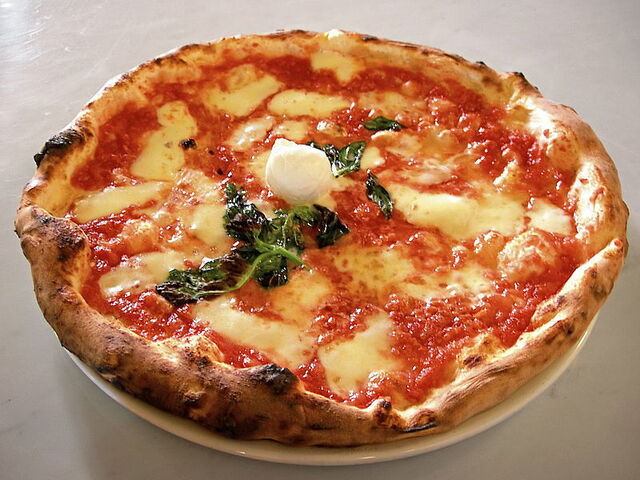
Pizza evolved from flatbread dishes made in Naples in the 18th and 19th centuries. The archetypal flavour, Margherita, also comes from that part of the country and its origins are steeped in local legend. Supposedly, it was first made in 1889 when the Queen of Italy, Margherita, was visiting. The tale goes that the Royal Palace of Capodimonte commissioned Neapolitan pizzaiolo, Raffaele Esposito to produce a dish for the queen. He made three options and the queen favoured the one with tomatoes, basil and Mozzarella, recalling the colours of the Italian flag. The pizza was then named for the queen and continues to bear her name to this day. Though the legend has been disputed by scholars and recent research, the dish remains popular all over the world. However, the best place in the world to try it has to be in Naples itself. Find a villa with pool in Campania, visit Naples, give the real deal a try and be ruined for pizza outside of Italy forever more.
If you can't wait until your trip, try making the famous pizza at home first. Here's our recipe.
Ingredients
Makes four 11 inch pizzas.
For the dough:
450g of Flour, plus extra for the counter
1 teaspoon of instant yeast
1 tablespoon of salt
Extra-virgin olive oil for greasing the bowl
For the topping:
4 teaspoons of extra-virgin olive oil
175g of canned chopped Italian plum tomatoes
1/2 teaspoon of salt
2 cloves of garlic (optional as not in the original recipe)
340g of fresh sliced Mozzarella
16 basil leaves
Method
1. Mix the flour, yeast, and salt in a food processor. With the motor running, add around 280g of warm water, enough to allow the processor to mix it. Allow it to mix for 45 seconds, adding water if it becomes dry or sticky.
2. Oil a bowl with the extra virgin olive oil, place the dough inside and form into a ball and wrap. Leave it to rise for around an hour at room temperature, until it has doubled in size. While this is going on, preheat the oven with a baking stone in it to 250°C.
3. Cut the dough into 4 pieces and also shape these into balls, on a lightly floured counter. Cover and let rest for 15 minutes before using a rolling pin, roll into 10-inch circles with the edges slightly higher than the centre.
4. For the topping, place the pizzas on greaseproof paper and rub with 1 teaspoon of oil. Spoon on the tomatoes and spread gently. Season with a pinch the salt and then top with one quarter of the Mozzarella and 4 basil leaves. Bake for 8 to 10 minutes.
Enjoy and then plan your next trip to Campania! If you want to try more Italian dishes, see our other recipes!
Ingredients
Makes four 11 inch pizzas.
For the dough:
450g of Flour, plus extra for the counter
1 teaspoon of instant yeast
1 tablespoon of salt
Extra-virgin olive oil for greasing the bowl
For the topping:
4 teaspoons of extra-virgin olive oil
175g of canned chopped Italian plum tomatoes
1/2 teaspoon of salt
2 cloves of garlic (optional as not in the original recipe)
340g of fresh sliced Mozzarella
16 basil leaves
Method
1. Mix the flour, yeast, and salt in a food processor. With the motor running, add around 280g of warm water, enough to allow the processor to mix it. Allow it to mix for 45 seconds, adding water if it becomes dry or sticky.
2. Oil a bowl with the extra virgin olive oil, place the dough inside and form into a ball and wrap. Leave it to rise for around an hour at room temperature, until it has doubled in size. While this is going on, preheat the oven with a baking stone in it to 250°C.
3. Cut the dough into 4 pieces and also shape these into balls, on a lightly floured counter. Cover and let rest for 15 minutes before using a rolling pin, roll into 10-inch circles with the edges slightly higher than the centre.
4. For the topping, place the pizzas on greaseproof paper and rub with 1 teaspoon of oil. Spoon on the tomatoes and spread gently. Season with a pinch the salt and then top with one quarter of the Mozzarella and 4 basil leaves. Bake for 8 to 10 minutes.
Enjoy and then plan your next trip to Campania! If you want to try more Italian dishes, see our other recipes!
Photo credits: Valerio Capello / CC BY-SA 3.0;