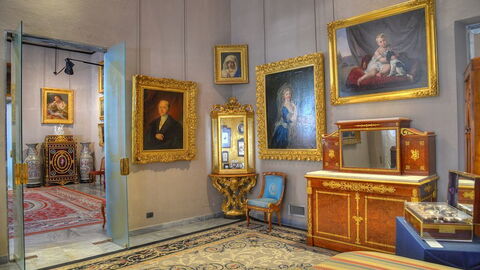
Interior, Palazzo Bianco
Posted in: Architectural Gems Liguria Museums & Galleries Northwest Italy Tourist Attractions Unesco World Heritage Sites
Genoa is a wonderful beauty, filled with architectural gems and hidden treasures. In fact, the built and historical worlds of Genoa are probably what make it most appealing to residents and tourists alike.

Among the stunning buildings in the Old Town, there are the system of 42 Palazzo dei Rolli buildings that have been listed as UNESCO World Heritage sites and, among these, one of the most interesting is the beautiful Palazzo Bianco.

For sipping on rooftop cocktails at sunset, wandering pretty gardens in the afternoon or taking in famous artworks in the morning, it is a perfect one-stop location with everything you could need for a lovely day out. Just find a villa in Liguria and pay a visit to this extraordinary spot for yourself.
Galleria Borbonica
Posted in: Architectural Gems Campania Museums & Galleries Southern Italy Tourist Attractions
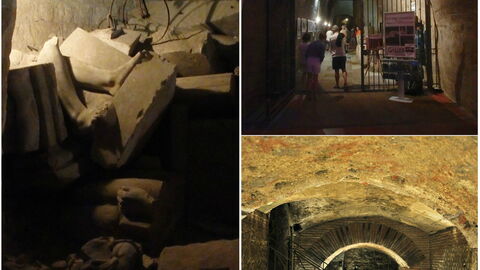
The Galleria Borbonica, or Bourbon Tunnel, is an ancient military underground passage that connects the Royal Palace to the military barracks in Naples. It was built to allow the king to flee to the sea and the soldiers to defend the palace quickly and remains a rather intriguing reminder of the past. Errico Alvino was commissioned by Ferdinand II in 1853 to construct this military passage due to his paranoia about the outbreak of a rebellion. His paranoia turned out to be well-founded as, two years after construction began, the fall of the Bourbon dynasty led to halt of all work on the tunnel.

A network of tunnels carved into the aqueducts of the city, it is 530m in length and remained unused and abandoned until WWII. During the hundreds of bombings in World War II, the people of Naples used the underground passages as shelters. There were also military hospitals established in the tunnel. Furthermore, confiscated vehicles such as cars and bicycles that were taken in this period were kept in the tunnels. A fascist monument made for Aurelio Padovani was also abandoned underground.

Then, again, the tunnels were forgotten until the 2000s, when the curious artefacts that were housed inside and the fascinating passages themselves began to garner attention from locals. In 2014, the tunnels were opened to the public and are now a tourist attraction. You can take several different tours of the tunnels including the Standard Tour, the Adventure Tour (80 minutes; adult/reduced €15/10) and adults-only Speleo Tour (2½ hours; €30).

Standard Tours take you around the displays of vintage cars, motorbikes and water tanks. The Adventure Tour, sees visitors enter a cistern still full of water and sail under the city on a raft. More extreme adventurers, meanwhile, might be more interested in the Speleo Tour, which sees participants don a hard hat and overalls and go crawling through aqueduct tunnels to reach the most beautiful water cisterns.

If you are exploring the city of Naples or have found a luxury villa in Campania, a visit to the Galleria Borbonica is a perfect alternative to more typical tourist attractions and promises to offer a rather unique experience!
Sistine Chapel
Posted in: Central Italy Churches & Religious Buildings Florence History Latium Localities Museums & Galleries Renaissance Tourist Attractions
Michelangelo is one of the most famous artists in the western world, as has been the case since early on his career and will probably always be true. Born in the fifteenth century, he was a Florentine sculptor, painter, poet, architect and engineer who was prodigiously talented and the true definition of a Renaissance man. His work is now scattered across the globe but Florence and Rome remain the best places to see it.

If you are an art lover or a Michelangelo fan, in particular, be sure to find a holiday rental in Rome or luxury villa in Florence or both and track down some of his greatest works. We have gathered a list of some of them to help you out.

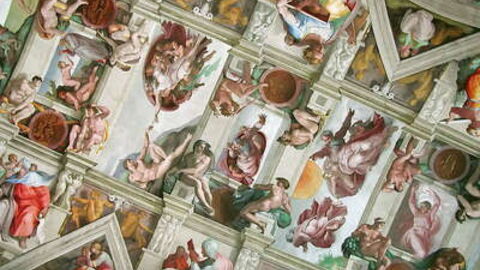
There are certain works that are must-sees, that are worth the lines and waiting. The Sistine Chapel, perhaps Michelangelo's most famous project, is one of these. It was completed under the patronage of three different popes and two bouts of painting over a total of ten years.
Venus of Urbino
Posted in: Central Italy Florence History Localities Museums & Galleries Renaissance Tourist Attractions Tuscany
The Uffizi Gallery, or Galleria degli Uffizi, in Piazza della Signoria is one of the oldest and most famous art museums in Europe and the world. Originally begun under Vasari for Cosimo I de' Medici in 1560, its name comes from the Italian word for “offices”, as that is what the building was intended to house when it was first constructed.
More and more space was dedicated to the display of artworks over time until that became its primary function and then, in the sixteenth century, access was granted to visitors who requested it. In 1765, it was officially opened to public access and, today, it is one of the world's best known and most beloved art galleries. It houses works by many famous artists from all over the world but one of the highlights has to be the work of Titian.
Montefalco, church
Posted in: Architectural Gems Central Italy Churches & Religious Buildings Museums & Galleries Tourist Attractions Umbria
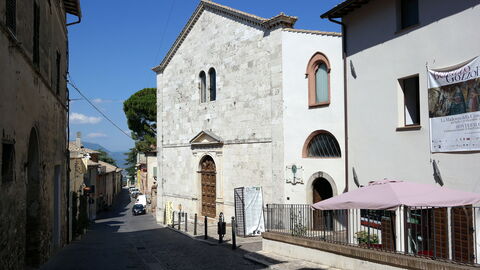
In the Municipality of Montefalco you will find a rather incredible place; the Complex of San Francesco. This a complex of buildings made up of a Franciscan church, convent, museum and picture gallery, wine cellars and crypt and is, unexpectedly, one of the best little cultural institutions that you have never heard of before.

The heart of the complex is the Church of San Francesco, which is homes to 16th century frescoes painted by Benozzo Gozzoli, in the chapel of San Girolamo and in the apse, including scenes from the life of St. Francis.

These are among the most important and well-maintained painting of the cycles of the Renaissance and, as such, are a must-see for art lovers visiting the area. The church itself was built between 1335 and 1338 by the Friars Minor on a rectangular plan and it is composed by a central nave ending in a pentagonal apse.