Chiesa di Sant'Eufemia, interior
Posted in: Architectural Gems Churches & Religious Buildings Must See Attractions Northeast Italy Tourist Attractions Veneto
Verona is already known internationally as a great city of romance in Italy as it was home to, perhaps, the most famous lovers of all time, Romeo and Juliet. In addition to this incredible claim to fame, the architecture of this charming town in Veneto is impossibly pretty and picturesque, adding to the thoroughly romantic ambiance of the place. Of all the lovely and romantic buildings in town, one of the best examples is the exceptionally charming Church of Sant'Eufemia, or Chiesa di Sant'Eufemia. If you have found a vacation rental in Verona and are spending time exploring the city then we highly recommend popping in for a visit to this wonderful architectural gem.

The Church of Sant'Eufemia is located right in the heart of the historic centre of Verona, over the site of a church that dates back to the 5th or 6th century. Various other buildings were placed over top throughout the centuries, with the foundation of the current church dating to the 13th century, when the ruling Della Scala family brought Augustinian monks to the city to build a monastery in what was then the Captains quarter of the city. Though they were brought to Verona in 1262, the necessary donations and funds had to first be gathered in order to pay for the construction of the new church and monastery. The bequest of Alberto della Scala, in particular, was integral in the funding and completion of the project.
Bastion di Saint Remy
Posted in: Architectural Gems Main Islands Pretty Views Sicily and Sardinia Tourist Attractions
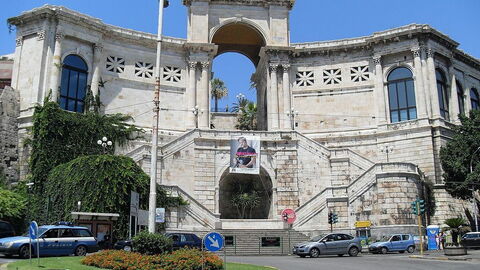
The island of Sardinia is a part of Italy but also has its own rather distinct culture, history, and charm. For those who love Italy and Mediterranean getaways but who are looking for something just a little bit different, it is the perfect destination: a luxury villa in Sardinia will ensure a holiday experience boasting the strong culinary traditions (don't try ordering a pizza in a restaurant before 7pm), incredible natural beauty, ancient ruins, Spanish remnants and influences, and the endless list of things to see and do on the island.

The Sardinian capital of Cagliari, equally, is uniquely distinct and lovely. Home to around 155,000 inhabitants, Cagliari is a university town and an ancient archiepiscopal district that is divided into four quarters: Castello, Stampace, Marina and Villanova. The historic core of the city is the district of Castello, which is one of the most picturesque Old Towns in all of Italy and the kind of place where one should aim to get a little lost in order to have a proper wander and to soak up the unique atmosphere of the place. If you're taking the time to really see Cagliari then you really should come to explore the wider avenues and winding little roads, the pretty little squares framed by colourful houses, the lines of washing strung between buildings, the medieval gates and historic buildings, and the views out over the harbour in this picturesquely ancient part of the city.
Piazza della Repubblica
Posted in: Architectural Gems Curiosities Florence Localities Must See Attractions Pretty Views Tourist Attractions
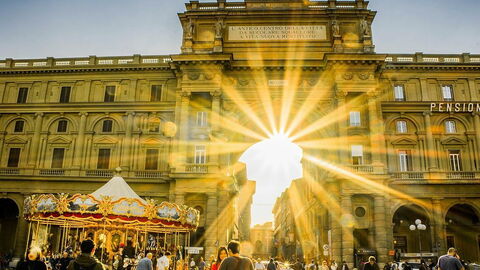
While there are lots of incredible traditional tourist attractions to seek out if you have found a luxury villa in Florence and are spending some time exploring the city, it is also a great place to wander around. Wandering semi-aimlessly is always a great way to get to know a new place and Florence, in particular, really rewards visitors who explore her streets as the incredible grandeur of her architecture and the impossible wealth of things to see and do mean that it is a true feast for the eyes. From grand old palaces where the nobles of Florence would stay when they weren't in their country homes on estates located throughout Italy and many of which now house excellent museums of art, fashion and more, to stunning churches and religious buildings like gilded jewellery boxes that are stuffed with amazing works of art and meticulously handcrafted objects. From gardens overflowing with blooms, to wonderful restaurants and cafes and bars (that have existed for centuries in some cases), to plazas offering incredible views over the city and filled with fountains and statues by history's most famous artists, the city is just full of abject beauty and wonder. If you are wandering around the city, one particular plaza (and one of the prettiest) that you will likely encounter is the Piazza della Repubblica.
Villa Carlotta
Posted in: Architectural Gems Lakes Localities Lombardy Northwest Italy Parks & Gardens Pretty Views Tourist Attractions
There are some places that are so cinematically beautiful and impressive it is hard to believe that they are real, that they haven't been perfectly put together to appear on a screen or page. Imagine, for example, a stunningly pretty Italian palace that looks strikingly like a perfect little doll's house, surrounded by gardens heavy with the smell of roses, filled inside with lyrical sculptural works by Canova, and overlooking the tranquil waters of the beloved and lovely Lake Como...sounds too good to be true, right? And, yet, this is a real description of the utterly idyllic Villa Carlotta in Tremezzina. One of Italy's most charming and wonderful examples of a historic villa (which is saying something as there is no shortage of stunning villas in Italy!), this incredible architectural gem is a must-see for those who have found a vacation rental in Lombardy and who are exploring the most beautiful nooks and crannies of Lake Como.

The Villa Carlotta traces its origins to the rise of the Clerici family from rural origins to successful silk merchants in the 16th century due to the efforts of Giorgio Clerici. His sons then furthered the wealth and status of the family with Pietro Antonio Clerici being made a Marquis and Carlo becoming the owner of several palaces in Milan and Brianza. Carlo's son, also named Giorgio Clerici, was also a marquis and then became a senator in 1684 and was nominated as President of the Senate in 1717. It was he who decided to establish a country estate on ancestral lakeside land at Tremezzo and its first iteration was completed in 1695. His great grandson Anton Giorgio Cerici then completed the villa in 1745 but died with little money left to the estate after sinking major investments into the Palazzo Clerici in Milan. Unusually, we do not actually know for certain who the architect of the villa was.
Baths of Caracalla
Posted in: Architectural Gems Central Italy History Latium Must See Attractions Roman Empire Tourist Attractions
Rome is dotted with the most extraordinary tourist attractions and ancient architectural gems that were so well-built in the time of the Ancient Romans that they have remained standing to this day, hundreds and hundreds of years (and even millennia) later. These lofty examples of Roman architectural and structural prowess dot the city, set among the bustling daily life of modern-day Romans, and attract endless crowds of tourists who have been coming since the 17th century to admire them and learn from them. If you have always wanted to see those famous ruins of that long-gone empire then browse our vacation rentals in Rome and start planning the trip of your dreams to finally go and make it happen.

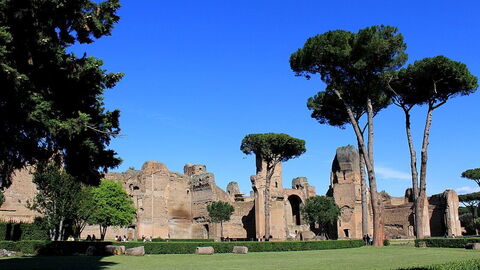
One of the more famous examples in the city of these incredible ruins is the Baths of Caracalla. This ancient thermal complex was once the city's largest public baths, or thermae, and was likely built in the period between 211 or 212AD and 216 or 217AD, during the rule of the emperors Septimus Severus and his son, Caracalla, for whom it was named. Located in the southern area of Rome of Regio XII at the time, the site on which the Baths were built was formerly a vast garden that was known as the Horti Asiniani. In fact, the so-called Farnese Bull sculptural group that came to adorn the Baths was actually already present in the gardens and later moved into the Baths after they were built. Work on the Baths was fast-tracked, with back-breaking efforts required from the workers doing the actual manual labour, in order to get it finished in the relatively short, approximately six-year-long, period in which it was built and from then on it was in use until the 6th century with some later renovations and modifications by subsequent rulers.