Villa Carlotta
Posted in: Architectural Gems Lakes Localities Lombardy Northwest Italy Parks & Gardens Pretty Views Tourist Attractions
There are some places that are so cinematically beautiful and impressive it is hard to believe that they are real, that they haven't been perfectly put together to appear on a screen or page. Imagine, for example, a stunningly pretty Italian palace that looks strikingly like a perfect little doll's house, surrounded by gardens heavy with the smell of roses, filled inside with lyrical sculptural works by Canova, and overlooking the tranquil waters of the beloved and lovely Lake Como...sounds too good to be true, right? And, yet, this is a real description of the utterly idyllic Villa Carlotta in Tremezzina. One of Italy's most charming and wonderful examples of a historic villa (which is saying something as there is no shortage of stunning villas in Italy!), this incredible architectural gem is a must-see for those who have found a vacation rental in Lombardy and who are exploring the most beautiful nooks and crannies of Lake Como.

The Villa Carlotta traces its origins to the rise of the Clerici family from rural origins to successful silk merchants in the 16th century due to the efforts of Giorgio Clerici. His sons then furthered the wealth and status of the family with Pietro Antonio Clerici being made a Marquis and Carlo becoming the owner of several palaces in Milan and Brianza. Carlo's son, also named Giorgio Clerici, was also a marquis and then became a senator in 1684 and was nominated as President of the Senate in 1717. It was he who decided to establish a country estate on ancestral lakeside land at Tremezzo and its first iteration was completed in 1695. His great grandson Anton Giorgio Cerici then completed the villa in 1745 but died with little money left to the estate after sinking major investments into the Palazzo Clerici in Milan. Unusually, we do not actually know for certain who the architect of the villa was.
Devil's Valley
Posted in: Central Italy Curiosities Spa Tourist Attractions Tuscany
Over on Tuscany Villas, we have covered the famous bath and spa towns of Tuscany pretty extensively. The region is home to a rather surprising number of beautiful towns that boast naturally-occurring thermal springs and around these long-standing tourist attractions large-scale wellness and spa industries have developed, making said towns the perfect place to head to if you have found a vacation rental in Tuscany and are looking to unwind and pamper yourself. However, while there are plenty of pretty spa towns with great resources to choose from, if you are looking for something less picturesque and more cinematic, if you are looking for something more unique, then we recommend heading to Larderello and the Valle del Diavolo, or the, “Devil's Valley.”

Located in Pomarance, a hilltop medieval town that is situated between Volterra and Massa Marittima, Larderello has been famous for, and attracting visitors to, its hot springs and its rather unique volcanic nature since the time of the Ancient Romans. If you have found a vacation rental in Volterra or a vacation rental in Massa Marittima and you're looking to get off the regular tourist routes to find something a little more special, then we definitely suggest a visit to Larderello. Do keep in mind, however, that it really is a unique place in Tuscany and does not look at all like the Tuscany that most imagine: in place of rolling green hillscapes and historic little villages, you will be confronted with bubbling, steaming lunar landscapes more akin to the scenery one might imagine in Hell and a modernised town where the harnessing of geothermal energy is the primary industry and the five giant cement towers of a thermal plant dominate the skyline.
Hiker in the forest
Posted in: Activities Central Italy Emilia-Romagna Hiking Must See Attractions Northeast Italy Pretty Views Tourist Attractions Tuscany
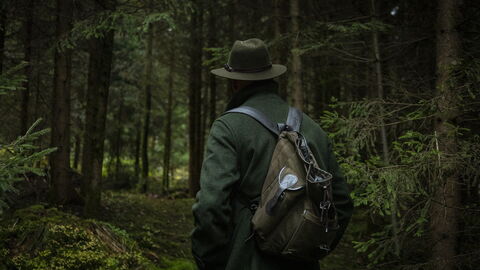
Right along the border between the famously picturesque, rolling green landscapes of Tuscany and Emilia-Romagna, you will find the Appennino Parmense Orientale, a chain of mountains located in the Eastern part of the Province of Parma. For those who have found a vacation rental in Emilia-Romagna or a vacation rental in Tuscany and who are looking to go hiking during their stay in Italy, it is definitely a place to take note of as it boasts lots of different routes and incredible views. Whether you are an experienced hiker, a hobbyist, or a budding photographer looking to simply dip your toes in the water and get some great shots, whether you want to stretch your legs or have an adventure, whether you have a whole day to spend or just hours, you'll find a trail (or a part of a trail) that will suit your needs in this part of the world. However, if you're particularly interested in pretty scenery and breathtaking views, then there is one section of the mountain range that we would recommend: Monte Sillara and her twin lakes that offer an extraordinary panorama right over the surrounding landscape, right out to the islands of the Tuscan Coast and to Corsica on the clearest days.
Baths of Caracalla
Posted in: Architectural Gems Central Italy History Latium Must See Attractions Roman Empire Tourist Attractions
Rome is dotted with the most extraordinary tourist attractions and ancient architectural gems that were so well-built in the time of the Ancient Romans that they have remained standing to this day, hundreds and hundreds of years (and even millennia) later. These lofty examples of Roman architectural and structural prowess dot the city, set among the bustling daily life of modern-day Romans, and attract endless crowds of tourists who have been coming since the 17th century to admire them and learn from them. If you have always wanted to see those famous ruins of that long-gone empire then browse our vacation rentals in Rome and start planning the trip of your dreams to finally go and make it happen.

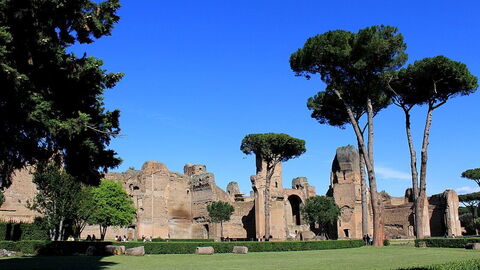
One of the more famous examples in the city of these incredible ruins is the Baths of Caracalla. This ancient thermal complex was once the city's largest public baths, or thermae, and was likely built in the period between 211 or 212AD and 216 or 217AD, during the rule of the emperors Septimus Severus and his son, Caracalla, for whom it was named. Located in the southern area of Rome of Regio XII at the time, the site on which the Baths were built was formerly a vast garden that was known as the Horti Asiniani. In fact, the so-called Farnese Bull sculptural group that came to adorn the Baths was actually already present in the gardens and later moved into the Baths after they were built. Work on the Baths was fast-tracked, with back-breaking efforts required from the workers doing the actual manual labour, in order to get it finished in the relatively short, approximately six-year-long, period in which it was built and from then on it was in use until the 6th century with some later renovations and modifications by subsequent rulers.
Circus Maximus
Posted in: Architectural Gems Central Italy Concerts & Festivals Events Latium Must See Attractions Plays & Shows Tourist Attractions
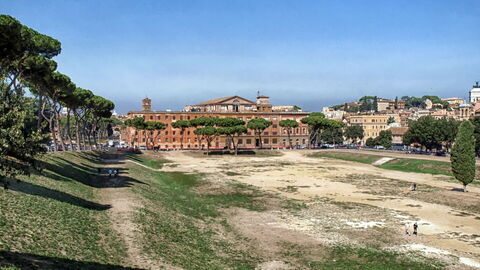
There are few cities with the quantity and quality of incredible landmarks as Rome. It is a truly staggering city to explore, with amazing sights around every corner that show the lingering presence of the grand history and heritage of Rome, living today alongside the hustle and bustle of contemporary life. Some of these landmarks are now cordoned off and require tickets and queuing up and milling along with other tourists on tours to view them but some have been absorbed into the landscape of the city in a more natural way. One such attraction is the famous Circus Maximus, which was once the site of grand chariot races in the time of the Ancient Romans and is now still very much in use by contemporary Romans as a place for performances, concerts, gatherings, and just sitting out, chatting, and enjoying the view that such noble ruins in the storied cityscape that surrounds afford. If you find yourself on
vacation in Rome, it is definitely a spot to pencil in as it is a key attraction, free to visit, and a little less hectic than many of Italy's other famous landmarks.