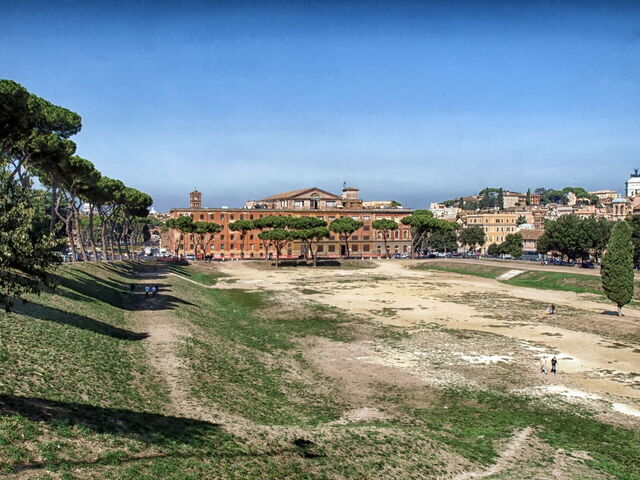
There are few cities with the quantity and quality of incredible landmarks as Rome. It is a truly staggering city to explore, with amazing sights around every corner that show the lingering presence of the grand history and heritage of Rome, living today alongside the hustle and bustle of contemporary life. Some of these landmarks are now cordoned off and require tickets and queuing up and milling along with other tourists on tours to view them but some have been absorbed into the landscape of the city in a more natural way. One such attraction is the famous Circus Maximus, which was once the site of grand chariot races in the time of the Ancient Romans and is now still very much in use by contemporary Romans as a place for performances, concerts, gatherings, and just sitting out, chatting, and enjoying the view that such noble ruins in the storied cityscape that surrounds afford. If you find yourself on
vacation in Rome, it is definitely a spot to pencil in as it is a key attraction, free to visit, and a little less hectic than many of Italy's other famous landmarks.
vacation in Rome, it is definitely a spot to pencil in as it is a key attraction, free to visit, and a little less hectic than many of Italy's other famous landmarks.
Despite being used as a public park in which big events occasionally occur today, the Circus Maximus was originally intended as, and designed to be, a chariot-racing stadium and mass entertainment venue. So, indeed, it was regularly a site of excitement and grand events and was the first and largest stadium in ancient Rome and its later Empire. Measuring 62m by 118m and able to accommodate hundreds of thousands of spectators in its final iteration, this massive and impressive stadium would become the model upon which circuses throughout the Roman Empire were based.
Situated in the Valley of Murcia, between Rome's Aventine and Palatine Hills, an area of rich agricultural land in Rome's early days, the Circus Maximus was first built in the 6th century BCE by Tarquinius Priscus, the fifth king of Rome. In 329BCE permanent starting gates were constructed and, gradually, under different rulers and throughout different eras, the Circus was added to and refined and expanded. By 7BCE it had so evolved that Dionysius of Halicarnassus described it as, "one of the most beautiful and admirable structures in Rome,” and it could accommodate an astounding 150,000 people. Outside the venue itself, lots of other businesses and attractions began to set up as people from all over flocked to attend events at the Circus. Dionysius describes the, “entrances and ascents for the spectators at every shop, so that the countless thousands of people may enter and depart without inconvenience." These shops that he mentions were an arcade of wooden structures that were inhabited by cooks, astrologers, prostitutes, and more, all flaunting their wares until the disastrous fire of 64AD. By then, 250,000 persons, including those viewing the arena from the slopes of the Aventine and Palatine hills, could attend the events at the stadium.
In addition to the chariot races for which the Circus Maximus is now so famous, the stadium also played host to gladiatorial combats, wild animal hunts, athletic events, and processions. By the time of Augustus, seventy-seven days each year were given over to public games, with races on just seventeen of them. However, these days of racing were jam-packed with ten or twelve races a day, until Caligula doubled that number. From his reign on, twenty-four races became typical and in the time of Domitian there were even 100 races a day, though with a reduced number of laps to fit them all in. The events became wildly popular and many charioteers became wealthy celebrities of their times, with ardent fans and detractors both. Later, when Rome fell to the barbarians and the fortunes of the empire changed, the sponsorship of the races fell entirely on the emperor and they were phased out, with the last race in the Circus Maximus recorded by Procopius as having occurred in 550AD. Throughout the following centuries, the site was used for various purposes after it fell into ruin and disuse, alternately housing homes, markets, and more. Excavations began in the 19th century and recovered the seats and layout with the area, eventually coming to be used as a public park in which what is left of the ruins are preserved. Occasionally, it is still a site of grand events and hosted the Rome edition of Live 8 and massive concerts by Genesis and the Rolling Stones as well as operatic, musical, theatrical, and other performances and special events.
As Italy opens back up after the events of recent months and, indeed, so does Rome, the Circus Maximus will be once again playing a central role in Roman life and entertainment as it is used to host operas once more. Summer opera in Rome is normally held at the Baths of Caracalla but this vast bathing and gymnasium complex from the time of the Roman Empire is not quite vast enough to hold crowds with the necessary social distancing rules that are in place. Instead, the immense and historic stadium that is the Circus Maximus will be put to use yet again and its famously large capacity will be used to the advantage of opera-lovers and those keen to get back to live events and performances. The Teatro dell’Opera di Roma will be the first European opera house to resume productions since lockdown and there will be performances of Rigoletto, The Barber of Seville, and The Merry Widow, with Verdi's Rigoletto beginning the season on the 16th of July. The opening night of the Barber of Seville on the 22nd of July will be exclusively for frontline staff. With ballerinas not allowed to touch or lift each other unless they are a couple off-stage as well as on, these will certainly be performances with a difference, emblematic of our times.
Rome is not quite yet as we all have remembered or dreamed of but those ancient structures have continued to stand, as they have for thousands of years, and the likes of the Circus Maximus will remain awaiting as we count down the days until everyone is free to visit Italy once more.
Situated in the Valley of Murcia, between Rome's Aventine and Palatine Hills, an area of rich agricultural land in Rome's early days, the Circus Maximus was first built in the 6th century BCE by Tarquinius Priscus, the fifth king of Rome. In 329BCE permanent starting gates were constructed and, gradually, under different rulers and throughout different eras, the Circus was added to and refined and expanded. By 7BCE it had so evolved that Dionysius of Halicarnassus described it as, "one of the most beautiful and admirable structures in Rome,” and it could accommodate an astounding 150,000 people. Outside the venue itself, lots of other businesses and attractions began to set up as people from all over flocked to attend events at the Circus. Dionysius describes the, “entrances and ascents for the spectators at every shop, so that the countless thousands of people may enter and depart without inconvenience." These shops that he mentions were an arcade of wooden structures that were inhabited by cooks, astrologers, prostitutes, and more, all flaunting their wares until the disastrous fire of 64AD. By then, 250,000 persons, including those viewing the arena from the slopes of the Aventine and Palatine hills, could attend the events at the stadium.
In addition to the chariot races for which the Circus Maximus is now so famous, the stadium also played host to gladiatorial combats, wild animal hunts, athletic events, and processions. By the time of Augustus, seventy-seven days each year were given over to public games, with races on just seventeen of them. However, these days of racing were jam-packed with ten or twelve races a day, until Caligula doubled that number. From his reign on, twenty-four races became typical and in the time of Domitian there were even 100 races a day, though with a reduced number of laps to fit them all in. The events became wildly popular and many charioteers became wealthy celebrities of their times, with ardent fans and detractors both. Later, when Rome fell to the barbarians and the fortunes of the empire changed, the sponsorship of the races fell entirely on the emperor and they were phased out, with the last race in the Circus Maximus recorded by Procopius as having occurred in 550AD. Throughout the following centuries, the site was used for various purposes after it fell into ruin and disuse, alternately housing homes, markets, and more. Excavations began in the 19th century and recovered the seats and layout with the area, eventually coming to be used as a public park in which what is left of the ruins are preserved. Occasionally, it is still a site of grand events and hosted the Rome edition of Live 8 and massive concerts by Genesis and the Rolling Stones as well as operatic, musical, theatrical, and other performances and special events.
As Italy opens back up after the events of recent months and, indeed, so does Rome, the Circus Maximus will be once again playing a central role in Roman life and entertainment as it is used to host operas once more. Summer opera in Rome is normally held at the Baths of Caracalla but this vast bathing and gymnasium complex from the time of the Roman Empire is not quite vast enough to hold crowds with the necessary social distancing rules that are in place. Instead, the immense and historic stadium that is the Circus Maximus will be put to use yet again and its famously large capacity will be used to the advantage of opera-lovers and those keen to get back to live events and performances. The Teatro dell’Opera di Roma will be the first European opera house to resume productions since lockdown and there will be performances of Rigoletto, The Barber of Seville, and The Merry Widow, with Verdi's Rigoletto beginning the season on the 16th of July. The opening night of the Barber of Seville on the 22nd of July will be exclusively for frontline staff. With ballerinas not allowed to touch or lift each other unless they are a couple off-stage as well as on, these will certainly be performances with a difference, emblematic of our times.
Rome is not quite yet as we all have remembered or dreamed of but those ancient structures have continued to stand, as they have for thousands of years, and the likes of the Circus Maximus will remain awaiting as we count down the days until everyone is free to visit Italy once more.