Krampus
Posted in: December Events Friuli Venezia Giulia Legends Northeast Italy Tourist Attractions
Santa is familiar to all of us. He's that jolly, ruddy-cheeked, bearded gentleman that delivers presents to all the children in the world on Christmas Eve. His origins as a Turkish saint may be less familiar to some and his evil counterpart, Krampus, probably even less so.

While Santa Claus is all things comfy and nice, Krampus is a literal demon. He is pictured with big curling horns, dark hair and fangs and comes equipped with a chain and bells that he lashes about, along with a bundle of birch sticks meant to swat naughty children. His aim? Well, it sure isn't to deliver lovely gifts or, even, lumps of coal. No, Krampus has little sympathy for the bad kids. He doesn't try and teach them a lesson or the error of their ways, he merely hauls them down to the underworld.

The name Krampus is derived from the German word “krampen”, which means claw. Said to be the son of Hel in Norse mythology, he was created as a counterpart to kindly St. Nicholas and is part of a centuries-old Christmas tradition in Germany. According to folklore, Krampus purportedly shows up in towns the night before December 6, at night known as Krampusnacht, or Krampus Night. December 6, meanwhile, happens to be Nikolaustag, or St. Nicholas Day, when German children look outside their door to see if the shoe or boot they'd left out the night before contains either presents (a reward for good behavior) or a rod (bad behavior).

Krampus, as a legend, and the celebrations surrounding his existence, were long suppressed by the Catholic church as pagan traditions. However, in recent years, Krampus has reared his horned head once more and is becoming increasingly popular. He has been featuring in popular culture more and more, being referenced in television shows, videos and movies. In fact, a whole movie was made based on the legend and released last Christmas.

If you are curious about Krampus, there are even towns in Italy, such as Pontebba, that have celebrations dedicated to the beast. Just find a vacation rental in Friuli Venezia Giulia and indulge a creepier festive tradition this Christmas. If you are curious about the celebrations themselves, be sure to read on to our next article to learn more!
Temple of Valadier
Posted in: Architectural Gems Central Italy Churches & Religious Buildings History Must See Attractions The Marches Tourist Attractions Umbria
There is absolutely no lack of things to see and do in Italy. The food is almost universally delicious, the shopping is great, it is home to some of the best beaches in the world and natural delights, and is rich beyond belief in historical, cultural and artistic gems. However, it is also home to many strange and incredible sights that could be called the “Wonders” of Italy. Here are just seven that we have picked out. Here are the Seven Wonders of Italy.

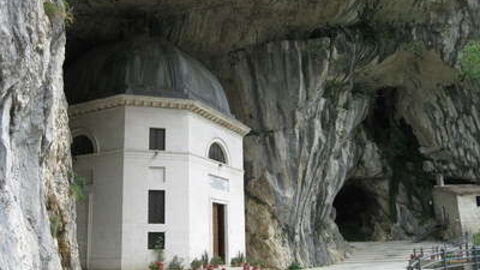
The Temple of Valadier doesn't look real but like something from a fantasy novel. Perched just inside the Frassassi mountain caves in Genga, Le Marche with views across an amazing landscape, it seems like a mythical temple or the home of some magical creature. It is actually a neoclassical church which was built in 1828 for Pope Leone XII, set inside the fantastical Frassassi cave system, which is made up of crags, stalagmites and stalactites, and has a theatrical and breath-taking appearance. To visit just, find a holiday rental in Le Marche and spend a day exploring this special place.
Dishes being plated
Posted in: Emilia-Romagna Food and Wine Northeast Italy Restaurants & Cafés Slow Food Tourist Attractions
Food is one of the things that makes many choose Italy as a holiday destination. The culture of dining, of spending hours eating and enjoying the company of your fellow diners, no technology infringing upon the experience, is something that appeals to residents of countries where this has died in favour of busy schedules and convenience. Plus, good food is never far away or hard to find and Italian cuisine is, by and large, a comforting, hearty style that developed from peasant dishes. However, if you want to try something a little different, why not supplement your Italian dining experiences with a trip to the best restaurant in the world?

Osteria Francescana is located in Modena and does not offer a typical Italian dining experience by any means. It is, however, somewhere that should make foodies excited. Just find a villa with pool in Emilia-Romagna and book a table well in advance to try it out for yourself.
Carpino Folk Festival, crowd
Posted in: Apulia Curiosities Must See Attractions Southern Italy Tourist Attractions
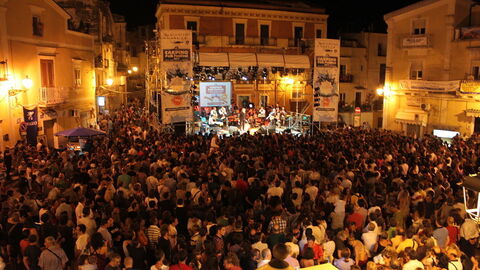
Carpino, in Puglia, is within a two hour drive of the busy international airport Bari but is probably not a name that many are very familiar with. Yet, each summer, thousands descend upon this little town for an incredible music festival: the Carpino Folk Festival.

The setting could not be more perfect or picturesque with the sun shining overhead, kissing the white-washed buildings, open piazza, cobbled lanes and buzzing crowds, excited to take in the music and festivities.

Down below, the lovely Lake Varano, olive groves, beach resorts and Gargano National Park all stretch out like a painting. The whole thing makes for an incredible atmosphere that can not be replicated elsewhere.
Montefalco, church
Posted in: Architectural Gems Central Italy Churches & Religious Buildings Museums & Galleries Tourist Attractions Umbria
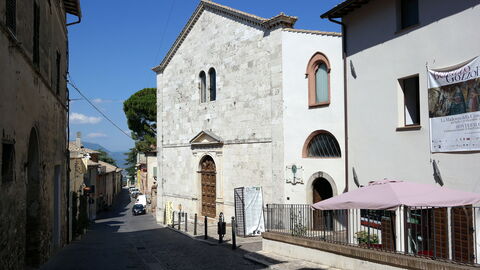
In the Municipality of Montefalco you will find a rather incredible place; the Complex of San Francesco. This a complex of buildings made up of a Franciscan church, convent, museum and picture gallery, wine cellars and crypt and is, unexpectedly, one of the best little cultural institutions that you have never heard of before.

The heart of the complex is the Church of San Francesco, which is homes to 16th century frescoes painted by Benozzo Gozzoli, in the chapel of San Girolamo and in the apse, including scenes from the life of St. Francis.

These are among the most important and well-maintained painting of the cycles of the Renaissance and, as such, are a must-see for art lovers visiting the area. The church itself was built between 1335 and 1338 by the Friars Minor on a rectangular plan and it is composed by a central nave ending in a pentagonal apse.