We have previously noted the influence that the Normans and Arab rulers had on Sicily during periods of rule in the Middle Ages, with the Islamic Conquest of 827-1091AD and the Norman era of 1071-1194AD, and how the two cultures remain visible in many places throughout the island. This leftover of the Middle Ages is particularly evident in the city of Palermo, which is a melting pot of Italian, Norman and Middle Eastern cultures and influences, and especially in her architecture. Norman buildings are dotted throughout the island of Sicily – Castelvetrano’s 12 century church of SS. Trinità di Delia, Cefalù’s Cathedral, Monreale’s Cathedral and cloister, and the church of SS. Pietro e Paolo a few kilometres outside of Forza d'Agrò, to name a few – but there are multiple buildings Arab-Norman buildings in Palermo including the Sala di Ruggero in the Royal Palace and the churches of Santo Spirito and San Giovanni degli Eremiti. One of the places and buildings that is most famous, beautiful, and clearly influenced by the wonderful marriage of these two cultures, however, is the stunning Cappella Palatina. The open exchange of Western and Middle Eastern cultures is at its peak here and it is a must-see if you have found a vacation rental in Palermo.
Located on the second floor of the Palazzo dei Normanni (Palace of the Normans), the Cappella Palatina is part of the architectural complex of the Norman Palace and was built as the royal chapel of the Norman kings of Sicily in 1140 for Ruggero II of Sicily. Bringing together the best artisans, materials, techniques, and motifs from all across the extended Norman world, it is an incredible jewellery box of a building. On the plan of a traditional Roman basilica, the chapel has three naves and carries a vaulted wooden roof on rows of granite columns with Cipolin Corinthian capitals bearing Islamic ogive arches. Said roof is covered in elaborate muqarnas, incredible traditional Islamic geometric designs. The walls of the church, however, are the true star of the show, covered in breath-taking Byzantine mosaics that are picked out in gold and vibrant colours.
15
Aug
2019
2019
The world is full of food markets but one of the headiest and most appealing to foodies has to be Palermo's incredible Mercato di Ballarò or Ballarò Market. If you have found a vacation rental in Sicily and are looking for somewhere to get the freshest and best-quality food products, to sample local street foods, and to immerse yourself in Sicilian food culture, then the Mercato di Ballarò is absolutely and undoubtedly a must. Pencil it into your travel itinerary and make sure to leave plenty of space in your stomach before heading out to experience it all for yourself.
According to a 10th -century Arab writer's travel diary, Ballarò Market is the oldest food market in Palermo and the very fact that it was being noted as being a fixture of the city all the way back in the 10th century is astounding and showcases just how steeped in local history and culture it is. Held in Albergheria, one of the four Norman quarters of the capital city of Sicily, it is one of four traditional markets, with each quarter having one of its own. The markets of Ballarò, Vucciria, and Capo are the most famous and popular among both locals and tourists, with the Mercato di Ballarò being the most popular and well-known of all.
The historic markets in Palermo feel a lot like the medinas of Marrakech or Cairo, which makes sense as Sicily was once under Arab rule and many remainders and reminders of this time still flavour the island and Palermo, in particular, from the architecture to the food to the language. This is one of the aspects of Sicilian life in which Arab traditions and culture feel the most alive and best-preserved in the Italy of today. As such, they also offer a rather unique cultural and culinary experience in Italy and really are a must-see.
According to a 10th -century Arab writer's travel diary, Ballarò Market is the oldest food market in Palermo and the very fact that it was being noted as being a fixture of the city all the way back in the 10th century is astounding and showcases just how steeped in local history and culture it is. Held in Albergheria, one of the four Norman quarters of the capital city of Sicily, it is one of four traditional markets, with each quarter having one of its own. The markets of Ballarò, Vucciria, and Capo are the most famous and popular among both locals and tourists, with the Mercato di Ballarò being the most popular and well-known of all.
The historic markets in Palermo feel a lot like the medinas of Marrakech or Cairo, which makes sense as Sicily was once under Arab rule and many remainders and reminders of this time still flavour the island and Palermo, in particular, from the architecture to the food to the language. This is one of the aspects of Sicilian life in which Arab traditions and culture feel the most alive and best-preserved in the Italy of today. As such, they also offer a rather unique cultural and culinary experience in Italy and really are a must-see.
9
Aug
2019
2019
Posted in: Activities
Beaches
Curiosities
Hiking
Main Islands
Pretty Views
Sicily and Sardinia
Tourist Attractions
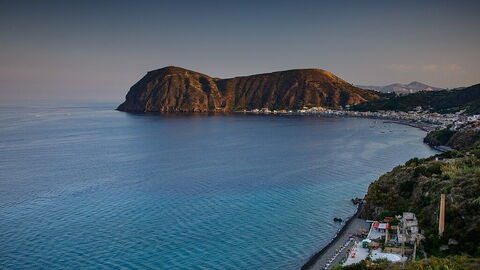
Lipari is the largest of the Aeolian Islands and is located in the Tyrrhenian Sea, just off the northern coast of Sicily. It is an exceptionally beautiful place with pretty and colourful little villages, the most impossibly blue waters, lovely sandy beaches, craggy volcanic rock formations, and a lush green landscape. There are lots of things to see and do but the best all revolve around enjoying the incredible natural beauty of Lipari, with boat trips and hiking the various trails around the island being two of the best activities to really make the most of those stunning surroundings. If you have found a vacation rental in Sicily and you are coming to explore Lipari for the day then we would highly recommend that you follow one particular route, to the Forgia Vecchia, at the top of which you will be rewarded with a sweeping view over all of the incredible natural bounty below.
The Forgia Vecchia is a large obsidian crater, that is 600m wide and 1km long, created by an old obsidian lava flow that came out of Monte Sant'Angelo and it is an extraordinary sight to behold. It also happens to offer the most evocative and exceptional viewing point on the island. The nearby Stromboli may be famous for having the only permanently active volcano in Europe and for its black sand beaches but the lesser-known Monte Sant’Angelo and the Forgia Vecchia hold their own with the incredible setting and a volcano-dyed beach made up of black pebbles that curve around a tranquil bay, framed by the volcano’s lush green slopes.
5
Apr
2019
2019
Those who are interested in archaeology and who are planning a trip to Italy will find themselves in no short supply of incredible archaeological sites and museums to visit. Considering the country's long and complex past, with many different periods of rule and civilizations, it makes sense that these archaeological institutions are dotted all over the country and, among them, are some of the most famous examples in the world. For every Pompeii and Colosseum, however, there are also endless local sites worth perusing. If you have found a vacation rental in Sicily, for example, you may want to head to the island of Isola di San Pantaleo, which is basically one great archaeological site called Mozia, to explore the past.
Mozia can be reached by ferries that launch from two spots on the lagoon shore between Marsala and Trapani. Run by two different companies, these ferries leave and return continuously throughout the day (except during lunch) and return tickets cost around five euros. When you get to the island, you will find a ticket office by the ferry jetty where you can pay for admission to the island and museum. On the island are basic facilities like a restroom, benches, a water fountain to get a drink, and a little cafe serving pastries, pizza, and some other small bits to eat and drink.
4
Apr
2019
2019
The city of Palermo, in Sicily, is a stunning place that is full of Arab-Norman architectural gems, elegant churches and palaces, fascinating attractions, and more. If you have found a vacation rental in Sicily, a visit to Palermo is highly recommended and, while you're in the area, you should also make your way to the nearby seaside resort of Mondello. It is just a short drive from the centre of the Sicilian capital and is more or less a suburb of the city. While often very busy as it is a famously beautiful beach, it is just that, famously beautiful, and, therefore, worth visiting. You'll find both locals and tourists alike, enjoying the turquoise waters, soft sands, and pretty surrounding neighbourhood featuring Liberty-style villas built in the early 20th century.
Long and curving, topped by powdery white sand, sloping down to the crystal clear turquoise sea, dotted by pastel-coloured changing cabins, full of families, groups of elderly ladies, teens bunking school, the beach is both a beautiful place and a culture in its own right. Beloved for generations and very much part of local life, it is a lively and bustling place with plenty of character and a great atmosphere.