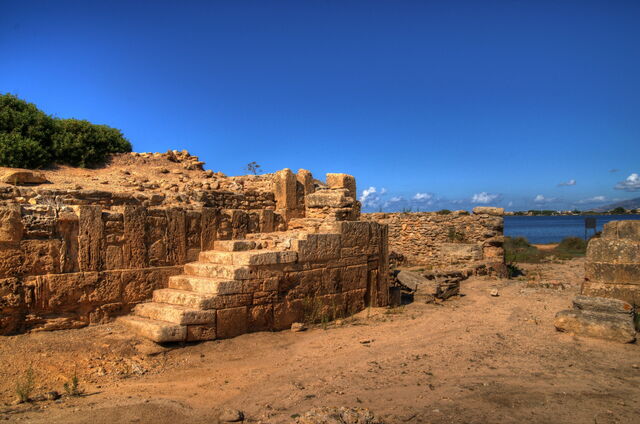
Those who are interested in archaeology and who are planning a trip to Italy will find themselves in no short supply of incredible archaeological sites and museums to visit. Considering the country's long and complex past, with many different periods of rule and civilizations, it makes sense that these archaeological institutions are dotted all over the country and, among them, are some of the most famous examples in the world. For every Pompeii and Colosseum, however, there are also endless local sites worth perusing. If you have found a vacation rental in Sicily, for example, you may want to head to the island of Isola di San Pantaleo, which is basically one great archaeological site called Mozia, to explore the past.
Mozia can be reached by ferries that launch from two spots on the lagoon shore between Marsala and Trapani. Run by two different companies, these ferries leave and return continuously throughout the day (except during lunch) and return tickets cost around five euros. When you get to the island, you will find a ticket office by the ferry jetty where you can pay for admission to the island and museum. On the island are basic facilities like a restroom, benches, a water fountain to get a drink, and a little cafe serving pastries, pizza, and some other small bits to eat and drink.
Mozia can be reached by ferries that launch from two spots on the lagoon shore between Marsala and Trapani. Run by two different companies, these ferries leave and return continuously throughout the day (except during lunch) and return tickets cost around five euros. When you get to the island, you will find a ticket office by the ferry jetty where you can pay for admission to the island and museum. On the island are basic facilities like a restroom, benches, a water fountain to get a drink, and a little cafe serving pastries, pizza, and some other small bits to eat and drink.
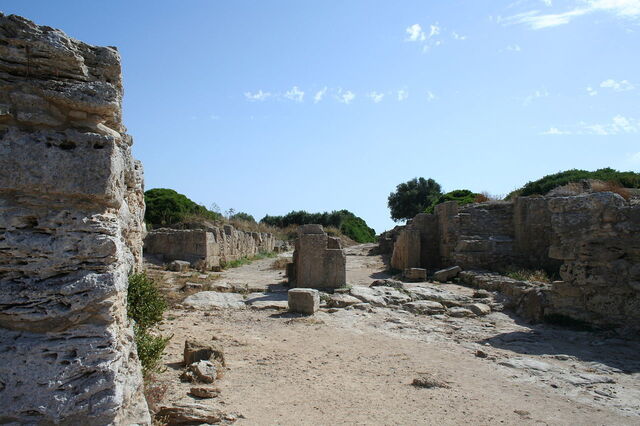
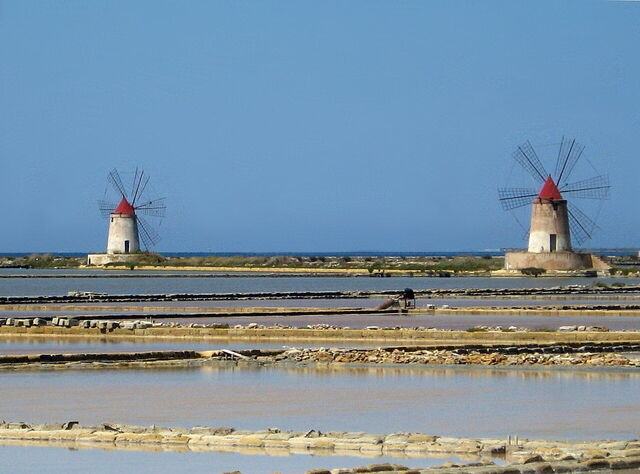
Chosen by the Phoenicians due to its strategic position, surrounded by the shallow waters of the Stagnone Lagoon and with protection from the open sea due to the presence of Isola Longa, a colony was founded on the island in the 8th century BC and called “Motya”. Meaning roughly “spinning centre,” it was named for the wool carding and spinning cottage-industries that were established on the island. Around this time, the Greek colonisation of Sicily began and, by the 6th century BC, Motya was forced to become involved. Despite efforts to protect the island, it was besieged in 397 BC by the tyrant of Syracuse, Dionysius the Elder. The island then went largely forgotten and unnoticed until it was rediscovered in the 1880s by an English nobleman named Joseph Whitaker.
The beautiful 19th century house that Whitaker built on the island is now home to a small museum investigating the history of the island but the whole island is, in truth, an open-air museum with much to see and explore. You can visit the ruins of the ancient Phoenician town, amble along the enclosure wall and discover the watchtowers along it, view the stelae and urns of the necropolis, visit the open-air sanctuary where human sacrifices to the goddess Tanit and the god Baal Hammon were deposited, explore the military buildings, view the two fine black and white pebble mosaic panel of a winged griffin chasing a deer and a lion attacking a bull in the Casa del Mosaici, and take in the amphorae in the Casa delle Anfore located behind the museum.
The beautiful 19th century house that Whitaker built on the island is now home to a small museum investigating the history of the island but the whole island is, in truth, an open-air museum with much to see and explore. You can visit the ruins of the ancient Phoenician town, amble along the enclosure wall and discover the watchtowers along it, view the stelae and urns of the necropolis, visit the open-air sanctuary where human sacrifices to the goddess Tanit and the god Baal Hammon were deposited, explore the military buildings, view the two fine black and white pebble mosaic panel of a winged griffin chasing a deer and a lion attacking a bull in the Casa del Mosaici, and take in the amphorae in the Casa delle Anfore located behind the museum.
In the museum itself you will find a collection of artefacts that were found between 1906 and 1927 on the island and from the necropolis at Birgi, which is located on the shore opposite Mozia. Some of the highlights from the collection include the sculpture collection that features a famous sculpture of a charioteer and some allegorical statuettes of motherhood and a collection of ceramics with both simple Phoenician and Punic pottery and imported decorated Corinthian, Attic and Italiot vases.
While there are information panels and resources throughout the island for those interested in getting the most out of the whole experience, for those less keen on the facts and ins and outs of the details, it is still very much possible to merely enjoy the immersive experience of this truly extraordinary island-museum in Sicily.
While there are information panels and resources throughout the island for those interested in getting the most out of the whole experience, for those less keen on the facts and ins and outs of the details, it is still very much possible to merely enjoy the immersive experience of this truly extraordinary island-museum in Sicily.
Photo credit
Picture 1: Mboesch / CC BY-SA 3.0;
Picture 2: b.roveran / CC BY-SA 2.0;
Picture 3: Rosapicci / CC BY-SA 4.0
Picture 1: Mboesch / CC BY-SA 3.0;
Picture 2: b.roveran / CC BY-SA 2.0;
Picture 3: Rosapicci / CC BY-SA 4.0