Spaghetti alla Puttanesca
Posted in: Campania Food and Wine History Products & Specialities Southern Italy
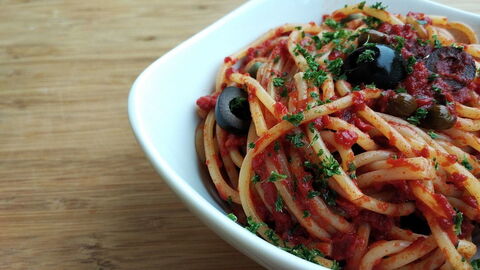
Spaghetti alla Puttanesca is an Italian pasta dish that is said to have been invented in Naples in the mid-20th century. The name literally means "spaghetti in the style of a prostitute" in Italian but don't get too carried away! While the etymology of the name once linked the dish to courtesans of old who were said to favour it as it was quick to make in between appointments, or because it smelled good enough to lure clients in from the street, neither of these two stories seem particularly convincing.
Venice
Posted in: Architectural Gems History Localities Top 10 Lists Tourist Attractions Venice
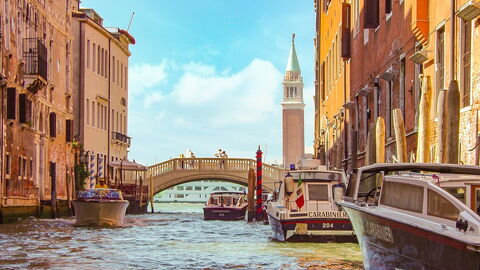
The city of Venice is not only culturally and historically but also physically different to other Italian cities. As much as its history and culture impacted the city's architecture, it is this physicality that had a major impact on how Venetian buildings look and were built. This set the city's architecture apart and marked it as different. Just find a vacation rental in Veneto and come see this uniquely beautiful city for yourself.

Venice is defined by her plan - divided by both streets and canals and built on marshy ground. This confined and restricted space and determined the way in which buildings could be made and how they looked.

The foundations had to be different – a system of pile-grids – and this sense of preoccupation with stability created a predilection for columns, arcades and other support systems.
Ca' D'oro
Posted in: Architectural Gems History Localities Museums & Galleries Top 10 Lists Tourist Attractions Venice
The Eastern influence on Venetian architecture is readily visible throughout the city and creates a stunning effect that is unique to the landscape, look and character of Venice. As a result, there is a distinct atmosphere about the city that, coupled with her famous canals, means you will never mistake Venice for anywhere else. Just find a vacation rental in Veneto and come see if for yourself.

Buildings of the early fifteenth century such as the Ca' D'oro feature Islamic motifs and decorative features, brought about by trade and interaction with the East; ogee arches, mihrab windows and rich foliate carvings, as well as multicoloured stones that come together to create a beautifully ornate Gothic facade. The important landmarks of the city, such as the Doge's Palace and San Marco, are all Gothic or clad in Gothic skins. It was not ignorance that lead to the decision to continue using Gothic forms in Venice, and the north of Italy in general, beyond its natural lifespan, but choice.

Furthermore, this lingering of the Gothic makes for a less stoic and grand architectural character and, instead, something more gilded and ornate.
Venice
Posted in: Architectural Gems History Localities Top 10 Lists Tourist Attractions Venice
Throughout the Renaissance, as new ideas and concepts spread across Italy, different cities expressed more universal notions in their own ways. Each city, state, town or region had unique identities, traditions and heritages and this informed their expression of the ideas of Brunelleschi, Alberti, humanism and the Renaissance at large. Usually this embodiment was not all that different to the prevailing styles but regional quirks or differences are apparent in some centres. Venice, in particular, is a good example of this.

The city is highly unique in many ways, both in its physical and cultural aspects. Built on a lagoon, the city is made up of a series of 72 confini – a very unusual plan which dictated how its buildings might be constructed. The geographical placing of Venice also affected her culture and influences. Here, East and West came together in a unique way and the dual influence of these cultures shaped the culture and architecture of the city.
Bernini, Self-Portrait
Posted in: Central Italy History Latium Museums & Galleries Tourist Attractions
In the final post in this series, we are rounding up the last of our picks of highlights of the incredible Galleria Borghese in Rome. This excellent gallery is home to works by the likes of Caravaggio, Raphael, Titian and Rubens but has a particularly exceptional group of works by Baroque sculptor and architect Bernini.

If you are a Bernini fan, the gallery truly is a must-see. Just find a vacation rental in Rome and drop by the Galleria Borghese to learn more about the great genius manipulator of marble that was Bernini.

7. The Goat Amalthea with the Infant Jupiter and a Faun, Bernini, 1609-1615

This work is actually the earliest known work by the Italian artist Gian Lorenzo Bernini and was produced sometime between 1609 and 1615. It depicts the mythological figure of Amalthea as a goat, the infant god Jupiter, and an infant Faun.