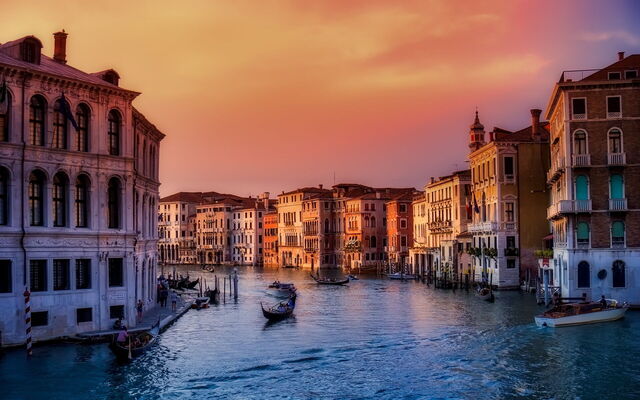
Throughout the Renaissance, as new ideas and concepts spread across Italy, different cities expressed more universal notions in their own ways. Each city, state, town or region had unique identities, traditions and heritages and this informed their expression of the ideas of Brunelleschi, Alberti, humanism and the Renaissance at large. Usually this embodiment was not all that different to the prevailing styles but regional quirks or differences are apparent in some centres. Venice, in particular, is a good example of this.
The city is highly unique in many ways, both in its physical and cultural aspects. Built on a lagoon, the city is made up of a series of 72 confini – a very unusual plan which dictated how its buildings might be constructed. The geographical placing of Venice also affected her culture and influences. Here, East and West came together in a unique way and the dual influence of these cultures shaped the culture and architecture of the city.
The city is highly unique in many ways, both in its physical and cultural aspects. Built on a lagoon, the city is made up of a series of 72 confini – a very unusual plan which dictated how its buildings might be constructed. The geographical placing of Venice also affected her culture and influences. Here, East and West came together in a unique way and the dual influence of these cultures shaped the culture and architecture of the city.
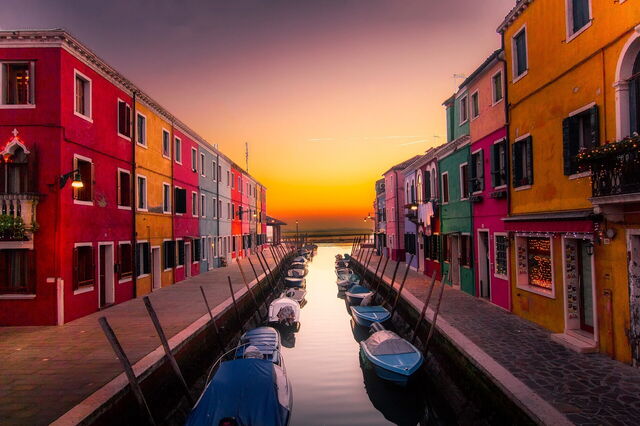
Tradition also meant that the Venetians were more attached than their Florentine counterparts to Gothic and, so, its forms lingered for longer in the architecture of the city.
More than any other Italian state, Venice owed much of her heritage to Byzantine roots. It was during the period of Byzantine rule that Venice was first built upon on a large scale and this legacy held influence over the city long after other cities of Italy and Europe abandoned its architecture. Byzantine decorative traditions, in particular, were to linger in the architecture of Venice.
The East infiltrated Venetian culture through trade as well and it become a “European crossroads”, where East and West met to trade. Venice came to control seventy percent of the Far Eastern spice trade in Europe and became a major centre of the book industry, attracting scholars from all around the Mediterranean. From these varied sources, Venice developed a “desire to draw a rich variety of traditions together” and a taste for colourful, decorative architecture.
More than any other Italian state, Venice owed much of her heritage to Byzantine roots. It was during the period of Byzantine rule that Venice was first built upon on a large scale and this legacy held influence over the city long after other cities of Italy and Europe abandoned its architecture. Byzantine decorative traditions, in particular, were to linger in the architecture of Venice.
The East infiltrated Venetian culture through trade as well and it become a “European crossroads”, where East and West met to trade. Venice came to control seventy percent of the Far Eastern spice trade in Europe and became a major centre of the book industry, attracting scholars from all around the Mediterranean. From these varied sources, Venice developed a “desire to draw a rich variety of traditions together” and a taste for colourful, decorative architecture.
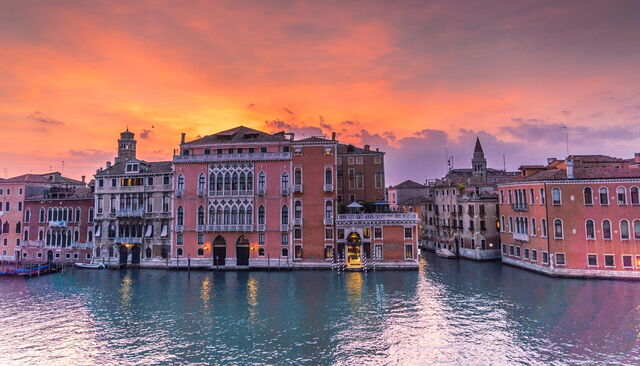
Motifs from Islamic architecture appear in the domestic architecture of Venice and much of the buildings of the city are infused with rich ornament and polychrome surfaces, preferences which can be linked to the Byzantine and Eastern influences the city experienced. Furthermore, Venice was never truly a Roman city and did not have the Roman infrastructure of other Italian cities for architects to study first-hand.
For these, and many other reasons, the architecture of Venice is particularly unique among all Italian cities. Stepping into the city is to visit a place unlike anywhere else. Find a vacation rental in Veneto and experience it for yourself. Read on to the rest of this series to learn more about the unique architecture of Venice.
For these, and many other reasons, the architecture of Venice is particularly unique among all Italian cities. Stepping into the city is to visit a place unlike anywhere else. Find a vacation rental in Veneto and experience it for yourself. Read on to the rest of this series to learn more about the unique architecture of Venice.