Rome is dotted with the most extraordinary tourist attractions and ancient architectural gems that were so well-built in the time of the Ancient Romans that they have remained standing to this day, hundreds and hundreds of years (and even millennia) later. These lofty examples of Roman architectural and structural prowess dot the city, set among the bustling daily life of modern-day Romans, and attract endless crowds of tourists who have been coming since the 17th century to admire them and learn from them. If you have always wanted to see those famous ruins of that long-gone empire then browse our
vacation rentals in Rome and start planning the trip of your dreams to finally go and make it happen.
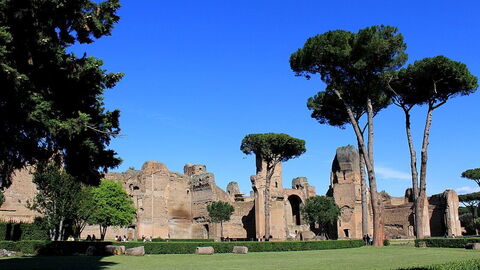
One of the more famous examples in the city of these incredible ruins is the
Baths of Caracalla. This ancient thermal complex was once the city's largest public baths, or thermae, and was likely built in the period between 211 or 212AD and 216 or 217AD, during the rule of the emperors
Septimus Severus and his son,
Caracalla, for whom it was named. Located in the southern area of Rome of Regio XII at the time, the site on which the Baths were built was formerly a vast garden that was known as the Horti Asiniani. In fact, the so-called
Farnese Bull sculptural group that came to adorn the Baths was actually already present in the gardens and later moved into the Baths after they were built. Work on the Baths was fast-tracked, with back-breaking efforts required from the workers doing the actual manual labour, in order to get it finished in the relatively short, approximately six-year-long, period in which it was built and from then on it was in use until the 6th century with some later renovations and modifications by subsequent rulers.
Read More