Archive for 'Food and Wine'


Mussels in a Pot
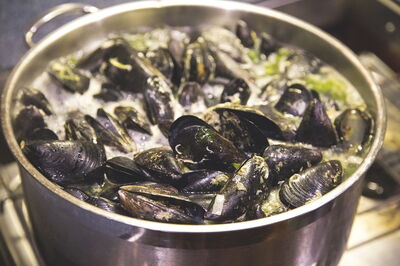
If you are thinking of spending Christmas in Italy or if you are planning a trip in the New Year and want to prepare by trying some of the local cuisine, you need look no further. Today, we're discussing a Ligurian recipe, Mussel Soup. This light but highly flavourful dish is tasty and satisfying. As the name suggests, it is from Liguria but similar dishes can be found along the entire coast of the peninsula. It is typically served as a first course and is the perfect thing for Christmas Eve dinner in the Italian tradition. Typically, Christmas Eve dinner in Italy is traditionally a light meal with no meat. The dinner precedes the Midnight Mass and is then often followed by hot chocolate with cookies or a slice of panettone once everyone has returned home from church and needs to warm back up once more. Try out the recipe yourself for now and then sample such delicious local specialities in Italy once you've found a holiday villa rental in Liguria.     Read More
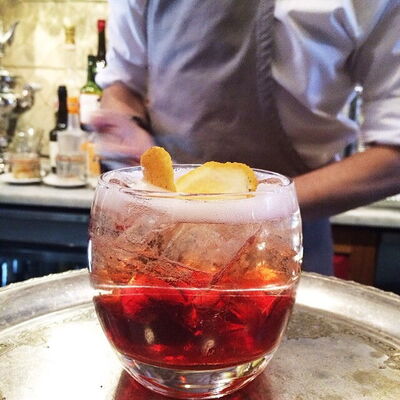
  

Negroni Sbagliato
Christmas means coming together with the people you love most in the world. Usually lots of food is involved – and, probably, a few drinks, as well! If you've become tired of the same old cocktails and drinks that are served every year and want to try something new then you've come to the right place. Today, we have a recipe for an Italian cocktail that's sure to be a hit, whether it's served at a party or as you sit around the fire with family. Negroni Sbagliato is a variation of the classic Negroni cocktail. “Sbagliato”, meaning “mistake”, refers to the origins of the drink which was invented in Milan. Why not find a vacation rental in Milan and try it in its spiritual home first? If you can't wait quite that long, read on and try it at home first!

The Negroni was, supposedly, invented in Florence in 1919 at Caffè Casoni, now called Caffè Giacosa, when Count Camillo Negroni asked the bartender, to strengthen his favourite cocktail. His regular Americano, was suddenly transformed by adding gin rather than the normal soda water. To help differentiate between the old and new, the bartender also added an orange garnish rather than the typical lemon garnish of the Americano. After the cocktail skyrocketed in popularity, the Negroni Family founded Negroni Distillerie in Treviso, Italy, and produced a ready-made version of the drink, sold as Antico Negroni 1919.

The Negroni Sbagliato, on the other hand, was invented at the legendary Bar Basso in Milan. When making a Negroni, spumante was grabbed instead of gin, by accident. Once again, a small change made an entirely new drink and another hit was born. The drink then became the bar's signature cocktail.     Read More


Pizelle
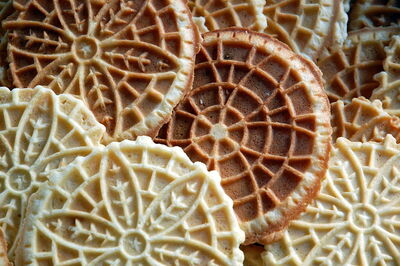
Pizzelle are cookies which come from Abruzzo in Italy. Also known as Italian wafer cookies, "Neole" or "Ferratelle" the name “pizzelle” (which has various spellings but pizzelle is the most widely recognised) comes from the Italian word "pizze", meaning round and flat. Many different cultures have adapted this cookie and re-named it accordingly. For examples, in Scandinavia, they are known as "Lukken". In some parts of Italy, they would even be made with family crests embossed on them.

Typically, pizzelle are eaten flat or folded into cone shapes which can then be filled with ice cream, sweets, fruit, syrups or whatever your heart desires! The batter used to make the cookies can also have flavours added to them. Common flavours for the cookies themselves include orange, almond, lemon or vanilla, but they are often made with anise at Christmas.

They are thought to be the oldest known cookie and originated in Abruzzo, in the south of Italy, during ancient times to mark an annual celebration. Over time, it became tradition to use pizzelle to celebrate any holiday or festive occasion, but inevitably there were pizzelle for everyone at Christmas and Easter. Today they are often found at Italian weddings as well.

Why not try to make a batch of these cookies as you look for the perfect holiday rental in Abruzzo?     Read More


Bombardino
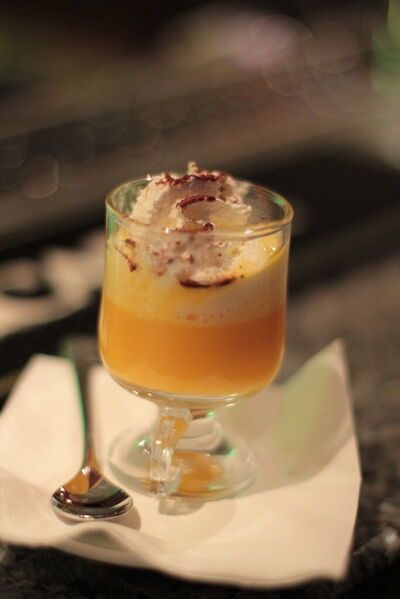
Bombardino is, quite, possibly the winter cocktail. The cocktail is an Italian tradition and is generally served in mountainous areas and at ski resorts, particularly in the north of the country, as a way to warm up. It is not unlike eggnog but is served warm, rather than cold, and has a higher level of alcoholic content. Perhaps, this is why is called a “bomb”.

There are lots of different recipes out there for the drink as towns, bars, restaurants and, even, families often have their own particular variations. However, the main ingredients are an egg-based liquor, coffee and rum or brandy. These elements all come together to make a high-calorie, warming drink that is rich, filling and will warm you from head to toe.

The most important ingredient of all in the Bombardino recipe is the egg liquor. The “official” recipe was invented by pastry chef Gian Battista Pezziol, from Padua who found a new and creative way to use the eggs left after the production of Torrone, another Italian delicacy. Many families in the North of Italy traditionally make their own egg liquor at home, but you can use whatever is handiest. Many people choose to use eggnog or advocaat as they are readily available in stores at this time of year.

Why not try out this recipe? If you're craving the real Bombardino experience afterwards, just find a holiday rental in Trentino Alto Adige, hit the slopes and relax in a local bar with the real deal afterwards.     Read More


Cassoeula
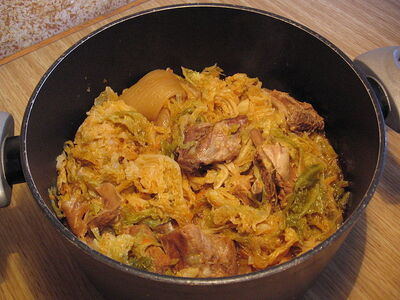
Cassoeula (also known as Cazzuola, Cazzola and Bottaggio) is a typical winter dish composed of cabbage and pork which is popular in Northern Italy and Lombardy, in particular. With a rich, strong flavour, it is the perfect, comforting dish for cold winter months.

There are several accounts of the origins of the dish, as is often the case with Italian specialities. However, one associates it with the celebration of St Anthony the Abbot on January 17th, which coincided with the end of pig slaughtering season. The parts of the pig used in the dish were those that could be immediately used after it was slaughtered and the better cuts were hung to improve the flavour of the meat. Another story states that the dish traces its roots back to 16th century, Spanish-ruled Milan. In this version of the origin story, the dish was taught to a Milanese girl by her Spanish lover, an army officer. She then served it to the noble Milanese family that she worked for and it was extremely well-received, soon gaining recognition and popularity.     Read More