Plenty of people head to a vacation rental in the Aosta Valley in the winter months to ski but it is also a wonder to explore throughout the other seasons on foot. In the summer, its mountains can provide a great escape from the more intense heat of the cities and towns of Italy, while in the fall and spring, the milder conditions make it an ideal time to hike and thoroughly explore the area. However, now is the time to visit if you want to see one of the region’s most charming attractions and one of the most magical botanical gardens in the world: the Chanousia Alpine Botanical Garden.
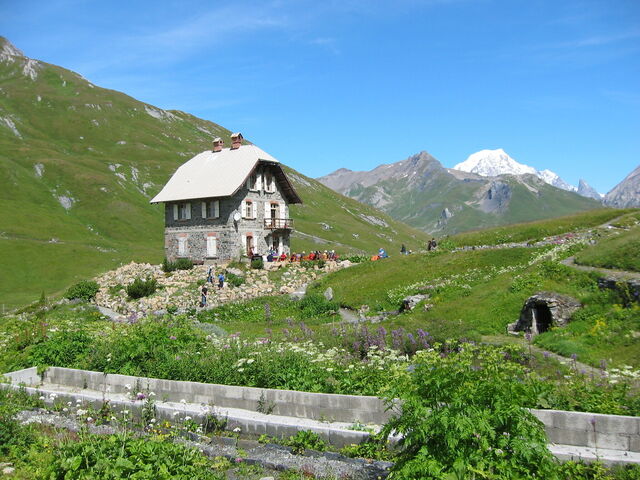
This gorgeous Alpine botanical garden is technically located in France but it belongs to the Italian commune of La Thuile in the Aosta Valley. Found 800m across the French-Italian border, on the Petit St Bernard Pass, between the Aosta Valley and Savoy, the Chanousia Alpine Botanical Garden is at an altitude of 2,170 metres, right in the Alps.
Already, therefore, it is quite a unique and extraordinary garden! However, everything about this magical place is pretty singular. It is named for Abbot Pierre Chanoux, who was rector of a hospice run by the Mauritian Order that was based on the site, and who began the garden as a passion project due to his love of botany. Particularly motivated to protect and preserve plants from the area, Chanoux was a forerunner to the environmentalist and conservationist movements. The garden was then officially inaugurated in 1897, making it making it one of the oldest Alpine gardens in Europe.
When the Abbott died in 1909, he was buried in the chapel next to his legacy and his work was continued for a time by his followers. Unfortunately, during WWII, maintenance on the garden was no longer possible and both the hospice and garden fell into decline. However, in 1976, work was thankfully begun to restore the gardens and buildings and it was eventually reopened to public.
In Chanoux’s own lifetime, some 4,000 different species of mountain plants from the Alps and other mountain areas around the world were planted in the gardens. Today, that number is at only around 1,200 but it is still a rather special collection that is only growing and is located across 10,000 square meters.
Each year, the garden finally comes alive after months and months of being blanketed under snow. As a result, the growing season is incredibly fast and only lasts two to three months. The garden is typically open to the public from July to mid-September, depending on the weather, snows, and growing schedule on any given year.
In addition to the plants themselves, however, visitors to the gardens will be able to admire the truly extraordinary surrounding scenery that can be taken in from the area. With Mont Blanc acting as an imposing and striking backdrop, other peaks popping up all around, and larch and spruce forests blanketing the Italian mountainsides. It is a place that will truly take your breath away if you visit while enjoying a stay in one of our holiday rentals in the Aosta Valley. While you’re there, you can pop into the museum to learn more about the garden, its beginnings and history, Chanoux himself, the ongoing work, and more. The bookshop with its botanical texts, meanwhile, is the perfect place to get a special souvenir of this special garden while on vacation in Italy.