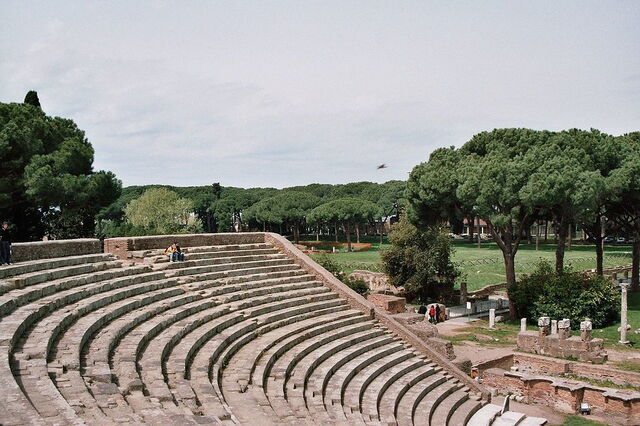
Ostia Antica is an ancient Roman ghost town, not unlike Pompeii. However, it has the added bonus of being located just a subway ride from downtown Rome and is normally devoid of the intense tourist crowds that will mob Pompeii year-round. If you're interested in the Romans and that period of history, then this is the place for you, just find yourself the perfect vacation rental in Rome, hop on the subway and head out to Ostia Antica, Rome's fascinating ancient seaport which was abandoned by inhabitants, after the fall of the empire, and by the sea, after gradual silting of the harbour saw the coastline move out 4km.
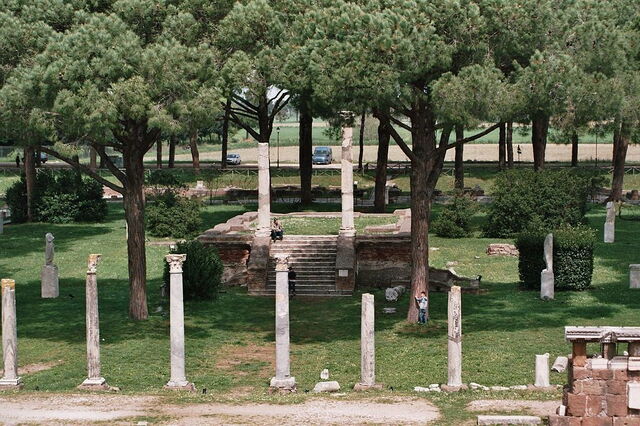
The well-preserved ruins of Ostia lie twenty miles from Rome, in the meadows between the Tiber River and the Tyrrhenian Sea. It is most likely that the town was first founded in the 4th century BC, as a military colony to guard in anticipation of possible invasions from the sea. The town then gained further importance later on when the Tiber became the main route for cargo entering the city and Ostia became a landing site. By the 2nd century AD, it was an important commercial centre and was inhabited by upwards of 100,000 people, whose apartment buildings, taverns, and grocery shops remain intact to this day. Scraps of fresco even still cling to the walls of private villas and millstones stand ready to grind in the back rooms of long-dead bakeries. Just like Pompeii, Ostia remains a hollowed shell, frozen in time in a way that is both eerie and fascinating.
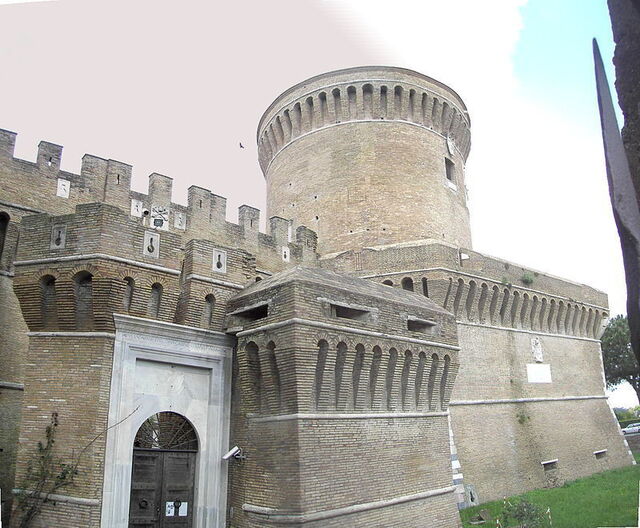
Today, though less popular than that most famous site at Pompeii, Ostia is a well-organised and wonderful attraction. The site plan available at the gate is very good and most of the structures inside the park are now placarded in English. Most visitors merely follow the Main Street through the town but if you take the time to explore deeper, into side streets, you'll find shops and the buildings with those aforementioned frescoes and millstones. The theatre, with is 2700 person capacity and masses of marble is a must, as is the Casa di Diana, a typical three-storey house with shops on the ground floor and its inner courtyard with a fountain depicting the goddess Diana, for whom the building is now named. The Terme dei Sette Sapienti is another sight to behold, a bath-house complex which is named for the seven sages painted on the walls. The highlight, however, has to be its floor mosaic depicting hunting scenes in the central hall of the building.
Other must-sees are the on-site museum which houses pieces likely to be carried off and the Case Decorate, restored homes with mosaic floors and frescoed walls intact, which can be toured on Sunday mornings upon reservation. There is also a café on-site to keep you fuelled up and ready to explore this little gem just outside Rome.
Other must-sees are the on-site museum which houses pieces likely to be carried off and the Case Decorate, restored homes with mosaic floors and frescoed walls intact, which can be toured on Sunday mornings upon reservation. There is also a café on-site to keep you fuelled up and ready to explore this little gem just outside Rome.
Photo credit
Picture 2: FoekeNoppert / CC BY-SA 3.0
Picture 2: FoekeNoppert / CC BY-SA 3.0