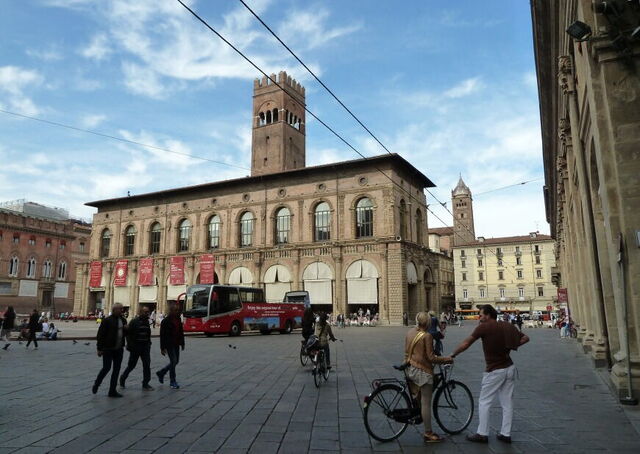
Bologna was first settled by at least 1000BC and, over the years grew and grew as a city. Walls were built in the 5th century to protect the city. More were added in the 11th century and, in the 13th century, a final ring called “La Circla” was built around what is now the historic centre of Bologna.
Much of the walls were destroyed in the 20th century due to war and expansion but the city gates of La Circla still exist. These were once part of great complexes consisting of a captain's house, keep, moat and drawbridge and controlled the coming and going of people to the city as well as imports.
Much of the walls were destroyed in the 20th century due to war and expansion but the city gates of La Circla still exist. These were once part of great complexes consisting of a captain's house, keep, moat and drawbridge and controlled the coming and going of people to the city as well as imports.
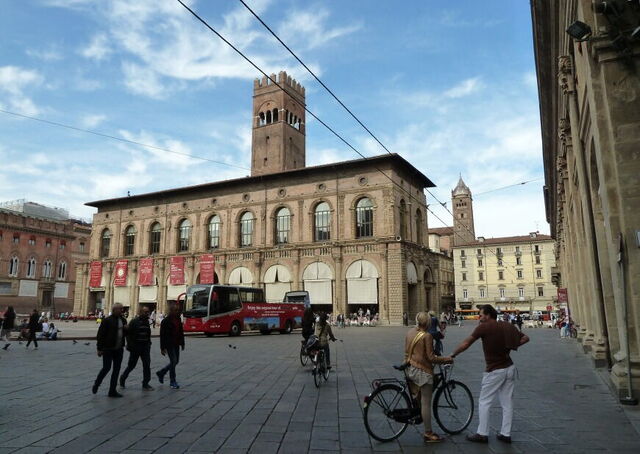
Originally there were twelve but only ten remain today and most of the gates were rebuilt in the 1600s or altered extensively. A stay in a nearby holiday villa could be very much enriched by a day trip into the city to find all of the ten existing gates and explore the sights, sounds, food and culture that Bologna has to offer between stops!
The ten existing gates are Castiglione, Santo Stefano, Maggiore, San Vitale, San Donato, Mascarella, Galliera, Lame, San Felice, Saragozza. For the purists, Porta Mascarella is a must-see as it is one of the few gates to conserve its 14th century character, if not its original appearance and is a rare medieval survivor of the city.
The ten existing gates are Castiglione, Santo Stefano, Maggiore, San Vitale, San Donato, Mascarella, Galliera, Lame, San Felice, Saragozza. For the purists, Porta Mascarella is a must-see as it is one of the few gates to conserve its 14th century character, if not its original appearance and is a rare medieval survivor of the city.
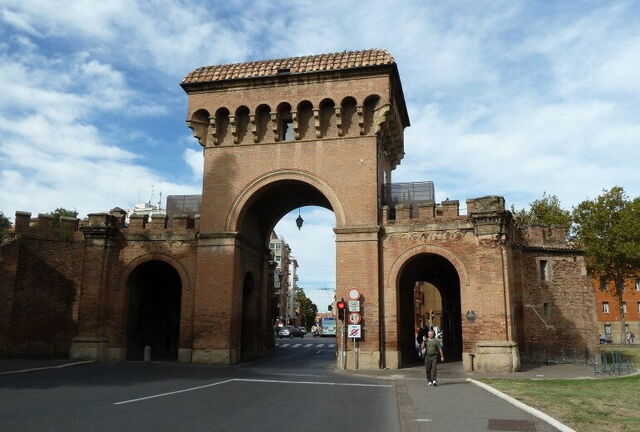
It was considered to be in a security risk and was constantly being closed and reopened throughout its history. The large tower that once dominated it was demolished in the 16th century for fear it would be hit by artillery.
One of the most highly altered and elegantly appointed of the gates is Porta Galliera. It was given a completely new appearance in the Baroque style by architect Bartolomeo Provaglia between 1659 and 1661. The external elevation emphasises the military role of the building while the interior portal has an elegant tripartite façade.
Another impressive castellated edifice is that of Porta Saragozza. In the 17th century, it became part of an annual procession of an icon from the centre of the town to the Basilica della Beata Vergine di San Luca and gained the name of the Holy Gate. The original bridge house was replaced by a new structure in the nineteenth century and arches were added either side to connect it to the two flanking towers and unify the façade. As a result, it now looks like a castle right out of a story book.
Exploring the gates is a great way to see historic Bologna and discover the little gems the town has to offer that you might not see otherwise.
One of the most highly altered and elegantly appointed of the gates is Porta Galliera. It was given a completely new appearance in the Baroque style by architect Bartolomeo Provaglia between 1659 and 1661. The external elevation emphasises the military role of the building while the interior portal has an elegant tripartite façade.
Another impressive castellated edifice is that of Porta Saragozza. In the 17th century, it became part of an annual procession of an icon from the centre of the town to the Basilica della Beata Vergine di San Luca and gained the name of the Holy Gate. The original bridge house was replaced by a new structure in the nineteenth century and arches were added either side to connect it to the two flanking towers and unify the façade. As a result, it now looks like a castle right out of a story book.
Exploring the gates is a great way to see historic Bologna and discover the little gems the town has to offer that you might not see otherwise.
Photo Credits:
Pictures 1 and 3: Photos of Bologna
Picture 2: Twice25 / CC BY-SA 2.5
Pictures 1 and 3: Photos of Bologna
Picture 2: Twice25 / CC BY-SA 2.5