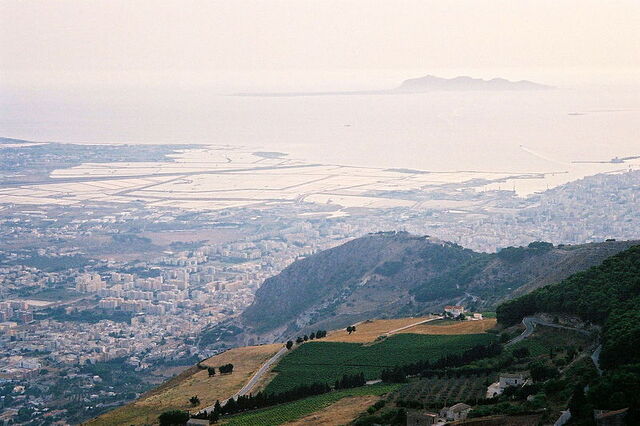
Erice is a historic town located on top of Mount Erice in Sicily. Primarily medieval in appearance, it, in fact, has much older origins. The ancient Greek name, Eryx, is associated with a Greek hero of the same name who was said to have been king of the town.
However, the town was actually established by the Phoenicians. It was destroyed in the First Punic War and declined in importance thereafter. After this it was ruled by the Aghlebids, Arabs, Normans until it became involved in internal struggle over lands by Italian kingdoms up to the Risorgimento.
However, the town was actually established by the Phoenicians. It was destroyed in the First Punic War and declined in importance thereafter. After this it was ruled by the Aghlebids, Arabs, Normans until it became involved in internal struggle over lands by Italian kingdoms up to the Risorgimento.
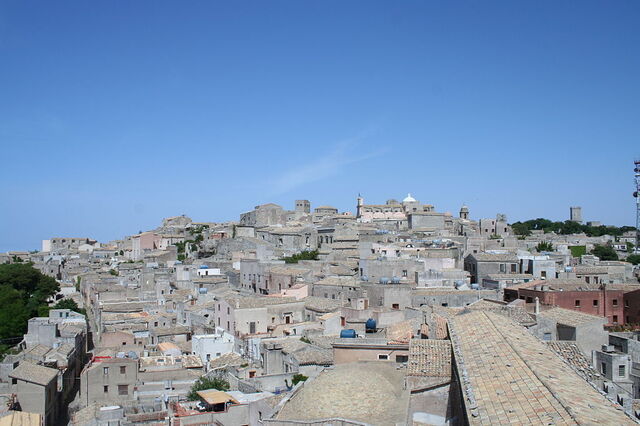
The town, with its location on the West coast of Sicily perched in a mountainous position at over 800m above sea-level and views over the port city of Trapani, is a serious visual treat. During Spring and Autumn, these views are at their best with sunshine and minimal fog. The town itself is decidedly charming, with its medieval historic centre being unusually clean and intact for Sicily. Stone arches, paving, town walls and towers abound. There are innumerable churches. Perhaps the best possible way to begin your exploration of the town is to take the cable-car up from Trapani, giving you panoramic views all around.
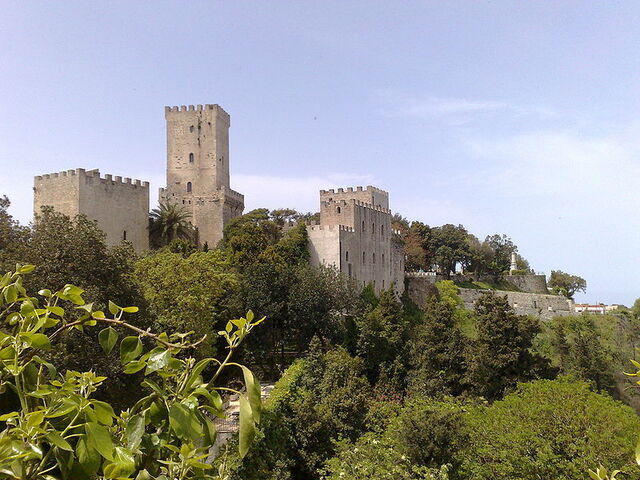
Once you arrive, take time to explore. The winding little side-streets often harbour treats and surprises and the town is small enough that you'll never be truly lost. Erice is also particularly famous for its almond biscuits and pastries, so be sure to grab a few to keep your energy levels up. If you want to take a moment to just sit and enjoy the town, some of the best spots are the café-bars in Piazza Umberto, and the panoramic café in the park by the Castello di Venere.
For sight-seeing, the 12th century Castello di Venere, on the site of Erice's ancient temple, is open daily. Built on the bare rock, it is a fascinating structure with signs and a guide-map to help you navigate its rich history.
The fortifications also offer an amazing view of the sea and coastline. In addition to this are the sixty churches located in the town. The Chiesa Madre or Real Duomo (cathedral) is the main church and dates to the fourteenth century. Built using materials from the ancient Temple of Venus it also has a surprising and stunning nineteenth-century Gothic Revival interior. You can purchase a combined ticket for a selection of the sitess including the bell-tower adjacent to the Chiesa Madre which, once again, offers stunning views.
Erice is one of the most charming and astoundingly well-preserved medieval towns you'll ever stumble upon in Sicily. Come for the views, stay for the history and find the perfect luxury villa in Sicily.
For sight-seeing, the 12th century Castello di Venere, on the site of Erice's ancient temple, is open daily. Built on the bare rock, it is a fascinating structure with signs and a guide-map to help you navigate its rich history.
The fortifications also offer an amazing view of the sea and coastline. In addition to this are the sixty churches located in the town. The Chiesa Madre or Real Duomo (cathedral) is the main church and dates to the fourteenth century. Built using materials from the ancient Temple of Venus it also has a surprising and stunning nineteenth-century Gothic Revival interior. You can purchase a combined ticket for a selection of the sitess including the bell-tower adjacent to the Chiesa Madre which, once again, offers stunning views.
Erice is one of the most charming and astoundingly well-preserved medieval towns you'll ever stumble upon in Sicily. Come for the views, stay for the history and find the perfect luxury villa in Sicily.
Photo credits
picture 1: Bernhard J. Scheuvens / CC BY-SA 2.5;
picture 2: b.roveran / CC BY 2.0;
picture 3: Dedda71 / CC BY-SA 3.0
picture 1: Bernhard J. Scheuvens / CC BY-SA 2.5;
picture 2: b.roveran / CC BY 2.0;
picture 3: Dedda71 / CC BY-SA 3.0