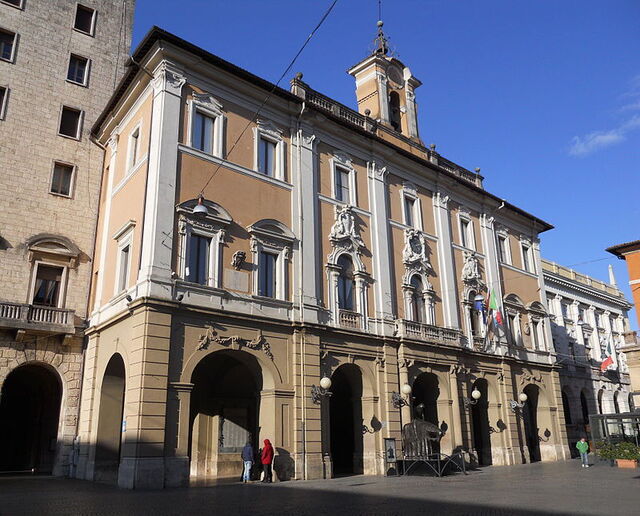
Rieti is the capital city of the province of Rieti in Latium, Italy. Its roots go back to the Sabines before being conquered by the Romans. During the Middle Ages it was destroyed by Barbarians but remained important within the Lombard empire. This period also saw it become a favoured papal seat and, therefore, witness to many important historical events in Italy. Rieti continued to move from ruler to ruler until the twentieth century when it initially became part of Umbria before being made a provincial capital of Latium. This turbulent past has only added to the town's heritage and made it an extraordinary little repository of art, architecture and history. Experience the walk through history that the town offers by finding a villa with a pool in Latium and spending some time there – you won't regret it!
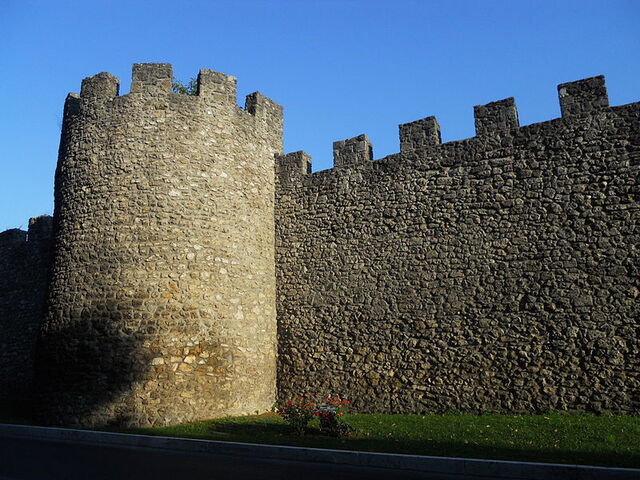
Few examples of Sabine and Roman remains were found during excavations in 19th and 20th centuries. However, among these were the foundations of a large temple, the stone floor of the main square, walls from private houses, concrete vaults, statues and pottery items. The most visible leftovers from this period are the stone bridge across the Velino river and the viaduct.
The Cathedral, in particular, showcases the patchwork of history in this town to perfection. Construction of the Cathedral began in 1109 on the site of an ancient basilica, the crypt is all that really remains of the earlier structure today. In the 17th, century the cathedral was almost entirely rebuilt.
The Cathedral, in particular, showcases the patchwork of history in this town to perfection. Construction of the Cathedral began in 1109 on the site of an ancient basilica, the crypt is all that really remains of the earlier structure today. In the 17th, century the cathedral was almost entirely rebuilt.
Only the 13th century bell-tower remained of the medieval structure, a wonderful example of the Romanesque style. The interior is Baroque with frescoes, including one by Antoniazzo Romano, other works on canvas and a statue of St Barbara which is thought to have been designed by the great Bernini.
Another important structure is the Palazzo Comunale, or Town Hall. Located in the Piazza Vittorio Emanuele II, which has Roman roots, it was initially built in the 13th century and rebuilt in the 18th. Inside, the town gallery is now housed which has a surprisingly good collection of established artists including Antoniazzo Romano, Antonio Canova and Bertel Thorwaldsen.
In addition to these buildings there are numerous stunning churches and other civic and private buildings from various historic periods dotted around the city. As Rieti is actually rather compact, a pleasant stroll through the streets would make for a delightful and illuminating activity. There is something around every corner and getting lost is half the fun!
If this sounds like your kind of thing, swing by if you ever find yourself in Latium.
Another important structure is the Palazzo Comunale, or Town Hall. Located in the Piazza Vittorio Emanuele II, which has Roman roots, it was initially built in the 13th century and rebuilt in the 18th. Inside, the town gallery is now housed which has a surprisingly good collection of established artists including Antoniazzo Romano, Antonio Canova and Bertel Thorwaldsen.
In addition to these buildings there are numerous stunning churches and other civic and private buildings from various historic periods dotted around the city. As Rieti is actually rather compact, a pleasant stroll through the streets would make for a delightful and illuminating activity. There is something around every corner and getting lost is half the fun!
If this sounds like your kind of thing, swing by if you ever find yourself in Latium.
Photo credits
picture 1: Alessandro Antonelli / CC BY 3.0;
picture 2: Alessandro Antonelli / CC BY 3.0;
picture 3: Idéfix / CC BY-SA 3.0
picture 1: Alessandro Antonelli / CC BY 3.0;
picture 2: Alessandro Antonelli / CC BY 3.0;
picture 3: Idéfix / CC BY-SA 3.0