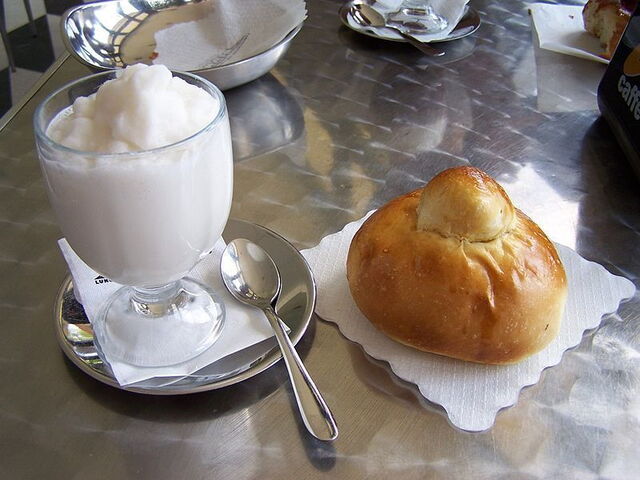
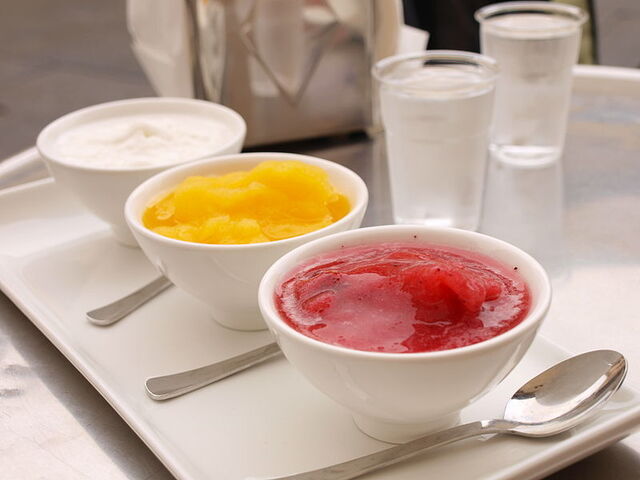
We've already featured a recipe for granita, a Sicilian semi-frozen dessert but the dish itself is so rich in history and tradition that it seemed a waste not to discuss that at all. This delicious and refreshing dish is made from sugar, water and various flavourings and, while originally from Sicily, is now available all over Italy. It is somewhat like a sorbet or snow cone but has a coarser, more crystalline texture – though the degree of this changes from place to place. There are lots of different flavours but some common and traditional ones include lemon, mandarin orange, jasmine, coffee, almond, mint, strawberry and black mulberry. Chocolate is a particular tradition of the city of Catania.
The dessert can be sampled all over Italy but it's best served on holiday in a luxury villa in Sicily with no cares in the world to take away from the taste.
Granita has origins in the Arab influence exerted on Sicily throughout history. They first brought what would become granita in the form of their sherbert – an iced drink which was flavoured with fruit juices or rosewater which comes from the Arabic word for drink. In the Middle Ages, the desire for these types of drinks and dishes necessitated “nevaroli” who were tasked with harvesting the snow of Mount Etna and others mountains in the area.
Granita has origins in the Arab influence exerted on Sicily throughout history. They first brought what would become granita in the form of their sherbert – an iced drink which was flavoured with fruit juices or rosewater which comes from the Arabic word for drink. In the Middle Ages, the desire for these types of drinks and dishes necessitated “nevaroli” who were tasked with harvesting the snow of Mount Etna and others mountains in the area.
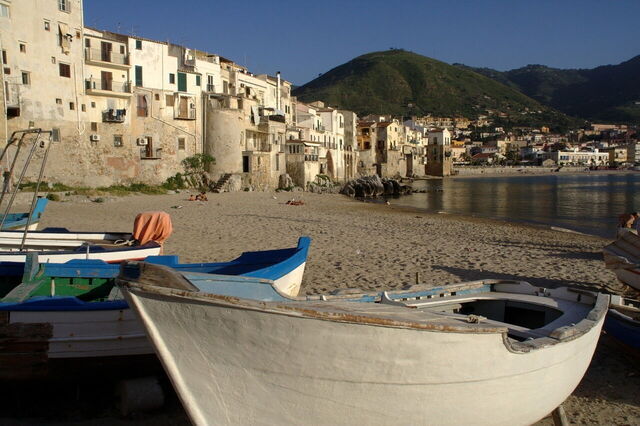
Mounds of the snow were then bought by the nobility during the hot summer months and mixed with lemon to quench their thirst. Over time, they experimented and added new flavours and, even, edible flowers. Now each city has its own flavour that it is known for from the simple to the complex.
The word, “granita”, came to be used to describe the dessert over time, coming from the same origin as the word “granite” (as in the rock) and referring to the granular texture of the Italian interpretation of the Arabic-originating dish.
It wasn't until the 19th century that it became more widely known outside of Italy with mentions of it in the work of writers such as Mark Twain who travelled the country. In his Innocents Abroad, from 1867, he details a scene in Venice, where people sat at small tables “smoking and taking granita (a first cousin to ice-cream)”.
Intimately intertwined with the complex history of Sicily, granita is much more than a treat, it reflects the cultural melting pot of Sicilian society and offers the perfect thing to cool down under the scorching Sicilian sun. Make sure to try it when you visit!
The word, “granita”, came to be used to describe the dessert over time, coming from the same origin as the word “granite” (as in the rock) and referring to the granular texture of the Italian interpretation of the Arabic-originating dish.
It wasn't until the 19th century that it became more widely known outside of Italy with mentions of it in the work of writers such as Mark Twain who travelled the country. In his Innocents Abroad, from 1867, he details a scene in Venice, where people sat at small tables “smoking and taking granita (a first cousin to ice-cream)”.
Intimately intertwined with the complex history of Sicily, granita is much more than a treat, it reflects the cultural melting pot of Sicilian society and offers the perfect thing to cool down under the scorching Sicilian sun. Make sure to try it when you visit!
Photo credits
picture 1: Sebastian Fischer / CC BY-SA 3.0;
picture 2: Adriao / CC BY 3.0
picture 1: Sebastian Fischer / CC BY-SA 3.0;
picture 2: Adriao / CC BY 3.0