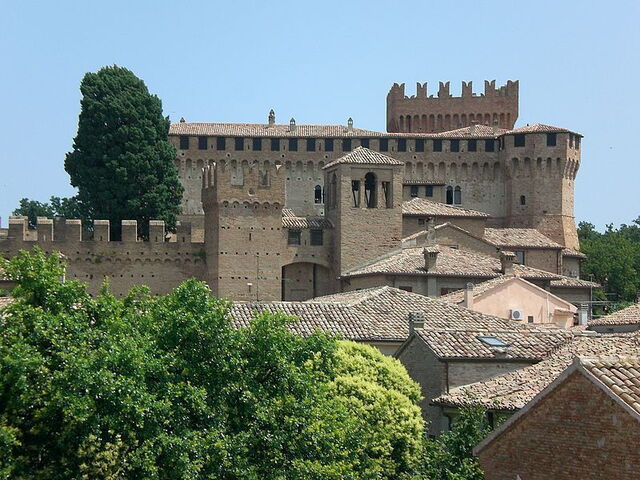
Though the town of Gradara is populated by less than 5000 people, it is visited by 500,000 annually. This medieval town, one of the best preserved in Italy, has been awarded an Orange Flag for tourism due to its management and maintenance of the area.
Located in the Le Marche area, it is characterised by the castle that sits overlooking everything else and the two rings of medieval walls that surround. In fact, Gradara and its Fortress are inseparable, almost synonyms.
Why not find yourself a luxury villa in Le Marche region and plan a day trip to see it for yourself?
Located in the Le Marche area, it is characterised by the castle that sits overlooking everything else and the two rings of medieval walls that surround. In fact, Gradara and its Fortress are inseparable, almost synonyms.
Why not find yourself a luxury villa in Le Marche region and plan a day trip to see it for yourself?
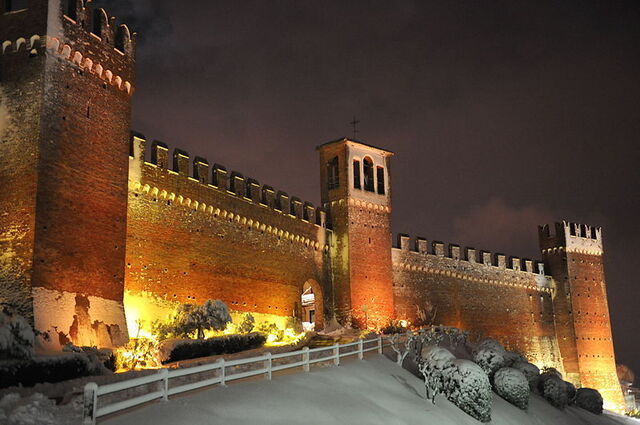
Initially, Gradara Castle was simply a watch tower built by the De Griffo family in the second half of the 12th century. Additions in the 13th and 14th centuries by the Malatesta family, who took up ownership of the building, fleshed out the structure into something closer to what it looks like today. In the fifteenth century, the military role was emphasised and the castle was given further fortification. Due to its geographic location as a crossroads through which people and traffic has always needed to pass, the town and castle were often caught in clashes between militias loyal to the papacy and those to the families of Romagna and Le Marche.
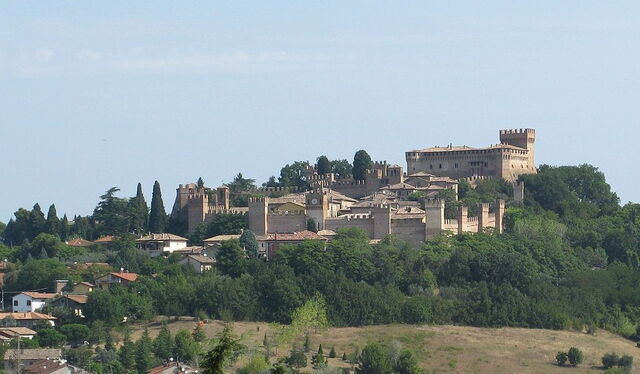
Additions and alterations to the building for various reasons continued up to the nineteenth century.
Inside the castle are high-quality works of art by renowned artists such as frescoes by Amico Aspertini, a glazed, terracotta altarpiece by Andrea Della Robbia of The Madonna with Child and Saints and Giovanni Santi's 15th century altarpiece originally from the church of St. Sofia. In addition, a small municipal art gallery housed inside the castle contains works by Bartolomeo Vivarini, Gian Giacomo Pandolfi and Benedetto Coda.
However, it isn't just the appearance and contents of the building that are of interest but the people who occupied it over the years as well. Apparently, it was home to one of the best known love stories of all time, that of Paolo and Francesca, who made it into Canto V of Dante's “Inferno”. The couple were caught in their affair by Francesca's husband, who happened to be Paolo's brother, and were murdered when he flew into a jealous rage. Lucrezia Borgia, that infamous figure from Italian history, was also a previous resident of this castle.
The town is also known for its natural beauty and is surrounded by olive groves and vineyards. Local restaurants tend to be quaint and family-run endeavours. Passatelli is one of the typical dishes specific to Gradara and are prepared with bread and grated Parmesan cheese, lemon-peel and nutmeg. There are also special days called “The Middle Ages at the table” which are dedicated to the medieval style of cooking and for which restaurants in the area are equipped like 14th century inns.
For a unique experience of the food and appearance of the middle ages, this lovely town and castle in Le Marche is not to be missed!
Inside the castle are high-quality works of art by renowned artists such as frescoes by Amico Aspertini, a glazed, terracotta altarpiece by Andrea Della Robbia of The Madonna with Child and Saints and Giovanni Santi's 15th century altarpiece originally from the church of St. Sofia. In addition, a small municipal art gallery housed inside the castle contains works by Bartolomeo Vivarini, Gian Giacomo Pandolfi and Benedetto Coda.
However, it isn't just the appearance and contents of the building that are of interest but the people who occupied it over the years as well. Apparently, it was home to one of the best known love stories of all time, that of Paolo and Francesca, who made it into Canto V of Dante's “Inferno”. The couple were caught in their affair by Francesca's husband, who happened to be Paolo's brother, and were murdered when he flew into a jealous rage. Lucrezia Borgia, that infamous figure from Italian history, was also a previous resident of this castle.
The town is also known for its natural beauty and is surrounded by olive groves and vineyards. Local restaurants tend to be quaint and family-run endeavours. Passatelli is one of the typical dishes specific to Gradara and are prepared with bread and grated Parmesan cheese, lemon-peel and nutmeg. There are also special days called “The Middle Ages at the table” which are dedicated to the medieval style of cooking and for which restaurants in the area are equipped like 14th century inns.
For a unique experience of the food and appearance of the middle ages, this lovely town and castle in Le Marche is not to be missed!
Photo credits
picture 2: Nazareno Balducci / CC BY 3.0;
picture 2: Nazareno Balducci / CC BY 3.0;