Archive for 'Legends'


Saint Columbanus Window
Columbanus, known as San Columbano, in Italy, was an Irish saint who was active in the Frankish Empire, establishing monasteries throughout what is now France, Germany, Belgium and Switzerland, in the 6th and 7th centuries.

The best known are: St. Gall in Switzerland, Disibodenberg in the Rhine Palatinate, St. Paul's at Besançon, Lure and Cusance in the Diocese of Besançon, Beze in the Diocese of Langres, Remiremont Abbey and Moyenmoutier Abbey in the Diocese of Toul, Fosses-la-Ville in the Diocese of Liège, Mont-St-Michel at Peronne, Ebersmunster in Lower Alsace, St. Martin at Cologne.

Finally, he moved on to Italy, where, at Bobbio, he established a great monastic centre. He worked to convert the Arian Lombards and restore unity with the Bishop of Rome. It was here that he spent the last years of his life, leaving a corpus of writings that shaped the monastic culture of the Middle Ages.     Read More


Krampus
In our previous article, we discussed the legend of Krampus, the scary anti-Santa that originated in Germany and mentioned that there are festivals dedicated to him each year during the festive season all over Europe. Such celebrations take place in Austria, Germany, Hungary, Slovenia, and the Czech Republic and involve drunken men dressed as devils, who take over the streets for a Krampuslauf, chasing people around. However, there are also many in Italy specifically.

Krampus's frightening presence was suppressed for many years as the Catholic Church forbade the raucous celebrations and fascists in World War II Europe found Krampus thought him a deplorable creation of the Social Democrats. Nowadays, however, he is appearing in popular culture more and more often – there was even a feature-length movie about the legend released in theatres in 2015 – and Krampus festivals are also increasingly popular. In fact, it has come to the stage where these events are even being labelled as commercialised and selling out!

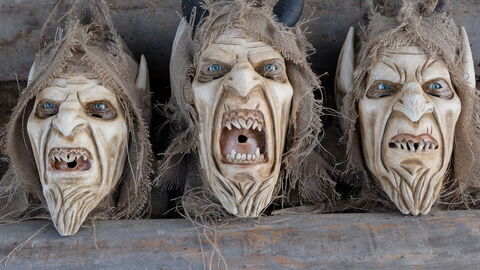
Around December 5th, several municipalities and towns in the Tarvisio area, namely such as Tarvisio, Fusine, Coccau, Malborghetto, Camporosso, Rutte, Cave del Predil and Pontebba all have Krampus celebrations. At dusk, a rite takes place that is an allegory of the eternal fight between good and evil. The Krampus figures wear monstrous masks with big red, white or naturally coloured horns, long red tongues and fangs and holding their walking stick and bundles of sticks and wearing big bells and chains to announce their arrival. They appear on the streets, accompanying St. Nicholas, passing through the main road of the town carrying torches and bundles of canes, and dragging a cart housing the Saint.

The figures make guttural sounds and move with aggressive attitudes and chase children, and sometimes the adults, to whip them, make them kneel down and recite prayers. In Pontebba, the Krampus are called Spitz Parkli but the rite is essentially the same as in other towns. In some towns, at the end, a bonfire is lit and the Krampus dance around it. Back in ancient times, the pagan festival did not have the figure of St. Nicholas. It was not until medieval times that he was introduced as a positive moderator.

Silly, raucous and vibrant, the festival is a fun event that takes place in the run up to Christmas. If you are curious about Krampus, just find a vacation rental in Friuli Venezia Giulia and indulge a creepier festive tradition this or next Christmas.     Read More


Witch
America has Salem and Italy has Triora in Liguria.

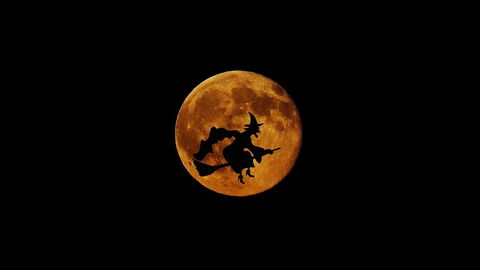
This charming town's appearance does not belie its troubled and bloody past and will forever be interconnected with witches and witchcraft.

It all goes back to 1587, when bad weather and a bad harvest lead locals from the town to speculate as to what was causing all of their misfortune. They came to the logical conclusion: it had to be the fault of witches. The rest, as they say, is history.

Find a holiday rental in Liguria and you can uncover this disturbing and fascinating history for yourself, all while enjoying the delightful town that Triora is today.     Read More


Krampus
Santa is familiar to all of us. He's that jolly, ruddy-cheeked, bearded gentleman that delivers presents to all the children in the world on Christmas Eve. His origins as a Turkish saint may be less familiar to some and his evil counterpart, Krampus, probably even less so.

While Santa Claus is all things comfy and nice, Krampus is a literal demon. He is pictured with big curling horns, dark hair and fangs and comes equipped with a chain and bells that he lashes about, along with a bundle of birch sticks meant to swat naughty children. His aim? Well, it sure isn't to deliver lovely gifts or, even, lumps of coal. No, Krampus has little sympathy for the bad kids. He doesn't try and teach them a lesson or the error of their ways, he merely hauls them down to the underworld.

The name Krampus is derived from the German word “krampen”, which means claw. Said to be the son of Hel in Norse mythology, he was created as a counterpart to kindly St. Nicholas and is part of a centuries-old Christmas tradition in Germany. According to folklore, Krampus purportedly shows up in towns the night before December 6, at night known as Krampusnacht, or Krampus Night. December 6, meanwhile, happens to be Nikolaustag, or St. Nicholas Day, when German children look outside their door to see if the shoe or boot they'd left out the night before contains either presents (a reward for good behavior) or a rod (bad behavior).

Krampus, as a legend, and the celebrations surrounding his existence, were long suppressed by the Catholic church as pagan traditions. However, in recent years, Krampus has reared his horned head once more and is becoming increasingly popular. He has been featuring in popular culture more and more, being referenced in television shows, videos and movies. In fact, a whole movie was made based on the legend and released last Christmas.

If you are curious about Krampus, there are even towns in Italy, such as Pontebba, that have celebrations dedicated to the beast. Just find a vacation rental in Friuli Venezia Giulia and indulge a creepier festive tradition this Christmas. If you are curious about the celebrations themselves, be sure to read on to our next article to learn more!     Read More


Lake Iseo
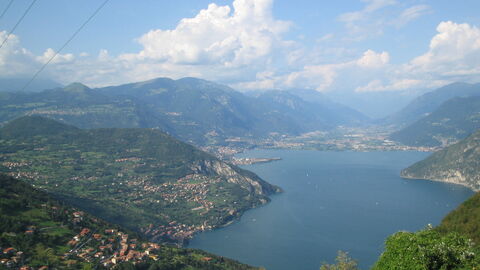
Lake Iseo is located in Lombardy, northern Italy, between two larger and much more famous bodies of water: Lake Garda and Lake Como. While tourist guides might point you towards spending time in the latter two destinations, it is wise not to look past the lovely Lake Iseo, which remains a bit of a relatively hidden gem. Just find a vacation rental in Lombardy and explore this beauty.

You'll not only find a lack of tourist crowds and long queues but also a lake as stunning and with as many activities and sights to offer any visitor.

First of all, be sure to try and enjoy the wonderful local cuisine. As you might imagine, there are plenty of fish to be had and, as a result, delicious aquatic delicacies to try. There are also plenty of small vineyards, olive groves and chestnut groves in the area. All of this fresh local produce means that the food of the area is particularly rich, comforting and tasty.     Read More