View of Turin
Posted in: Activities Day Trips Northwest Italy Piedmont
Turin is the one-time capital of Italy and there is no lack of things to do or see between the Turin Shroud, museums and churches but one of the city's most interesting features isn't readily visible or apparent. In fact, you could easily visit without ever being aware of what you were missing; a vast underground network of tunnels which feature dungeons, alchemist's caves, crypts, escape routes, ice cellars and, according to local legends, an entrance to the Underworld. There are even dedicated tours of these creepy and fascinating spaces so why not find a holiday rental in Piedmont and spend a day exploring Turin above and below ground.
Mussels in a Pot
Posted in: Food and Wine Liguria Northwest Italy Recipes
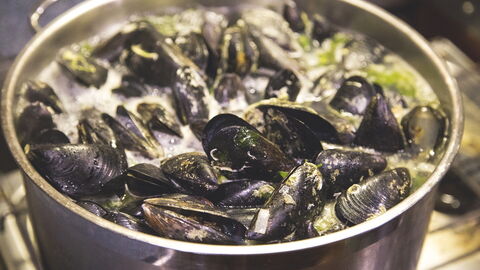
If you are thinking of spending Christmas in Italy or if you are planning a trip in the New Year and want to prepare by trying some of the local cuisine, you need look no further. Today, we're discussing a Ligurian recipe, Mussel Soup. This light but highly flavourful dish is tasty and satisfying. As the name suggests, it is from Liguria but similar dishes can be found along the entire coast of the peninsula. It is typically served as a first course and is the perfect thing for Christmas Eve dinner in the Italian tradition. Typically, Christmas Eve dinner in Italy is traditionally a light meal with no meat. The dinner precedes the Midnight Mass and is then often followed by hot chocolate with cookies or a slice of panettone once everyone has returned home from church and needs to warm back up once more. Try out the recipe yourself for now and then sample such delicious local specialities in Italy once you've found a holiday villa rental in Liguria.
Cassoeula
Posted in: Food and Wine Localities Lombardy Milan Northwest Italy Recipes
Cassoeula (also known as Cazzuola, Cazzola and Bottaggio) is a typical winter dish composed of cabbage and pork which is popular in Northern Italy and Lombardy, in particular. With a rich, strong flavour, it is the perfect, comforting dish for cold winter months.

There are several accounts of the origins of the dish, as is often the case with Italian specialities. However, one associates it with the celebration of St Anthony the Abbot on January 17th, which coincided with the end of pig slaughtering season. The parts of the pig used in the dish were those that could be immediately used after it was slaughtered and the better cuts were hung to improve the flavour of the meat. Another story states that the dish traces its roots back to 16th century, Spanish-ruled Milan. In this version of the origin story, the dish was taught to a Milanese girl by her Spanish lover, an army officer. She then served it to the noble Milanese family that she worked for and it was extremely well-received, soon gaining recognition and popularity.
Villa del Balbianello facade
Posted in: Architectural Gems Books and Movies Lombardy Northwest Italy Tourist Attractions
Villa del Balbianello is an 18th century villa which is perched precariously and picturesquely over Lake Como. It is now owned by Fondo per l'Ambiente Italiano (FAI), private, non-profit trust which receives sites of historic, artistic and naturalist value and restores and opens them to the public so that everyone can enjoy them. A popular spot for weddings and tourists, it was built for Cardinal Angelo Maria Durini at the end of the 1700s. The décor which exists today, however, comes from its last owner, the explorer Guido Monzino. It has a rich collection of Chinese, African and pre-Colombian art, precious English and French furniture of the 1700s and a small museum with documents and mementoes of his expeditions.
Isola del Garda
Posted in: Islands Localities Lombardy Northwest Italy
The Island of Garda – also known as the Isola del Garda, Isola di Garda or Isola Borghese – is the largest island on Lake Garda. It has been inhabited for thousands of years, going back to Roman times. After being used by pirates for years, it came under the control of the monks of St Zeno of Verona. It then shifted hands many times over the years. The current villa, the Villa Borghese-Cavazza, which occupies the island was built in the late 19th and early 20th centuries and is occupied by the Cavazza Counts who inherited the island in 1927 and still live there today.