Coppedè
Posted in: Architectural Gems Central Italy Curiosities History Latium Tourist Attractions
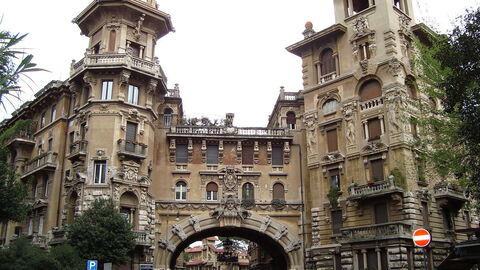
Between the centuries of the might of the Roman Empire millennia ago and the continued power of the papacy throughout history, it is safe to say that Rome has had plenty of money invested in her appearance and infrastructure over the years. It is also safe to say that the city is one of the great architectural gems of the world, especially on such a scale and throughout so much of the city. Few other places can boast the same consistently stunning range and quality of architecture through such a large percentage of their square-meterage. Yet, even when you think you cannot be surprised by what Rome's architectural treasure trove has to offer, you stumble across something that you have never seen before: like Coppedè, the Eternal City's answer to Gaudì.

Located behind the main streets of Quartiere Trieste, between Piazza Buenos Aires and via Tagliamento, is the bizarre, beautiful and whimsical district of Coppedè. Tucked away as it is, many people never stumble across this tiny area, the smallest quartiere of Rome.
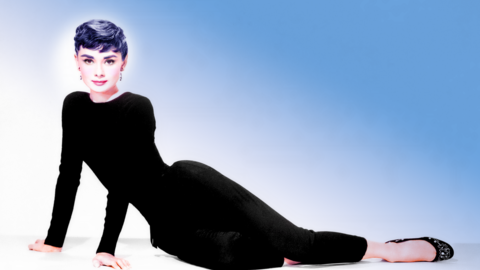
Hepburn
Posted in: Architectural Gems Central Italy Curiosities History Latium Tourist Attractions
In the last post in this series, we round up your “Roman Holiday” tour of Rome! Just find a holiday rental in Rome and take in the city where Audrey Hepburn, as a princess, and Gregory Peck, as a journalist, fell in love. Here are the last few of the key sights that you need to include in your itinerary if you are a fan of the film!

When making the film, as we have discovered thus far, the most iconic and popular tourist spots were featured heavily, which is good for you as it means you can kill two birds with one stone and double up on visits. Another famous attraction that features in the movie is the Roman Forum.

In fact, it is where the two main characters first meet after the princess escapes the stifling atmosphere of her country's embassy in Rome and wanders. However, having been just given a sleeping pill to help her rest, he falls asleep on a bench near the Temple of Saturn and the Arch of Septimus Severus. This is where Peck's character finds her and tries to get her back to her home.
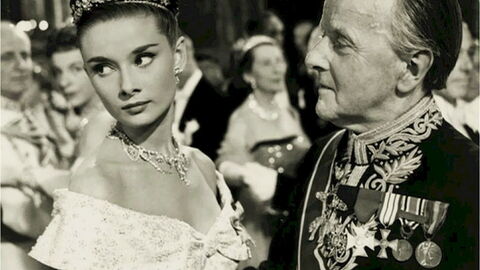
Hepburn
Posted in: Architectural Gems Central Italy Curiosities History Latium Tourist Attractions
Continuing on from our last post, in which we discussed the iconic Hollywood classic, “Roman Holiday” and how it was filmed and set in Rome, here are some more of the key locations in the film in order for you to create you very own Roman romance, a la Hepburn and Peck. Just find a holiday rental in Rome and begin exploring the Eternal City in style!

You probably would have had the Pantheon on your must-see list if visiting Rome anyway but it is also part of the Roman Holiday itinerary. In the film, the two characters enjoy coffee and champagne in a cafe in the Piazza della Rotonda, in front of the Pantheon. While the cafe in question is not longer there, you can still easily grab a similar treat to cool down and relax on your travels at another cafe in the piazza. Then, once you're done, be sure to stop by the building itself and, if you happen to be looking for mementos from the movie, there are a series of souvenir stands selling all of the classic prints from the film on Via delle Murate.
Hepburn in Roman Holiday
Posted in: Architectural Gems Central Italy Curiosities History Latium Legends Tourist Attractions
For many, a big factor in constructing their notions and expectations of Rome is the classic 1950s Hollywood romance, “Roman Holiday”. Starring Audrey Hepburn and Gregory Peck as a European princess and an American journalist who shows her around Rome before the two ultimately fall in love, it is the movie that launched Hepburn's career, won her an Oscar and made millions fall for the city.

If you, too are a fan of the movie and have always wanted to recreate your own Roman Holiday, just find a holiday rental in Rome and check out these locations that were featured in the film.

One of the first sights on your list should be the Spanish Steps, the beautiful 18th century Baroque steps between the Piazza di Spagna (at the base) and Piazza Trinità dei Monti. These 135 steps were built by French diplomat Étienne Gueffier’s, linking the Bourbon Spanish Embass, and the Trinità dei Monti church and was designed by architects Francesco de Sanctis and Alessandro Specchi.
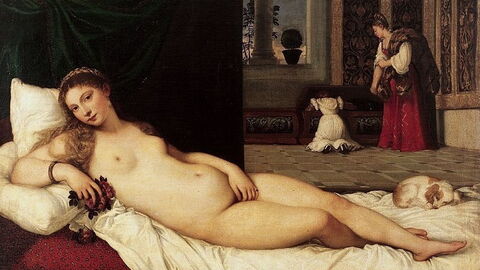
Venus of Urbino
Posted in: Florence History Localities Museums & Galleries Renaissance Tourist Attractions
If you have found a luxury villa in Florence, one key attraction that you have probably already added to your list is the Uffizi Gallery, or Galleria degli Uffizi, in Piazza della Signoria. One of the oldest and most famous art museums in Europe and the world, the Uffizi was originally begun under Vasari for Cosimo I de' Medici in 1560 as an office building.

More and more space was dedicated to the display of artworks over time until that became its primary function and in 1765, it was officially opened to the public access. It is now famous for its collection of works by writers, artists and scientists and, particularly, for its Renaissance art collection with works by the likes of Da Vinci, Michelangelo, Cimabue, Botticelli, Giotto, Van der Weyden, Durer, Raphael, Titian, Caravaggio, Artemisia Gentileschi and Rembrandt.